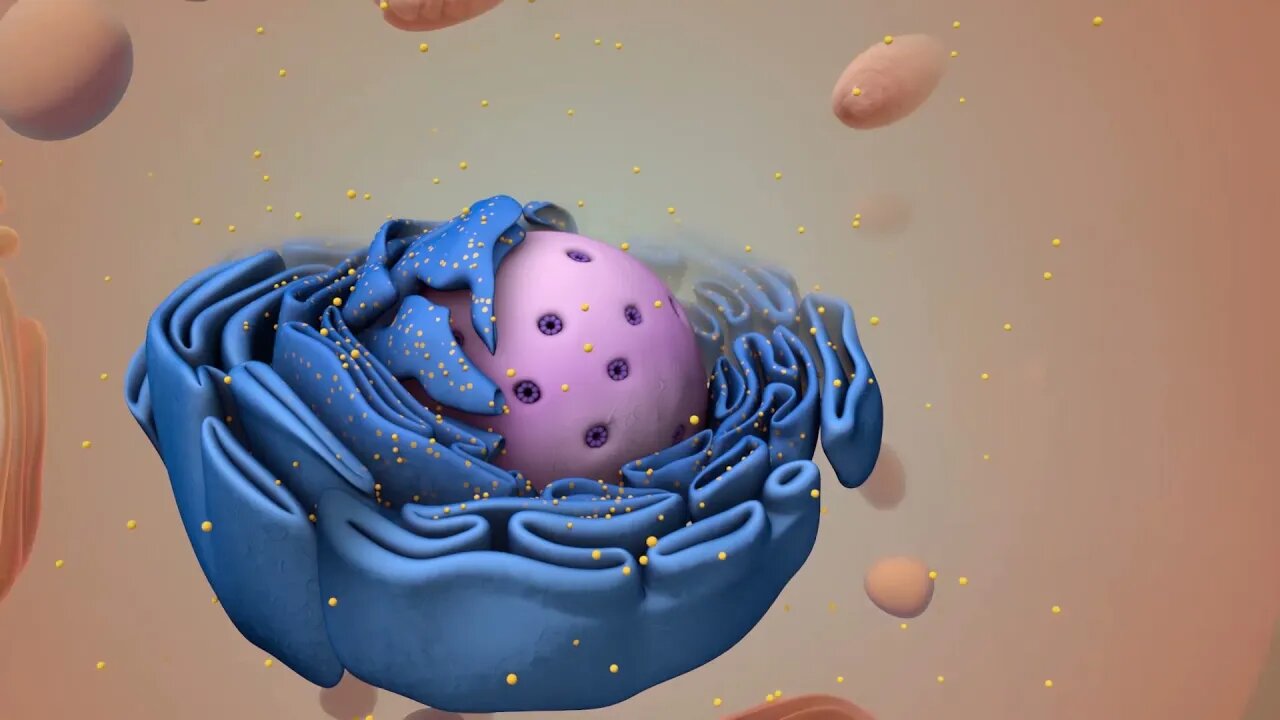
What are Haploid and Diploid Cells?
For Employees of hospitals, schools, universities and libraries: download up to 8 FREE medical animations from Nucleus by signing up for a free trial at: http://nmal.nucleusmedicalmedia.com/biology_youtube
#HaploidCells #DiploidCells #biology
SCIENCE ANIMATION TRANSCRIPT: In this video, we will discuss haploid versus diploid cells. Haploid and diploid are terms that describe the number of sets of chromosomes in a cell. Haploid means the cell has only one set of chromosomes. And diploid means the cell contains two sets of chromosomes. In your body, sex cells called Gametes have a haploid number of chromosomes represented by symbol n. In humans, every gamete has one set of 23 chromosomes, so the haploid, or n, number in humans is 23. This is important, since the union of gametes during fertilization creates a diploid cell called a zygote with two sets of chromosomes for a total of 46. At fertilization, the chromosomes from each parent match up to become the new pairs of chromosomes in a zygote. Each pair contains one chromosome from the father and a corresponding chromosome from the mother. These pairs are called homologous chromosomes. Homologous chromosomes are similar in shape and size along with the same types of genes in the same locations. A diploid zygote will go through cell division many times to produce all the cells in the body of a fully developed baby. All body cells except gametes are referred to as somatic cells. In humans, somatic cells are always diploid, written as 2n, which means they have 2 sets of 23 chromosomes for a total of 46 chromosomes. Other organisms have somatic cells with different diploid numbers of chromosomes. But the gametes in these organisms are haploid, meaning they always have half the diploid number of chromosomes. So, how does cell division affect the number of chromosomes in daughter cells? Well, somatic cells only reproduce by mitosis, a type of cell division that results in two genetically identical diploid daughter cells. In contrast, meiosis is a type of cell division that only produces gametes. In meiosis, a diploid cell undergoes two cell divisions to produce four genetically different haploid gametes. We'll cover the details of meiosis in another video. In summary, diploid cells have two complete sets of chromosomes. One set from each parent. Diploid cells have twice the number of chromosomes as haploid cells. The two sets consist of pairs of homologous chromosomes. The diploid chromosome number is written as 2n. All somatic cells, whether they're skin cells, muscle cells, or leaf cells in a plant are diploid. Diploid cells reproduce only by mitosis. And gametes are never diploid. In contrast, gamete cells, which are always haploid, have only one set of chromosomes, which is half the diploid number. Since there's only one set of chromosomes there are no homologous pairs. The haploid chromosome number is written as n. All gametes are haploid. And haploid gametes form from diploid cells through meiosis, never through mitosis. [music]
NSV15017
-
 0:23
0:23
Nucleus Biology
3 years agoBiology Quiz: What structure gives plant cells shape, support and protection?
31 -
 1:35
1:35
dcsgadgets
3 years ago $0.01 earnedQueen cells post emergence
501 -
 0:34
0:34
dcsgadgets
3 years agoCut comb queen cells
55 -
 LIVE
LIVE
LFA TV
12 hours agoLIVE & BREAKING NEWS! | TUESDAY 12/02/25
3,421 watching -
 11:36
11:36
tactical_rifleman
11 days agoNever Run Out Of Ammo | Magazine Pez Dispenser | Tactical Rifleman
28.3K3 -
 26:11
26:11
Upper Echelon Gamers
16 hours ago $2.52 earned"Her" Wasn't Fiction - Its Real
9.07K3 -
 3:11
3:11
Canadian Crooner
2 years agoPat Coolen | It's Beginning to Look A Lot Like Christmas
61K17 -
 5:22
5:22
DropItLikeItsScott
1 day ago $2.61 earnedThe GLOCK Killer? Shadow Systems XR920 / Would You Choose It?
10.7K8 -
 2:06:15
BEK TV
1 day agoTrent Loos in the Morning - 12/01/2025
12.6K1 -
 LIVE
LIVE
The Bubba Army
23 hours agoDIDDY'S NEW DOC EXPOSED! - Bubba the Love Sponge® Show | 12/02/25
1,318 watching