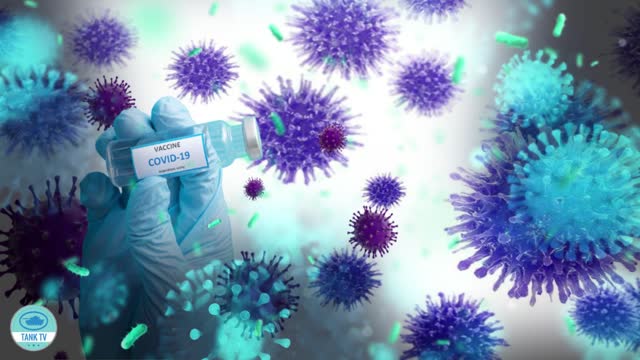
COVID-19 threatens the entire nervous system
COVID-19 threatens the entire nervous system.
Summary: Roughly 50% of patients hospitalized for COVID-19 experience neurological symptoms including headaches, dizziness, smell and taste disorders, and stroke, a new study reports. Coronavirus may affect the entire nervous system, including the brain, spinal cord, and muscles. Neurological symptoms of COVID-19 may appear before the fever and cough commonly associated with infection.
Source: Northwestern University
A new review of neurological symptoms of COVID-19 patients in current scientific literature reveals the disease poses a global threat to the entire nervous system, reports a Northwestern Medicine study published this week in Annals of Neurology.
About half of hospitalized patients have neurological manifestations of COVID-19, which include headache, dizziness, decreased alertness, difficulty concentrating, disorders of smell and taste, seizures, strokes, weakness, and muscle pain.
“It’s important for the general public and physicians to be aware of this, because a SARS-COV-2 infection may present with neurologic symptoms initially, before any fever, cough or respiratory problems occur,” said lead author of the review, Dr. Igor Koralnik, Northwestern Medicine chief of neuro-infectious diseases and global neurology and a professor of neurology at Northwestern University Feinberg School of Medicine.
The review describes the different neurological conditions that may occur in COVID-19 patients and how to diagnose them, as well as likely pathogenic mechanisms.
“This understanding is key to direct appropriate clinical management and treatment,” Koralnik said.
The disease may affect the entire nervous system, including the brain, spinal cord and nerves as well as the muscles. There are many different ways COVID-19 can cause neurological dysfunction, he said. Because this disease may affect multiple organs (lung, kidney, heart), the brain may also suffer from lack of oxygenation or from clotting disorders that may lead to ischemic or hemorrhagic strokes. In addition, the virus may cause direct infection of the brain and meninges. Finally, the reaction of the immune system to the infection may cause inflammation that can damage the brain and nerves.
Koralnik and colleagues have formed a Neuro-COVID research team and started a retrospective analysis of all COVID-19 patients hospitalized at Northwestern Medicine to determine the frequency and type of neurological complications, as well as response to treatment.
Since knowledge about the long-term outcome of neurologic manifestations of COVID-19 is limited, Koralnik also will follow some of those patients prospectively in his new outpatient Neuro-COVID clinic to determine if neurological problems are temporary or permanent. These studies will provide the foundation on how to diagnose, manage and treat the many neurologic manifestations of COVID-19, he said.
Abstract
COVID ‐19: a global threat to the nervous system
In less than 6 months, the severe acute respiratory syndrome‐coronavirus type 2 (SARS‐CoV‐2) has spread worldwide infecting nearly 6 million people and killing over 350,000. Initially thought to be restricted to the respiratory system, we now understand that coronavirus disease 2019 (COVID‐19) also involves multiple other organs including the central and peripheral nervous system. The number of recognized neurologic manifestations of SARS‐CoV‐2 infection is rapidly accumulating. These may result from a variety of mechanisms including virus‐induced hyper‐inflammatory and hypercoagulable states, direct virus infection of the CNS, and post‐infectious immune-mediated processes. Examples of COVID‐19 CNS diseases include encephalopathy, encephalitis, acute disseminated encephalomyelitis, meningitis, ischemic and hemorrhagic stroke, venous sinus thrombosis, and endothelialitis. In the peripheral nervous system, COVID‐19 is associated with dysfunction of smell and taste, muscle injury, the Guillain‐Barre syndrome, and its variants. Due to its worldwide distribution and multifactorial pathogenic mechanisms, COVID‐19 poses a global threat to the entire nervous system. While our understanding of SARS‐CoV‐2 neuropathogenesis is still incomplete and our knowledge is evolving rapidly, we hope that this review will provide a useful framework and help neurologists in understanding the many neurologic facets of COVID‐19.
Feel Free To Share This COVID-19 News.
-
 LIVE
LIVE
Timcast
56 minutes agoNarco Boat Double Strike Triggers MASSIVE Political Firestorm, Admiral To Be QUESTIONED By Congress
12,658 watching -
 LIVE
LIVE
Dr Disrespect
2 hours ago🔴LIVE - DR DISRESPECT'S TRIPLE THREAT CHALLENGE - ARC RAIDERS • BF6 • FORTNITE
1,173 watching -
 LIVE
LIVE
Side Scrollers Podcast
1 hour agoKaceytron Publicly Humiliated by H3H3 + Sabrina Carpenter/White House FEUD + More | Side Scrollers
709 watching -
 LIVE
LIVE
The Charlie Kirk Show
48 minutes agoBlackpilled Zoomers + Charlie's Sabbath + Minnesota Meltdown | Bowyer, Turek, Glahn | 12.3.2025
2,370 watching -
 LIVE
LIVE
Steven Crowder
3 hours ago🔴Vintage MAGA: Trump's Epic Somalia Rant Isn't Racist - It's Irrefutable
19,073 watching -
 1:06:14
The Rubin Report
1 hour ago‘The View’ Crowd Gets Confused as Whoopi Contradicts Facts
16.7K22 -

LadyDesireeMusic
2 hours ago $0.05 earnedLive Piano Music & Convo - Warm & Cozy
4.15K -
 1:17:36
vivafrei
2 hours agoRobert Barnes Before Court of Appeal in Brook Jackson's Qui Tam Fraud Lawsuit Against Pfizer
22.1K5 -
 LIVE
LIVE
LFA TV
14 hours agoLIVE & BREAKING NEWS! | WEDNESDAY 12/03/25
3,992 watching -
 LIVE
LIVE
MYLUNCHBREAK CHANNEL PAGE
2 hours agoNo Public Entry?
382 watching