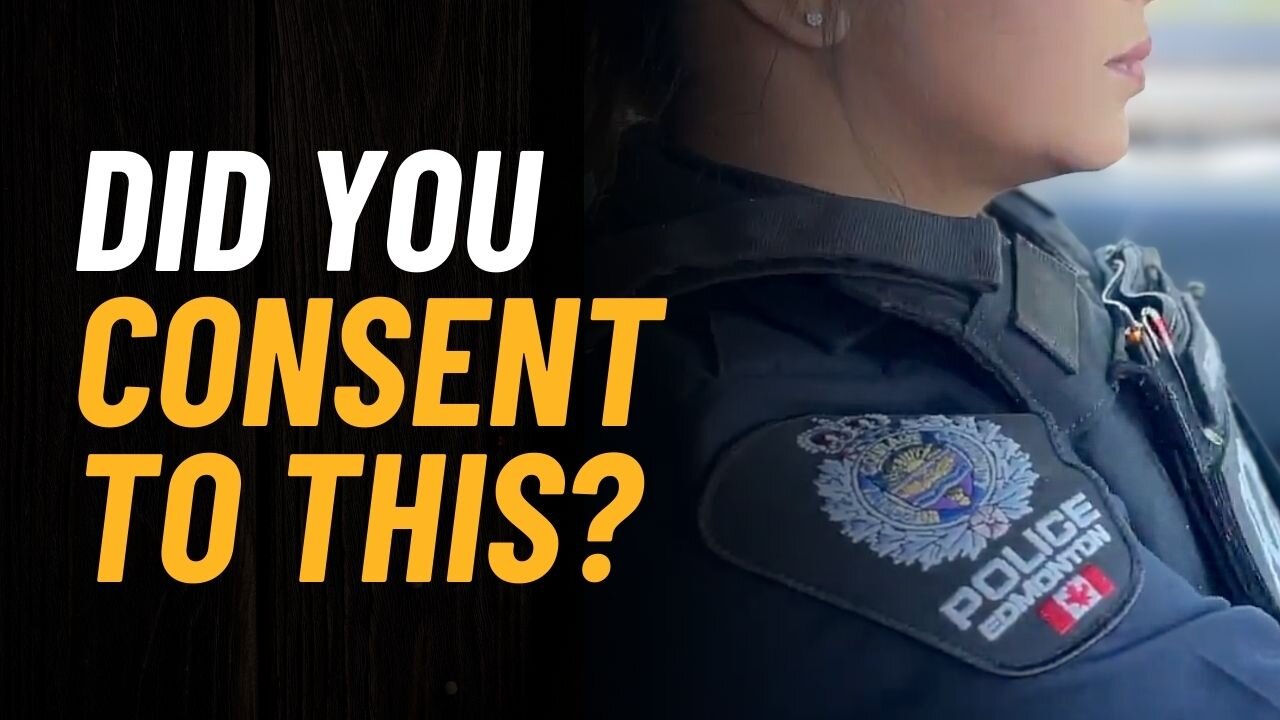
Canada’s First Step to a Surveillance State?
The hosts open with Edmonton Police launching a month-long pilot project testing body-worn cameras equipped with facial-recognition matching. Fifty officers will record the public, and the footage will be compared against databases of wanted individuals. While police frame the program as a public-safety tool, the hosts immediately question its purpose, arguing that Canada already fails to prosecute repeat offenders—so introducing new surveillance tools before fixing the justice system makes little sense. They warn that the program feels less like crime prevention and more like a step toward a broader surveillance infrastructure.
They then pivot to the major privacy implications, especially when officers enter private property. Alberta required the police to file a privacy impact assessment, and the hosts stress that filming inside homes or private spaces could violate rights in ways Canadians haven’t grappled with. They recall a Hamilton case where a homeowner was nearly forced to remove exterior cameras for “violating public privacy”—yet now police want to record everyone in public and private spaces. The hosts argue this double standard exposes the creeping expansion of state surveillance, raising fears of a future “Minority Report”-style system that identifies individuals automatically in real time.
Finally, the hosts widen the discussion to the broader risks of facial recognition, data retention, foreign technology, and digital ID integration. They highlight documented failures of recognition systems—misidentifying minorities, flagging innocent people, and enabling unconstitutional stop-and-identify practices. They warn that Canadian police already use plate-scanning technology that tracks vehicles live, and bodycams could evolve into similar systems for people. Combined with courts dismissing cases due to delays, revolving-door bail, and 32,000 untracked illegal entrants, they question whether any of this will actually reduce crime. Instead, they suspect the primary beneficiaries will be the foreign companies selling the hardware and the governments seeking more citizen data. With risks of hacking, foreign backdoors, and Chinese-made RCMP drones, they conclude this may be less about public safety and more about building a surveillance system Canadians never asked for—paid for, as always, by taxpayers.
https://edmonton.citynews.ca/2025/12/02/edmonton-police-testing-facial-recognition-bodycams/
https://www.edmontonpolice.ca/News/FacialRec
0:02 – Edmonton Police Launch Facial-Recognition Bodycam Pilot
1:16 – Major Privacy Concerns Inside Private Homes
2:03 – “Minority Report?” Growing Fears of Real-Time Tracking
3:57 – Double Standards: Citizens Restricted, Police Empowered
5:01 – False Matches & Racial Bias in Facial Recognition
6:29 – Automatic Identification vs. Charter Protections
7:31 – License-Plate Scanners & Surveillance Creep
8:56 – Digital ID, Data Storage & Government Overreach
10:00 – Justice System Failures Undermine the Stated Purpose
11:47 – Foreign Tech, Backdoors & Data-Security Risks
13:02 – Untracked Individuals & Broken Enforcement
14:32 – RCMP Chinese-Made Drones & National Security Concerns
16:12 – Who Actually Benefits? (Not Canadians)
Check us out on:
X: https://x.com/DDxStandards
YouTube: https://www.youtube.com/@DoubleDoubleStandard
-
 14:17
14:17
RTT: Guns & Gear
15 hours agoBest Budget RMR Red Dot 2025? Gideon Optics Granite Review
1172 -
 LIVE
LIVE
BEK TV
22 hours agoTrent Loos in the Morning - 12/05/2025
266 watching -
 LIVE
LIVE
The Bubba Army
21 hours agoWill Michael Jordan TAKE DOWN NASCAR - Bubba the Love Sponge® Show | 12/05/25
1,746 watching -
 35:55
35:55
ZeeeMedia
14 hours agoPfizer mRNA in Over 88% of Human Placentas, Sperm & Blood | Daily Pulse Ep 156
5.43K99 -
 LIVE
LIVE
Pickleball Now
4 hours agoLive: IPBL 2025 Day 5 | Final Day of League Stage Set for Explosive Showdowns
261 watching -
 9:03
9:03
MattMorseTV
16 hours ago $14.63 earnedIlhan Omar just got BAD NEWS.
26.7K84 -
 2:02:41
Side Scrollers Podcast
20 hours agoMetroid Prime 4 ROASTED + Roblox BANNED for LGBT Propaganda + The “R-Word” + More | Side Scrollers
133K14 -
 16:38
16:38
Nikko Ortiz
15 hours agoVeteran Tactically Acquires Everything…
20.6K1 -
 20:19
20:19
MetatronHistory
2 days agoThe Mystery of Catacombs of Paris REVEALED
11.7K2 -
 21:57
21:57
GritsGG
19 hours agoBO7 Warzone Patch Notes! My Thoughts! (Most Wins in 13,000+)
18.1K