Ethiopia Volcano Awakens After Thousands of Years | What Scientists Are Watching
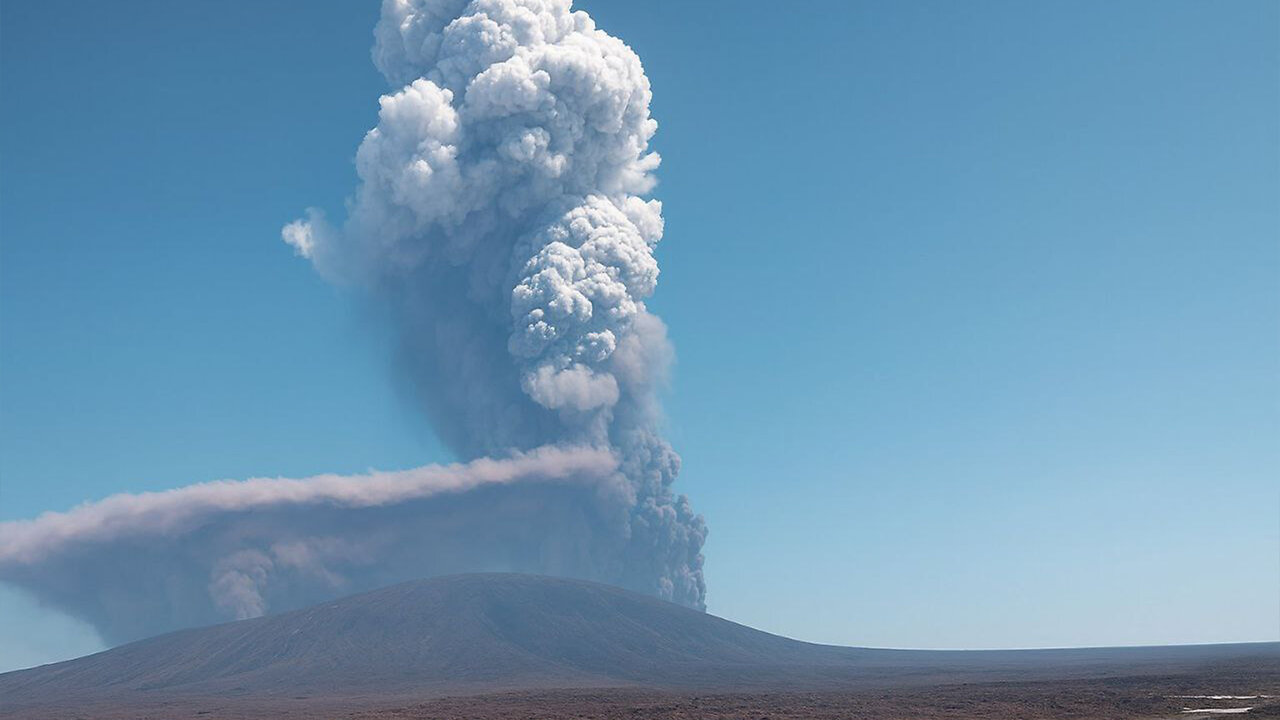
On November 23, Ethiopia experienced a sudden and powerful eruption of the Haili-Gubbi volcano.
The ash plume rose to an altitude of about nine miles, disrupting the air corridors connecting Africa, the Middle East, and South Asia. A “red code” aviation alert was issued immediately for the region, as also reported by the Toulouse Volcanic Ash Advisory Center.
Satellite data obtained on November 24 revealed not only an extensive volcanic-ash plume but also a strong sulfur-dioxide release at altitudes ranging from about three miles to roughly eleven miles. These measurements clearly indicate major volcanic activity: the IASI-C satellites detected an SO₂ plume with a total mass of more than fifty-eight thousand short tons.
The gas-and-ash plume persisted in the atmosphere for a long time after the eruption, gradually drifting over the Red Sea and moving toward Oman and Yemen.
What makes this event especially remarkable is that Haili-Gubbi had no confirmed eruptions for nearly twelve thousand years; previously, the volcano exhibited only weak gas emissions. Its sudden awakening has become yet another indication of the growing geological activity on our planet.
Dr. Egon Cholakian has outlined the fundamental changes in geodynamic catastrophes that await us in the coming years. We highly recommend watching his analysis.
#EthiopiaVolcano #VolcanicEruption #BreakingNews #NaturalDisaster #ExtremeNature #GeologyUpdate #EarthActivity #GlobalWeather #DisasterNews #ScienceAlert
-
 5:31
5:31
ALLATRA
6 days agoCOP-30: Fernando Gabeira on Journalism, Microplastics, and Global Sustainability
43 -
 LIVE
LIVE
Inverted World Live
3 hours agoNASA Hints at Life Beyond Earth | Ep. 150
2,257 watching -
 19:01
19:01
Stephen Gardner
8 hours agoAlex Jones: ‘Trump Is About to Do Something MASSIVE!'
19K95 -
 LIVE
LIVE
Drew Hernandez
21 hours agoCANDACE OWENS ACCEPTS TPUSA INVITATION TO DISCUSS SUSPICION BEHIND CHARLIE KIRK ASSASSINATION?!
1,055 watching -
 2:52:10
TimcastIRL
4 hours agoDrunk Raccoon Becomes Top US Story After Getting Plastered, Passing Out In Bathroom | Timcast IRL
198K73 -
 LIVE
LIVE
SpartakusLIVE
7 hours agoRule #1 - The BEST Loot is ALWAYS in the OTHER GUY'S BAG
572 watching -
 LIVE
LIVE
ThatStarWarsGirl
4 hours agoTSWG LIVE: CHRISTMAS IS COMING! Stargate's BACK & DC is Doomed?!
229 watching -
 LIVE
LIVE
I_Came_With_Fire_Podcast
11 hours agoDid Pete Hegseth Commit WAR CRIMES | No more INCOME TAX | More Fraud in Minnesota W/ Mike Caldarisie
245 watching -
 DVR
DVR
Adam Does Movies
6 hours ago $0.36 earnedTalking Movies + Ask Me Anything - LIVE
10.7K1 -
 2:12:14
TheSaltyCracker
4 hours agoWar Crimes ReeEEStream 12-03-25
65.5K134