Ridge Runner - Fezzes and Tears
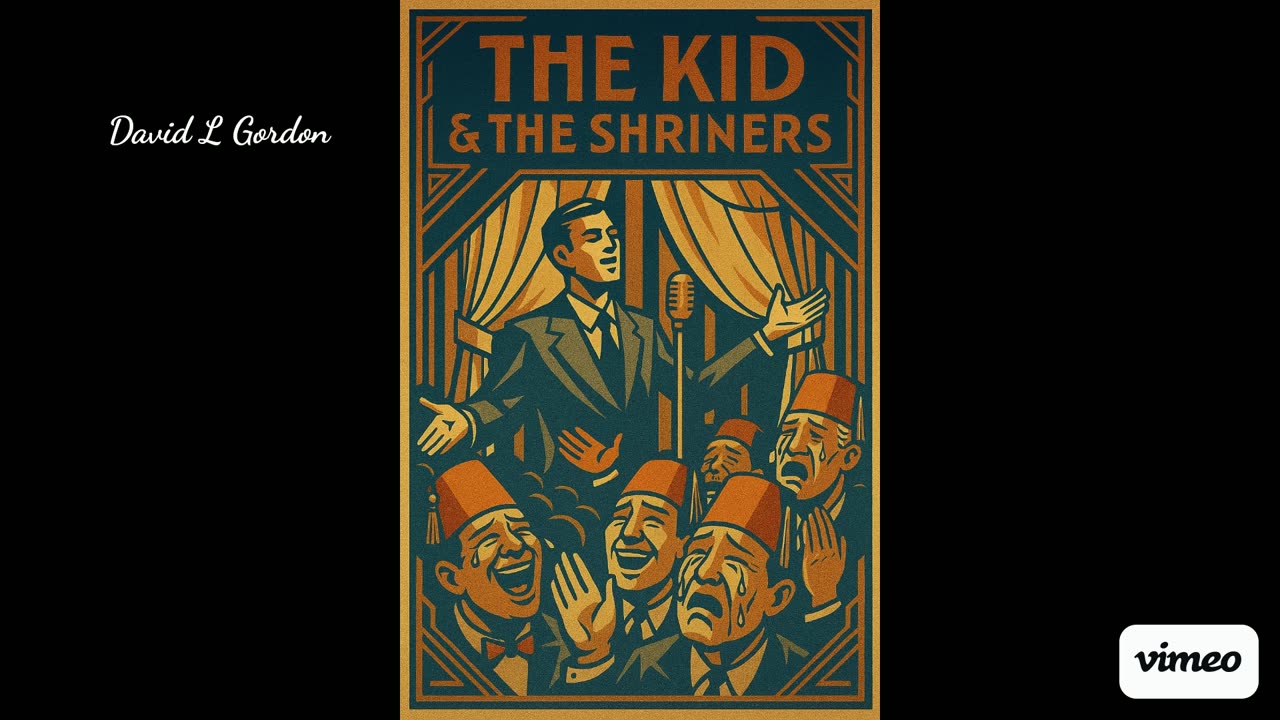
The Kid Episode III: Fezzes and Tears
The Kid had been hired to perform his act for a Shriner's convention he showed up a little late...as usual.
The hall is a low-ceilinged box, fluorescent lights buzzing like insects trapped in jars. A banner droops across the stage, “WELCOME SHRINERS!”
The punchbowl at the center of the room glows faintly, as if it knows something the men in fezzes do not.
The Shriners sit in rows of folding chairs, their fezzes tilted at odd angles, their faces flushed from the spiked punch. Their laughter is volcanic, rolling, uncontrollable, echoing off the linoleum floor. One man clutches his belly as if he’s giving birth to joy. Another tries to
crawl under his chair, convinced it’s a submarine.
Onstage, The Kid grips the microphone like it’s a lifeline. His jokes about traffic lights and rent land with explosive force, each punchline detonating in the crowd.
The Kid opened with a joke about traffic lights. "They’re just mood rings for cars," he said. The Shriners howled. They slapped their knees, their fezzes tilted back, their laughter ricocheted off the walls like machine-gun fire in a cartoon war.
He’s exhilarated, but also unnerved, this is too much laughter, too loud, too long.
The Kid thought, “Well, this is going better than usual”.
He told another joke about the absurdity of paying rent to live on a planet you were born on. The Shriners erupted again, some of them falling out of their chairs, one man trying to crawl into the punchbowl to baptize himself in hilarity.
But then The Kid, feeling bold, decided to talk about his old Irish grandmother. She was a woman who boiled potatoes until they surrendered, who believed in saints and curses, who once told him that laughter was proof the devil had lost another round.
The Shriners stopped laughing. Their faces melted into puddles of sorrow. One by one, they began to cry. Not polite tears, but great sobs, like children who had just realized their parents were mortal.
The Kid froze. He looked at them, these men in fezzes, bawling like widows at a funeral. He wondered if he had killed comedy, or if comedy had killed them.
And the Shriners applauded through their tears, because in their LSD haze, they thought he was their grandmother, risen from the grave to tell them one last joke. The Jesuit priest, watching from the shadows, smiled. He believed he had performed a miracle: turning a comedy show into a mass by spiking the punch with acid.
The Kid cleared his throat. "Well," he said, "I guess that’s my time."
The Kid didn’t drink the punch. He was too nervous, too focused on remembering the order of his jokes. But as the Shriners roared and wept in their fezzes, something strange began to happen.
The laughter was so loud it seemed to vibrate inside his skull. The sobbing was so raw it seemed to leak into his bloodstream. He felt his pulse sync with theirs, as if the room itself had become a single organism and he was plugged into its circulatory system.
Colours sharpened. The banner above the stage began to shimmer like stained glass. The microphone in his hand pulsed like a living thing. He thought he could hear his grandmother’s voice, not in memory but in stereo, echoing from every corner of the hall.
The Kid realized he was high. Not from the punch, but from proximity. A contact high, delivered through laughter and tears, through the collective hallucination of men in fezzes who believed they were attending a comedy show but had stumbled into a séance.
He grinned, though it felt less like joy and more like surrender. He was no longer telling jokes. He was channelling something larger, something absurd and holy. He was the priest, the prophet, the clown, and the grandson all at once.
And the Shriners, in their LSD haze, saw him exactly that way.
-
 LIVE
LIVE
Nerdrotic
2 hours agoHollywood PANICS! Netflix WINS Warner Bros | RIP Star Trek - Friday Night Tights 383
677 watching -
 LIVE
LIVE
vivafrei
1 hour agoJan. 6 Suspect ADMITS to Planting Bombs, Claims to be Trump SUPPORTER? The Blaze RETRACTS? & MORE!
2,718 watching -
 LIVE
LIVE
The HotSeat With Todd Spears
1 hour agoEP 221: Bonus Friday Episode! 2025 Spotify Recap
257 watching -
![MAHA News [12.5] Glyphosate Study Retracted (MONSANTO), Vaccine News (COVID), DMSO Chat](https://1a-1791.com/video/fwe2/02/s8/1/0/u/D/F/0uDFz.0kob-small-MAHA-News-12.5.jpg) UPCOMING
UPCOMING
Badlands Media
11 hours agoMAHA News [12.5] Glyphosate Study Retracted (MONSANTO), Vaccine News (COVID), DMSO Chat
5.83K -
 1:11:14
DeVory Darkins
3 hours agoJeffries SCRAMBLES After National Gas Prices hit record low amid AFFORDABILITY CRISIS
177K74 -
 56:44
56:44
The Quartering
3 hours agoSpam Calls Are Out Of Control, Candace Hits Rock Bottom & More Poison Food
21.5K66 -
 47:44
47:44
Tucker Carlson
3 hours agoRupert Lowe Warns of the Globalist Agenda Destroying the West and the Revolution Soon to Come
47.8K100 -
 1:16:03
Sean Unpaved
4 hours agoWill Miami Be "ODD MAN OUT" Of The College Football Playoff? | UNPAVED
12.2K1 -
 58:31
58:31
Jeff Ahern
1 hour ago $0.24 earnedFriday Freak out with Jeff Ahern
4.13K3 -
 27:03
27:03
The Kevin Trudeau Show Limitless
2 days agoThey're Not Hiding Aliens. They're Hiding This.
31.2K47