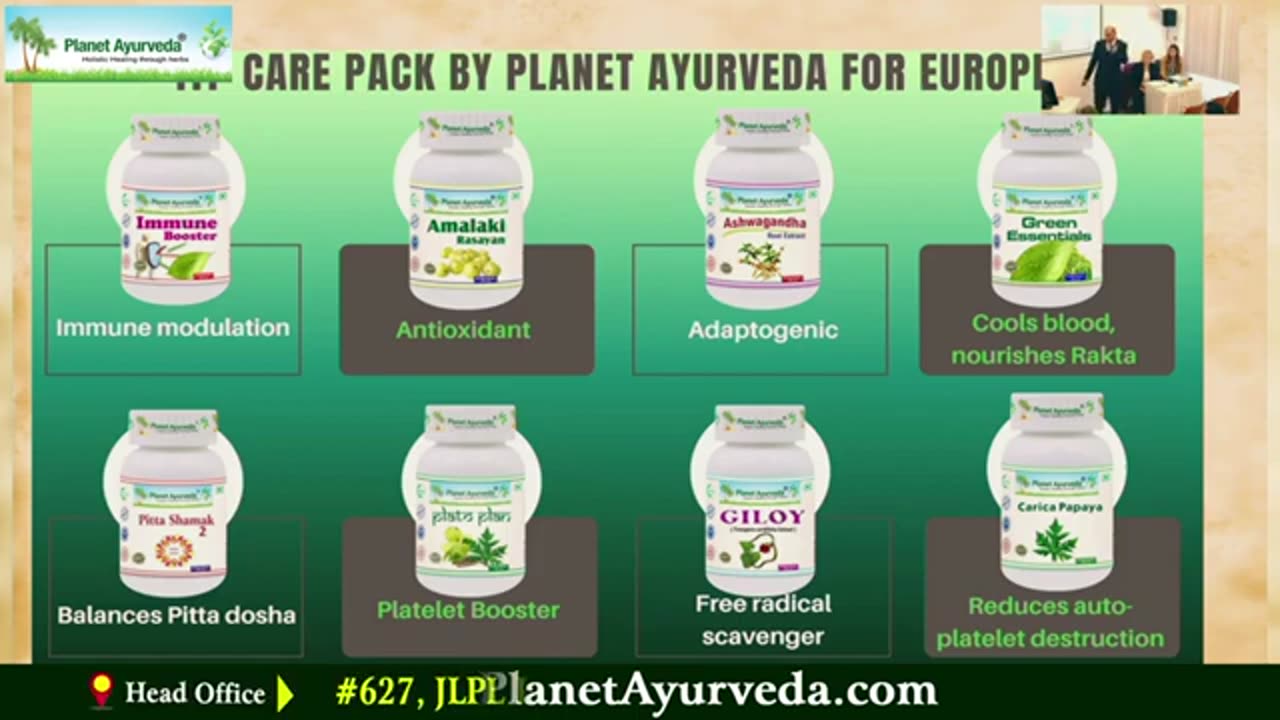
Dr. Vikram Chauhan's Presentation on ITP - Autoimmune Disease
Dr. Vikram Chauhan's Presentation on ITP through the Ayurvedic Lens - A Rare Autoimmune Disease
video osurce:-
https://www.youtube.com/watch?v=tiTDHraHeGI
Book ONLINE Video Consultations with Ayurveda Experts from the Comfort of Your Home (+91)9915593604 ( Call or Whatsapp)
ITP CARE PACK (FOR KIDS 0 TO 5 YEARS): https://store.planetayurveda.com/products/itp-care-pack-kids?
ITP CARE PACK (FOR CHILDREN 5 TO 14 YEARS):https://store.planetayurveda.com/products/itp-care-pack-children
ITP LEVEL-1 (BASIC PACK): https://store.planetayurveda.com/products/itp-level-1-basic-pack
ITP LEVEL-2 (PLATELET GUSH PACK) : https://store.planetayurveda.com/products/itp-level-2-platelet-gush-pack
Read More:- https://www.planetayurveda.com/library/idiopathic-thrombocytopenic-purpura/
Idiopathic Thrombocytopenic Purpura (ITP) is an uncommon autoimmune disorder characterized by abnormally low platelet counts, leading to easy bruising, bleeding #gums, and #petechiae. While modern medicine explains ITP as an immune-mediated destruction of platelets, Ayurveda—India’s traditional system of healing—offers a unique, holistic lens through which to understand this condition.
From an Ayurvedic perspective, ITP can be correlated with disorders such as Raktapitta, Rakta Kshaya, and Prana Vaha Srotas imbalance. These conditions involve disturbances in blood tissue (Rakta dhatu), impaired clotting, and weakened #vitality. According to classical texts, an aggravated Pitta dosha, often fueled by excessive heat, stress, or incompatible dietary patterns, can lead to the vitiation of blood. This vitiated blood may weaken the body’s natural defense mechanisms, leading to symptoms resembling those seen in ITP, such as spontaneous bleeding and purpura.
Ayurveda approaches such disorders with a comprehensive strategy aimed at restoring doshic balance, strengthening Rakta dhatu, and enhancing the body’s natural immunity. Cooling and blood-purifying herbs—traditionally used to pacify Pitta—are considered supportive. Additionally, nourishing therapies that promote tissue regeneration, such as Rasayana (rejuvenative) treatments, may help improve overall vitality. Dietary guidelines emphasize cooling, hydrating, and easy-to-digest foods, reducing spicy, sour, and fried items believed to aggravate Pitta.
Mind-body harmony plays a crucial role in Ayurvedic healing. Stress, known to exacerbate autoimmune processes, is addressed through practices like yoga, meditation, pranayama, and lifestyle adjustments aimed at calming the nervous system.
While Ayurvedic insights provide a broader understanding of the disease’s origin and holistic well-being, ITP remains a serious medical condition requiring proper clinical evaluation and monitoring. Integrating Ayurvedic principles alongside evidence-based medical care—under the guidance of qualified practitioners—may offer a complementary approach to fostering balance, resilience, and improved quality of life in individuals living with this rare autoimmune disorder.
-
 LIVE
LIVE
Barry Cunningham
1 hour agoLIVE BREAKING NEWS: Erika Kirk and TPUSA Have Had It With Candace Owens | Where Are The Children?
1,525 watching -
 LIVE
LIVE
The Jimmy Dore Show
1 hour agoTrump Pardons DEMOCRAT Henry Cuellar! Candace SHUTS DOWN Zionist Talking Points! w/ Nick Cruse
5,995 watching -
 1:05:17
BonginoReport
2 hours agoWhite House Claps Back At Sabrina Carpenter - Nightly Scroll w/ Hayley Caronia (Ep.189)
28.5K12 -
 1:06:50
TheCrucible
3 hours agoThe Extravaganza! EP: 69 (12/03/25)
44.8K10 -
 1:08:49
Kim Iversen
3 hours agoEpstein Island: What's With The Creepy Medical Chair and Masks?
17.9K19 -
 23:54
23:54
Jasmin Laine
4 hours agoCarney’s WORST Day EVER—BOOED, Fact-Checked, and Forced to FLEE the House
4.64K9 -
 1:59:47
Redacted News
3 hours agoDeep State Coup Coming for Trump? New JFK Files Released and NATO Preparing Attack on Russia
134K66 -
 7:31:43
Dr Disrespect
8 hours ago🔴LIVE - DR DISRESPECT'S TRIPLE THREAT CHALLENGE - ARC RAIDERS • BF6 • FORTNITE
80.9K5 -
 1:00:57
Russell Brand
5 hours agoThe Vaccine Ideology Unmasked | Dr Peter McCullough - SF658
102K35 -
 1:11:25
vivafrei
4 hours agoKash Patel's Jacket-Gate! Pfizer Whistleblower Qui Tam on Appeal! Meanwhile in Canada! AND MORE!
54.4K42