Israel Thought the Exodus Was a Blip. They Were Wrong.
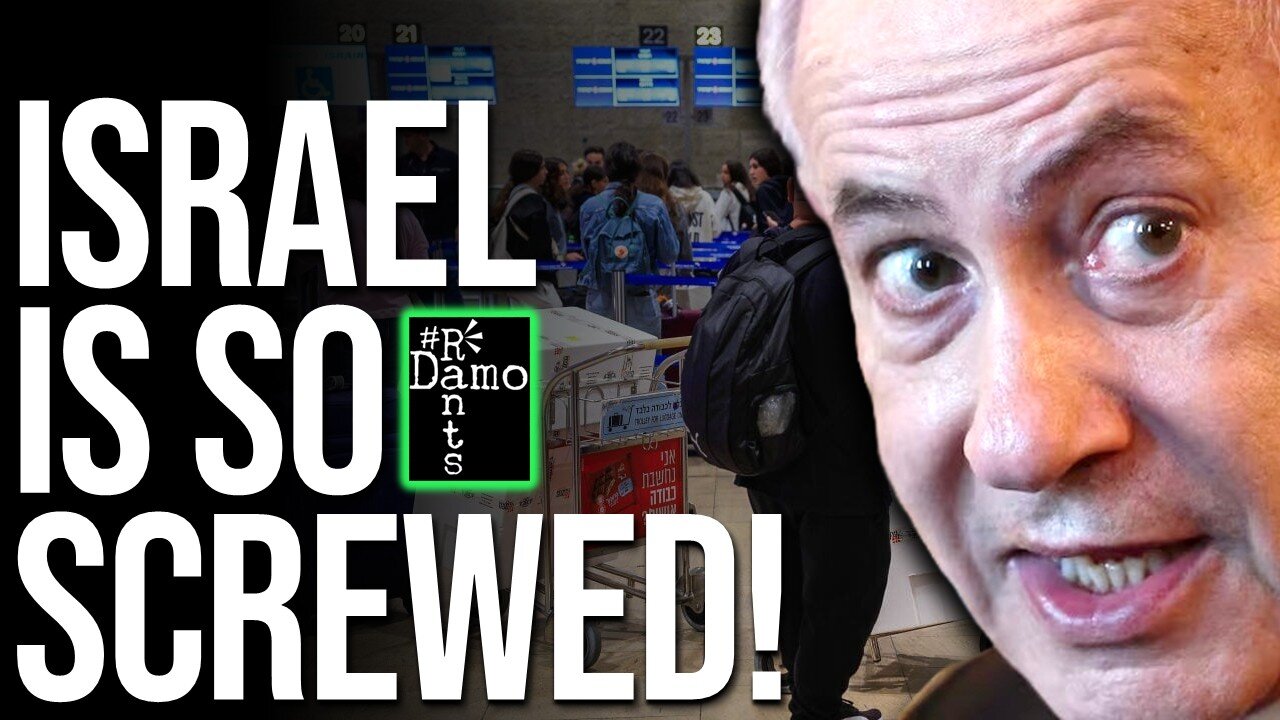
Right, so Israel keeps telling the world it’s winning, it’s strong, it’s stable, it’s unbreakable — and meanwhile more than a quarter of its own population is quietly checking flight prices and Googling residency visas. When seventy-nine thousand people leave in a single year and the state can only tempt forty-six thousand back, you don’t need a demographer to tell you what direction the country is heading in. You just need a calendar and a passport. Because this isn’t the fringe doing the running. It’s the secular core — the engineers, the doctors, the teachers, the people who keep the lights on — deciding they’d rather build a life somewhere that isn’t permanently braced for its next catastrophe. And when the stabilisers are the first ones out the door, the wobble that follows isn’t a surprise. It’s the bill coming due when all you’re left with are the extremists.
Right, so Israel is watching the people it relies on most quietly make plans to leave, and the state has created every condition pushing them out. You don’t get twenty-seven per cent of a population telling pollsters they’re considering emigration unless something has shifted at the level where people decide whether the place they live is still capable of giving them a future. I suppose it’s at least good to know that for many of them, that they can always go back to where they actually came from though. You don’t get a year where seventy-nine thousand depart to never return and only forty-six thousand arrive unless the internal story people tell themselves about their country has broken down. A country can survive many things, but it cannot survive losing the population that believes its tomorrow is worth staying for.
What makes this more than another political argument is the composition of the people thinking of leaving. It isn’t a fringe. It isn’t a marginal bloc. It is the secular heart of the country, the high-tech engineers, the researchers, the medical staff, the academics, the younger families, the global middle class that pays the taxes, keeps the institutions functioning, and carries the cultural and professional bandwidth that makes a state feel like a state. When that group begins to drift, the consequences run deeper than numbers on a graph. It affects every institution, every election, every sector that depends on continuity, and every attempt to steer the country away from the extremes.
And people always ask why. Why now, why this scale, why this kind of demographic? It is because the pressures that once felt temporary have turned into the norm. The wars and genocide in Gaza have ceased to be episodes and become the default setting now. The government has become less a government and more a machine servicing the most extreme partners in its coalition. The cost of living has outpaced wages so sharply that professionals see no path to stability anymore. Mobilisation is no longer an emergency measure but a constant drain on families, workplaces, and mental health. People may name different issues when they explain their worries, but the underlying sentiment is identical: the country is no longer on a trajectory they can trust.
The Gaza genocide accelerated these pressures dramatically. Even those who don’t cite Gaza directly can trace the consequences in their daily lives. Israel’s international reputation has collapsed in a way no PR campaign can ever paper over. Its diplomatic ties have frayed on many fronts, if not the ones that keep them armed. Its global partnerships have cooled. Its economic image has taken a hit that investors are no longer willing to ignore. And young secular Israelis — the people who run the industries that rely on global connection — understand that reputational damage is not a moral debate for them. It is a practical one. Their careers, their research opportunities, their chances abroad, even their social interactions are shaped by how the world sees their country. And right now the world does not see Israel as stable, responsible, or modern. It sees it as a source of racism, apartheid, genocide and crisis.
The state’s response has only deepened that crisis. Instead of trying to win people back, the government has leaned into its far-right base. It has offered confrontation instead of competence. It has picked fights with the judiciary, the civil service, universities, and the press. It has treated dissent as sabotage and criticism as disloyalty. What kind of person stays in a country that treats their genuine issues as a problem to be managed rather than a serious issue that needs to be listened to. And when the government shows that its survival depends more on the hard-right blocs than on the professionals keeping the country afloat, those professionals and plenty of others too, who may well work in these industries take the hint.
What turns this into a demographic trap is the imbalance between who can leave and who won’t. The Zionist ultra-Orthodox and the hard-settler movements have some of the highest birth rates in the developed world, and they do not emigrate. Their lives, ideology, and identity are embedded in the land. They believe this is where history is meant to unfold. They believe it is theirs by divine right. And the state caters to them because it relies on them for political survival. More secular citizens on the other hand, have mobility. They have dual passports. They have foreign degrees. They have job offers abroad. They have options. And the state is losing them because it keeps choosing the politics of its least mobile population over the interests of its most mobile one.
As that imbalance grows, the political centre of gravity shifts permanently. When thousands of secular voters leave each year, the electorate becomes more religious, more nationalist, and more supportive of escalation. More extreme. That, in turn, produces governments that are even more aligned with the far-right agenda, which creates more instability, which pushes more secular families out. Demography doesn’t need drama to reshape a country. It just needs a steady drip of the same kind of departure. A few years of that, and the political ecosystem becomes something entirely different from what it was ever intended to be. The last place it is, is a safe place for international Jewry.
This is already visible in the workforce. Hospitals are losing experienced doctors because other countries can offer stability and better conditions. High-tech firms are shifting teams abroad because investors trust offices in Berlin or Amsterdam more than Tel Aviv. Academic staff are relocating to universities that aren’t entangled in diplomatic backlash. Even civil servants — the last people to jump ship, the people who keep government departments and services functioning — are quietly exploring options. These aren’t isolated choices. They’re signals. And when the people who form the living infrastructure of the state begin looking for exits, the state’s ability to function declines long before anyone notices the cracks from the outside.
And it’s not just professional capacity that suffers. Institutional legitimacy depends on who stays. Courts depend on judges who believe in their independence. Universities depend on staff who believe in their mission. The public service depends on people who believe the system is worth maintaining. When those people begin imagining lives elsewhere, their commitment weakens. And once they leave, those institutions are filled by people whose priorities aren’t competence or independence but ideological loyalty. A hollow institution can remain standing for years without anyone realising how thin the internal support has become.
Global stigma only intensifies this drift. Israelis abroad increasingly talk about how they’re treated — the questions, the discomfort, the political assumptions. For older generations, this might feel familiar. For younger ones, it feels like a burden they never agreed to carry. And they can see the trajectory: as long as the state remains on a path of escalation, which is something Israel has been on since its inception, it has only accelerated to become more obvious ion the last few years, that stigma will grow, not shrink. So they make rational choices. They look for ways to build a future that isn’t shaped by permanent conflict and international hostility. These aren’t ideological decisions. They’re survival decisions.
What makes this even more consequential is that Israel’s founding model depended on a constant inflow of Jews from abroad to reinforce the population. Aliyah, as it’s called, was never just sentimental. It was demographic strategy. It was political insurance. But aliyah has slowed to the point where it can no longer compensate for the outflow. Young diaspora Jews do not see Israel as a safe haven. They see it as unstable, extreme, and morally compromised and they’re right. Many simply don’t want to move to a place that is becoming known internationally for the destruction that has always been at its core and has grown worse with time, rather than the innovation reputation Israel has always coveted. When a country built on immigration loses its appeal, the demographic safety valve closes.
So the country is now in a position where the inflow is weakening just as the outflow grows sharper, and the people leaving are disproportionately the ones who anchor the institutions that make the place governable. That isn’t something you reverse with a new PR campaign, or a softer speech, or an investment package. People don’t come back because you’ve lowered taxes or offered a grant. They come back when they believe the state’s trajectory has changed. And there’s no evidence that Israel’s trajectory is changing. If anything, every political signal points in the opposite direction.
You can see it in the government’s posture. Instead of acknowledging the crisis, it has leaned into the idea that leaving is a failure of patriotism. That’s what states say when they have run out of legitimacy and only have obligation left to offer. I wish a few more British MPs would take that same stance towards billionaires threatening to leave here, because it's hardly a patriotic move is it? You don’t tell your people they should stay out of loyalty unless loyalty is the last thing you have to appeal to. And people feel the shift. A country that is confident in its future doesn’t try to guilt its own citizens into staying. It convinces them by offering stability, opportunity, and direction. Israel is offering none of those things right now.
The deeper problem is that the demographic shift changes the country’s political instincts. As the secular voting pool shrinks, the electorate becomes more dependent on groups whose worldview is shaped by religious authority and territorial ideology rather than modern governance. Your Smotrich’s and your Ben Gvir’s become stronger. That doesn’t just affect policy. It affects how the state interprets crisis. It affects what the state considers strength. And it affects how much the public is willing to tolerate in the name of survival. A society that becomes accustomed to permanent conflict begins to justify permanent exceptionalism, and exceptionalism corrodes institutions at their base.
This shift also alters the military balance in ways people rarely talk about. Israel’s army is built on a conscription model that assumes a large, secular, technically trained population. If that population shrinks, the burden shifts onto those who are least prepared or least willing to carry it. That creates friction between communities, resentment inside the ranks, and long-term degradation of skill and readiness. You can have the same number of soldiers on paper and a weaker army in reality if the skill distribution changes. Demographics shape militaries just as much as politics shape them.
At the same time, the economic base that funds the military is thinning out. Israel’s high-tech industry isn’t just a source of jobs; it’s the engine that pays for everything from healthcare to national defence. When that sector begins moving teams abroad, or scaling back investment, or losing staff to Europe and North America, the state loses more than tax revenue. It loses the very thing that underwrites its geopolitical posture. And the people who run that sector are the same people now considering emigration in large numbers. Once they leave, the state doesn’t just lose talent. It loses leverage.
That leverage mattered because it gave Israel room to act internationally. It bought time, cover, and diplomatic protection. But the Gaza genocide has strained much of that protection to breaking point. Major partners are publicly distancing themselves. International legal scrutiny is increasing. BDS is increasing. Popular opinion abroad is sharply negative. And Israelis can see that these pressures won’t dissipate in the short term. They know reputational crises don’t resolve themselves because a cabinet minister says they should. They resolve when the facts on the ground change. And the facts have not changed.
When people judge whether to stay or go, they look at these layers together. They consider the economy, the political climate, the security environment, the international context. And what they see right now is a state that is running hotter than ever but thinking less clearly than ever. They see a political class that treats escalation as a substitute for governance. They see institutions that are fraying under pressure. They see allies losing patience. And they see no credible plan to stabilise any of it. Once people lose confidence in the state’s ability to correct itself, migration becomes a rational decision.
Some argue that all countries experience phases like this, or that Israel has been through worse. But that misses the specific nature of this crisis. The country has had wars before, but it had a strong secular movement to rebuild after them. It has had political extremism before, but it had institutional ballast that moderated it. It has had international crises before, but it had a global reputation – propagandised as that nevertheless was - strong enough to absorb them. What’s different now is that all these conditions are happening at once while the very population capable of holding the state together is shrinking. It’s not a crisis of events. It’s a crisis of capacity.
And when capacity erodes, the state begins adapting to what remains. You can already see ministries making decisions shaped more by ideological commitments than practical outcomes. You can see regulations bending to political pressure. You can see universities being targeted because they represent a worldview that the emerging electorate distrusts. You can see civil society shrinking because the groups that defend it are demoralised or departing. And you can see the judiciary coming under pressure because it is one of the last institutions still functioning with a sense of independence. These are early symptoms of a state that is losing its internal counterweights.
This is why the emigration numbers matter far more than the government wants to admit. They are not merely a barometer of public sentiment. They are the mechanism by which the state’s future is being rewritten. If the people who maintain institutions leave, institutions will adapt to those who remain. If the people who value international legitimacy leave, foreign policy will adapt to those who dismiss it. If the people who embody secular, modern governance leave, the system will adapt to communities that have no commitment to those values. That adaptation doesn’t happen through ideology. It happens through arithmetic.
You don’t need a demographic collapse for this to happen. You just need demographic imbalance. You need sustained outflow of the group that historically kept the extremes in check. You need sustained growth of the group that sees compromise as weakness. That’s all it takes. And the state has walked straight into that imbalance, not because it didn’t see it coming, but because its political survival depends on the very forces that are accelerating it.
The worst part for the state is that this crisis isn’t hidden behind a glossy façade anymore. The world has watched Gaza in real time. Israel isn’t seen as a modern hub with problems; it’s seen as a pariah with an army. And that global shift lands hardest on Israelis who rely on international trust for their careers and their kids’ futures. They’re the ones who feel the reputational cost directly — through job prospects, academic ties, travel, and the way every conversation abroad now changes the moment the word “Israel” comes up. Inside the country, people feel it even more sharply: the quiet departures, the colleagues who say they’re “just taking a break abroad” and never return, the doctors who complete training overseas because coming back feels like locking themselves into decline. These are the early indicators of a centre losing confidence in itself.
And when the centre loses confidence, politics follows its absence. A smaller secular representation leaves more space for the blocs that thrive on confrontation rather than competence. Opposition weakens. The far-right grows bolder. Institutional restraints stretch thinner. The people who might once have pulled the country back from the brink are increasingly building lives elsewhere. And a state can replace policies or coalitions, but it cannot replace the part of its population that stops believing it can change direction at all.
The diaspora dimension only sharpens the picture. Israel historically relied not only on retaining its own population but on attracting new arrivals. But the moral and political shock of Gaza has put younger diaspora Jews in a position where Israel is no longer the destination their grandparents imagined. Many simply don’t want to be associated with a state that is generating global outrage and facing intensifying legal scrutiny, even if they have Zionist leanings. And if the next generation of diaspora Jews does not migrate in meaningful numbers, the demographic safety valve Israel once counted on closes. A country built on immigration cannot afford to lose its attractiveness at the same time its own citizens are considering exit.
There is also the psychological fracture inside Israel itself. The sense that the social contract is dissolving. The sense that the government can no longer protect its citizens from instability but can certainly drag them deeper into it. The sense that political power has become disconnected from competence. The sense that the most extreme voices decide the direction because everyone else is too exhausted or disillusioned to resist. These feelings don’t always show up in polls, but they show up in conversations around kitchen tables, in WhatsApp groups, in workplace discussions. This is how a national identity gets chipped away at.
You see this most clearly in people who have not yet left but no longer speak about the country in future terms. They talk about “waiting to see where things go.” They talk about “options.” They talk about “not wanting their children to go through this.” Once people start speaking that way, the emotional anchor that holds them to a place has already weakened. Migration is not just a logistical choice. It’s a psychological shift. And that shift is happening faster than the state wants to admit.
What makes the current moment decisive is that the groups least inclined to emigrate are the ones most committed to an uncompromising territorial project. As their share of the electorate grows, policy will follow them. And the more policy follows them, the more secular professionals will leave. That demographic direction becomes political direction. And political direction becomes a kind of gravitational pull the country cannot escape. It is not that Israel will become unrecognisable. It is that it will become more recognisable as a country governed by its most ideological constituencies, a country more recognisable for the entity it actually is.
It’s important to be clear here though: Israel is not on the brink of disintegration. States with far worse internal pressures have continued for decades. Israel has a strong security apparatus, entrenched institutions, and allies who are not yet willing to abandon it. But that does not mean the state is healthy. It means the exterior still holds while the interior becomes less stable. A state can survive without collapse while still losing the traits that once made it successful. And that is the direction that becomes visible when you look past the surface.
The demographic change determines who staffs the hospitals, who teaches in universities, who runs the civil service, who pays most of the taxes, who innovates, who works in diplomacy, who handles the global networks that keep economies alive. If those people leave, the country loses the infrastructure of competence. And once competence goes, you cannot simply legislate it back into existence. It takes decades to rebuild. Sometimes it never returns.
And this is the point where the emigration story stops being anecdotal and becomes structural. When seventy-nine thousand people leave in a year, and the government shows no interest in understanding why, and the people leaving are the ones who normally stabilise a country during crisis, the consequences become baked in. You don’t reverse this by changing a minister or passing a budget. You reverse it by changing the political forces driving the instability, and that is impossible when those forces are the ones shaping the electorate’s direction. A demographic tipping point does not announce itself. It just becomes the new baseline.
Israel is now living through a moment where the people who could have pulled the country toward moderation are increasingly living somewhere else. And the people who remain are not all Ben Gvir level extremists, but they are increasingly drawn from communities whose priorities do not align with modern state-building and it all ends up shifting in that direction regardless. That imbalance will shape politics, policy, and public life long after today’s Netanyahu government is finally gone. It will decide which institutions survive intact and which ones erode. It will determine whether the country remains integrated in the global system or moves further into extremism. And the decisions being made today — especially the refusal to confront the demographic trend — will determine how difficult it becomes to rebuild what is being lost.
This is why the emigration numbers matter. They are not just a snapshot of public mood. They are a measurement of which groups believe the country still belongs to them. And right now, the group that once defined Israel’s identity is quietly stepping back in large numbers. Israel might not be dead and buried yet, but at the rate it is going, its digging the hole and writing its own epitaph in preparation.
Of course its not just Gaza that is driving the emigration as far as indiscriminate warfare goes, Lebanon has become increasingly more visible of late as well, an entire year of abusing a supposed ceasefire has finally just reached a head and it ought to be the point of no return for Israel as far as their excuses go, so get all the details of that story here.
Please do also hit like, share and subscribe if you haven’t done so already so as to ensure you don’t miss out on all new daily content as well as spreading the word and helping to support the channel at the same time which is very much appreciated, holding power to account for ordinary working class people and I will hopefully catch you on the next one. Cheers folks.
-
 2:02:41
Side Scrollers Podcast
19 hours agoMetroid Prime 4 ROASTED + Roblox BANNED for LGBT Propaganda + The “R-Word” + More | Side Scrollers
92.1K13 -
 9:03
9:03
MattMorseTV
15 hours ago $8.65 earnedIlhan Omar just got BAD NEWS.
13.5K63 -
 16:38
16:38
Nikko Ortiz
13 hours agoVeteran Tactically Acquires Everything…
12.5K1 -
 20:19
20:19
MetatronHistory
2 days agoThe Mystery of Catacombs of Paris REVEALED
7.29K2 -
 21:57
21:57
GritsGG
17 hours agoBO7 Warzone Patch Notes! My Thoughts! (Most Wins in 13,000+)
11.6K -
 2:28:08
PandaSub2000
11 hours agoMyst (Part 1) | MIDNIGHT ADVENTURE CLUB (Edited Replay)
8.02K -
 1:12:43
TruthStream with Joe and Scott
5 days agoJason Van Blerk from Human Garage: Reset your life with Fascial Maneuvers,28 day reset, Healing, Spiritual Journey, Censorship, AI: Live 12/3 #520
17.1K4 -
 24:21
24:21
The Pascal Show
1 day ago $8.98 earned'CHALLENGE ACCEPTED!' TPUSA Breaks Silence On Candace Owens Charlie Kirk Allegations! She Responds!
38.1K23 -
 17:41
17:41
MetatronGaming
2 days agoI should NOT Have taken the elevator...
12.4K2 -
 LIVE
LIVE
Lofi Girl
3 years agolofi hip hop radio 📚 - beats to relax/study to
530 watching