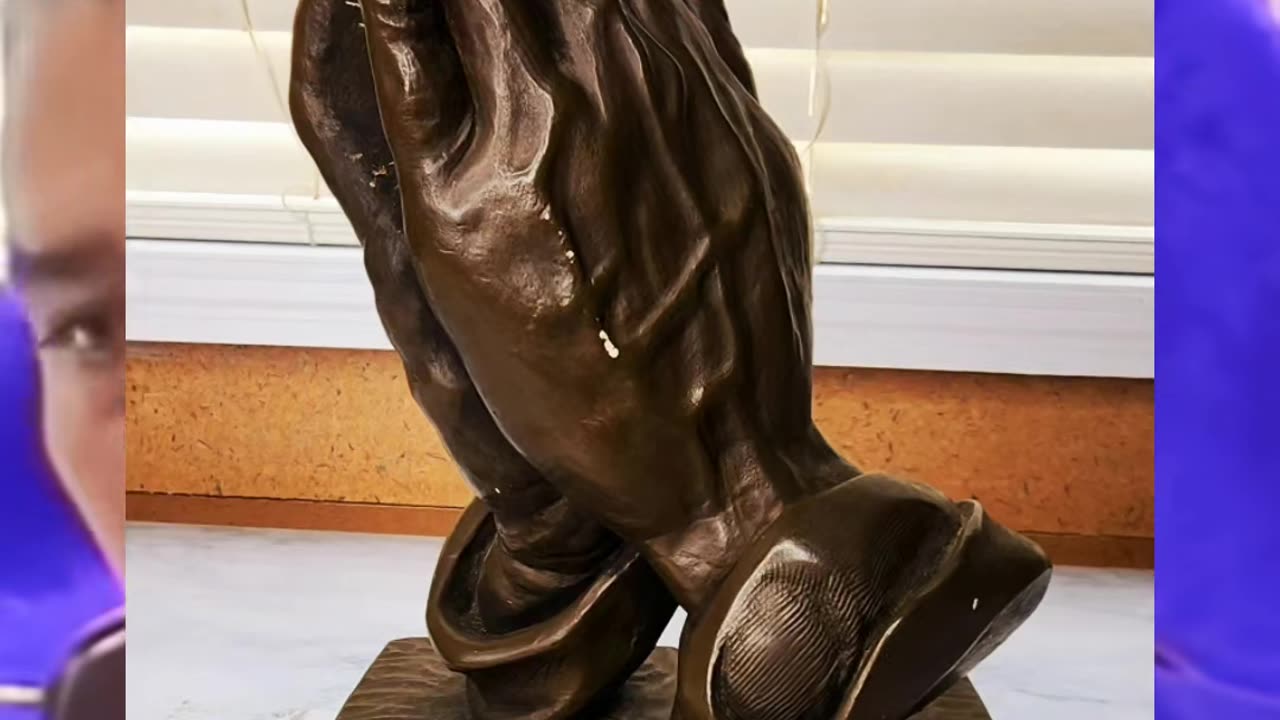
🖼️ The Real Story of the Praying Hands: Resilience and the Eucharist (Fr. Mark Beard)
Father Mark Beard delivers a phenomenal homily, weaving together a famous art legend, personal sacrifice, and the theological reality of the Eucharist. He focuses on the virtue of resilience—the ability to take a hit and get back in the game—as the essence of the Gospel message.
The True Meaning of Dürer's "Praying Hands"
The Poster Child for Resilience (0:03): Father Beard introduces the German artist, Albrecht Dürer, as a poster child for resilience.
A Brother's Sacrifice (0:28): He tells the true story of Albrecht and his brother, who came from a poor family of 18 children. They flipped a coin: the winner would go to the art academy (Albrecht), and the loser would work in the coal mines to support him.
The Price of Art (2:39): Albrecht returned from the academy famous, only to find his brother's hands were brutally broken, arthritic, and unable to hold a glass, let alone draw.
The Most Popular Hands in the World (3:23): As a tribute, Albrecht sculpted his brother's deformed, folded hands, creating the famous image that everyone today mistakenly believes are Christ's hands: Albrecht Dürer's "Praying Hands" . These hands are a testament to sacrifice, perseverance, and true love.
The Eucharist: The Center of Resilience
The Fight is Supernatural (3:36): He asserts that the spiritual fight is supernatural, and the strength to take a hit and keep going comes from the Eucharist.
The Final Call (4:30): Father Beard uses a Mel Gibson reference (Mel Gibson's hands nailed Christ to the cross in The Passion of the Christ) to underscore the seriousness of the crucifixion. He then brings it all back to the core message: Resilience is your ability to get up, dust yourself off, and get back in the game. That is the Gospel.
The "praying hands" are a perfect symbol of the sacrifice required to follow Christ. Are you willing to take the hit and finish the race?
-
 LIVE
LIVE
GritsGG
2 hours agoBO7 Warzone Is Here! Win Streaking! New Leaderboard?
480 watching -
 LIVE
LIVE
ReAnimateHer
19 hours ago $0.03 earnedScreams in the Fog | DBD Live
167 watching -
 LIVE
LIVE
Grant Cardone
4 hours agoHow to Find Your First $1million Profit In Real Estate
1,827 watching -
 LIVE
LIVE
This is the Ray Gaming
59 minutes agoNew Shirt SaturRAY | Rumble Premium Creator
47 watching -
 LIVE
LIVE
PenguinSteve
34 minutes agoLIVE! The Return of the Battlefield 6!
68 watching -
 54:54
54:54
iCkEdMeL
2 hours ago $46.80 earned🔴 BREAKING: Gunman Opens Fire at Tim Pool’s Home
71K34 -
 LIVE
LIVE
GamingWithHemp
2 hours agoPlaying Metroid Prime 4 episode 1 A new beginning
93 watching -
 2:30:55
I_Came_With_Fire_Podcast
12 hours agoPuerto Rico, Corruption, Ther Sterilization of Women, and the Bankers Behind it All
19.9K16 -
![Mr & Mrs X - [DS] Pushing Division, Traitors Will Be Exposed, Hold The Line - EP 18](https://1a-1791.com/video/fwe2/96/s8/1/w/U/W/F/wUWFz.0kob-small-Mr-and-Mrs-X-DS-Pushing-Div.jpg) 54:40
54:40
X22 Report
6 hours agoMr & Mrs X - [DS] Pushing Division, Traitors Will Be Exposed, Hold The Line - EP 18
106K29 -
 3:14:03
ttvglamourx
3 hours ago $2.66 earnedHAPPY SATURDAY !DISCORD
26.3K3