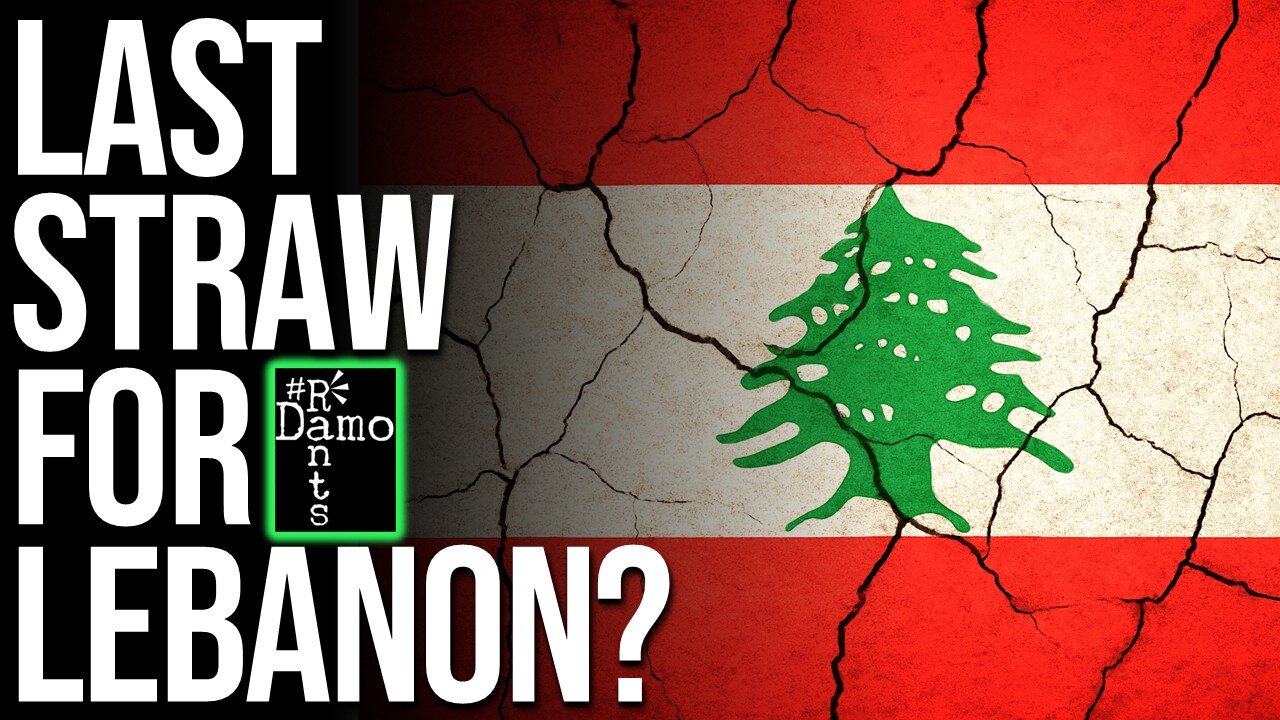
South Lebanon Just Changed Everything Israel Thought It Could Control
Right, so here’s the thing about this so-called ceasefire on the Lebanese front: it’s only ever been a ceasefire if you squint hard enough to pretend the body count doesn’t matter. Israel has been hitting refugee camps, blowing up towns, scattering cluster munitions across valleys and calling it restraint, and Lebanon has been told to take it on the chin because apparently that’s what good neighbours do now. Then Israel strolls into Beirut with an airstrike that kills a senior Hezbollah figure and still expects the world to treat this like an unfortunate misunderstanding. You don’t need a map to see what’s happening here. One side has been honouring the deal, the other has been testing how far they can push before anyone notices the ceasefire is a corpse. And if this wasn’t the last straw for Hezbollah, you’d have to ask what would be.
Right, so a ceasefire only exists when both sides stop shooting, and Israel hasn’t stopped for more than five minutes at any point in the last year as far as Lebanon is concerned. Lebanon kept its side of Resolution 1701, Hezbollah held its fire, and Israel carried on as if the agreement was a technicality, the most recent events consisting of hitting refugee camps, dropping cluster munitions into rural valleys, killing officials in the south and now assassinating a senior figure in Beirut. So the idea that this thing has “fallen apart” is too generous by half. You can’t fall apart if you were never intact. What we’re looking at is a ceasefire being performed on one side and ignored on the other to greater and greater extent at that and Israel has been ignoring it from day one. That’s the situation on the Lebanese front right now. Israel has been escalating for a year straight, and Hezbollah has been holding its fire for a year straight. Because when Israel carried out an assassination in Beirut, in a city that was supposed to be safe under the terms both sides claimed to accept, what you saw wasn’t a sudden escalation, you saw the moment where the sham finally collapsed under the weight of its own contradictions.
The thing about this front is that the pressure didn’t begin with the assassination, it’s been building step by step, and Lebanon has been absorbing the damage because the state can’t fight back and Hezbollah has been choosing not to escalate.
Let’s start with the attack on the Palestinian refugee camp in Lebanon. Over a dozen people killed in a single set of Israeli strikes in the south in the space of a day is not an accident or a misunderstanding, and you can see why Palestinians called it a massacre, because it hit a densely populated area, and the numbers are plain enough. When thirteen people are killed in a camp that has no recognised military infrastructure inside it and Israel is still claiming it was hitting a compound, you’re not dealing with a targeted strike, you’re dealing with a government that has stopped pretending that civilian areas are off-limits.
That’s the first sign that the ceasefire had become meaningless for Israel. When the quiet holds on the Lebanese side and Israel still bombs a refugee camp, the message is obvious: Hezbollah’s restraint won’t buy safety for anyone else. And you can see how quickly the pattern expands. A town like Al-Tiri gets hit next, and officials start talking about children and students being caught in the blast, and the point is that this isn’t a border area, this isn’t some disputed hillside in the south, this is a civilian settlement. When the speaker of the Lebanese parliament Nabih Berri says Israel is targeting civilians and Lebanon is still getting blamed even though it’s observing Resolution 1701, the UN mandate supposedly keeping the peace on the border with UN oversight in the form of UNIFIL peacekeepers, what he’s really saying is the country has no leverage left. The state can file complaints, it can call for Security Council sessions, but it can’t stop a single missile, and everyone knows it.
That would be bad enough, but then you add what was uncovered in the valleys further east, because that tells you the strategy isn’t just about sending messages, it’s about shaping the battlefield when there shouldn’t even be a battlefield right now. When remnants of cluster munitions start turning up in three separate locations, and specialists identify exactly what the weapons were, you get a different sort of signal. These aren’t weapons that hit a single house or a single car, these are weapons that spread dozens of bomblets across an area and keep killing for years, as they have a rotten tendency to fail, only to go orff much later. When each shell carries nine submunitions and each submunition explodes into over a thousand tungsten fragments, and when each missile contains sixty-plus bomblets that don’t always go off the first time, you realise you’re not looking at a strike, you’re looking at contamination. Lebanon is still clearing bomblets from the last time Israel used these, and now there are new ones scattered across rural areas that people rely on for their livelihoods. You don’t use that kind of weapon if you intend to keep a ceasefire alive. You use it if you’re preparing for a situation where you might want those areas depopulated, inaccessible, or dangerous for anyone moving through them later.
So you follow the escalation. Civilian casualties mount. The types of weapons change. The areas being hit expand. Then you get the targeted killing of a local official, Hussein Yassine Hussein, in the south, which is Israel pushing even harder on the assumption that Hezbollah won’t react. By this point the message is simple: Israel is acting as though the ceasefire constraints apply only to the Lebanese side and functionally they aren’t wrong. There’s a reason nobody in the Lebanese government dares to pretend they can stop this. The army can’t challenge Israeli jets. The president Joseph Aoun can’t threaten retaliation. The cabinet can issue condemnations until the lights go out and it won’t change anything, which is why the anger coming out of various political blocs feels like resignation. Everyone knows Israel is escalating because nothing is pushing back.
This is the background you need before you even get to Beirut. People say the assassination is the moment everything changed, but it didn’t come out of the blue. It sits on top of a pile of dead civilians, contaminated land, shattered infrastructure, and a year’s worth of strikes that Lebanon couldn’t respond to. The hit in Beirut is the first time Israel has gone into the capital during the ceasefire to take out a senior Hezbollah official, and that’s why it feels different, because Beirut is not just another grid square. Beirut is the national centre. It’s supposed to be the place Israel won’t hit unless a full war is underway, and that’s why it lands like a political shockwave. The point wasn’t just to remove a Hezbollah figure. The point was to show that Israel no longer recognises any red lines at all, and to demonstrate that if Hezbollah won’t fire back, there’s no boundary left on the map.
You can see how that lands inside Lebanon. This isn’t something the Lebanese state can swallow quietly. Even people who oppose Hezbollah’s entire role in the country don’t want the capital treated as a target zone. When a foreign military bombs Beirut and kills a senior figure, the state looks powerless, humiliated, and exposed, and the president looks like he’s presiding over a country that can’t even protect its own capital. You don’t need to like Hezbollah to see the political reality here. If the state can’t retaliate and Hezbollah doesn’t retaliate, then effectively nobody is defending Lebanon. And that is not something you can sustain, because it destroys the basic idea that Lebanon has any control over its own airspace, its own borders, or its own political life.
That’s why the assassination of Hezbollah Chief of Staff Haytham Tabatabai is a genuine turning point, not because of who was killed but because of where it happened and when. When Hezbollah says a red line has been crossed, they mean it. They don’t say that casually. They don’t use that language unless they are committing themselves to action. And that’s where the trap closes, because any action they take brings the risk of escalation, and any action they don’t take invites even more Israeli strikes. You don’t need to infer motives to see the logic. Israel has been escalating while Hezbollah has held fire, so Israel is testing how far the quiet will stretch and whether Hezbollah still has any deterrent capacity at all. If Hezbollah lets this pass, they’re admitting that even a hit in the capital won’t bring consequences, and if Israel believes that, the next strike will be deeper and bolder than this one.
Lebanon’s problem is that the government has no options. It can’t retaliate militarily. It can’t protect its own territory. It can’t prevent future strikes. So all the pressure lands on Hezbollah, because they are the only force in the country capable of responding, and they know that if they don’t do it now, their deterrent value collapses and Israel will treat the entire country as an open field. That’s why this isn’t just another strike. This is the moment where Hezbollah’s restraint stops looking like strategic patience and starts looking like paralysis, and they can’t afford that. Not with their own supporters watching, not with the Lebanese public watching, not with Palestinian groups pointing to the earlier massacres, and not with Israel signalling that another strike in Beirut is always an option.
This is therefore the moment where the paper ceasefire and the real situation finally diverge too far to reconcile. On paper, the ceasefire still exists. In practice, Israel has been acting as though it ended months ago. You see that in the bodies pulled from the rubble in Sidon. You see that in the cluster munitions found in rural valleys. You see it in the officials killed in the south. And you see it in the footage from Beirut. This is a sequence, not a surprise. The assassination is the culmination of a year’s worth of tests that Israel has kept pushing because nothing pushed back.
You can watch how a situation like this locks itself into place. Israel has been escalating the scale, the depth, and the boldness of its strikes, and every time Hezbollah has chosen not to escalate back, Israel has treated that as licence to move further. That isn’t speculation, it’s the observable pattern. You start with civilian areas in the south, test the reaction, see none, then expand the radius of strikes. You start using weapons that contaminate large areas and carry long-term risks for villagers returning home, and when that still doesn’t draw fire, you escalate again. Then you test targeted killings. Then you take the shot in Beirut. Each stage is a probe, and each stage makes it clear to Israel that the quiet is holding because Lebanon is absorbing everything without hitting back.
What Hezbollah has to decide now is what their deterrence is worth, because deterrence isn’t a slogan, it’s the belief that if you hit us, you will pay. If Israel stops believing that, Hezbollah’s entire logic collapses. There’s no way around that. This is why the term “red line” isn’t rhetorical. It is the point in their doctrine where restraint ends. They can absorb civilian deaths in the south without escalation, because those communities have always borne the brunt of conflict and Hezbollah can frame those losses as part of the ongoing confrontation. They can even absorb targeted killings in southern towns, because Israel does that whenever it feels the need and Hezbollah can respond indirectly later. But they cannot absorb an assassination in Beirut without answering. That is a structural fact of their political role inside Lebanon as much as it is a strategic fact of their military stance against Israel. There’s no version of this where Hezbollah does nothing and keeps any credibility at all.
The thing is, Hezbollah doesn’t want war. It knows the cost of a full conflict better than anyone. The last time the front blew open, Lebanon was flattened, and the country hasn’t recovered. Factor in the retaliations against Israel in solidarity with Gaza and then the pager attack and this just dots the I’s and crosses the t’s of the situation. The economy is on life support. The state barely functions. The army is underfunded. The political blocs are fractured, and nobody has the appetite or the capacity for a 2006-level confrontation. Israel knows this. It’s part of why Israel is pushing. And this is where you can see the distinction between what Hezbollah wants and what the situation is forcing them into. They can’t escalate all the way. They can’t declare that the ceasefire is gone and open fire across the front. That leads straight to a war Lebanon cannot manage. But they also can’t stay quiet. That leads straight to Israel escalating again, and that erodes their deterrent power even further.
So Hezbollah has to find the space in between: enough of a retaliation to show the Beirut hit has a price, but not enough of one to force Israel into a major response. That’s a tightrope. They are dealing with an opponent that has already shown it’s willing to cross lines, and that will see any hesitation as an invitation to test again. You can see how dangerous that is, because once this pattern sets in, miscalculation becomes inevitable. One side fires one strike too far, the other side responds harder than planned, and suddenly you’re in a spiral where both sides are acting from momentum rather than logic. But this is what happens when only one side believes the ceasefire still matters.
You can see the pressure from the Lebanese side too, because this isn’t just about Hezbollah’s internal politics. The government cannot defend the country, and that means every time Israel strikes, Hezbollah takes the political blame if nothing happens in response. Lebanon isn’t united, but it does agree on one thing: Israel hitting the capital is not acceptable. When Beirut gets bombed, it doesn’t feel like an attack on Hezbollah alone. It feels like an attack on the country. And that’s why you saw condemnation from different political blocs, even ones that want Hezbollah disarmed. Nobody wants to live in a country where the capital is open to foreign strikes whenever the neighbour decides it needs to send a message. That’s why the pressure is national now, not just organisational. Hezbollah isn’t just responding for itself anymore. It’s responding because Lebanon is watching.
This is the point where the state’s paralysis becomes part of the crisis. Lebanon has a president who can’t act, an army that can’t defend the airspace, a government that can’t keep the lights on, and a parliament that can issue statements but can’t enforce anything. So Hezbollah becomes the only actor with any actual power, but how much is debatable since those aforementioned pager attacks. But when the only actor with power is being directly attacked, the idea that they should sit quietly and wait for the next one still becomes politically ridiculous. The reason the assassination is a turning point is that it forces Hezbollah to choose between its own survival as a deterrent force and the stability of the country, and they can’t choose the latter without losing the former. Which means the situation is now structurally unstable no matter what they do.
This is why you can talk about the assassination as a kind of last straw now. You look at the sequence. Refugee camp. Civilian town. Cluster munitions. Targeted killings. A hit on the capital. Each step is heavier than the last, each step is deeper into Lebanon’s territory, each step is a clearer signal that Israel doesn’t care if the ceasefire holds or not. When a state is repeatedly attacking a neighbour’s civilian areas, using weapons banned in most of the world, killing officials, and then hitting the capital, you can stop pretending the arrangement is intact. The ceasefire is only real if both sides believe the consequences are symmetrical. That hasn’t been true for months. Israel is acting with impunity because Hezbollah let the earlier escalations pass for the sake of preventing a wider conflict. But once that logic reaches Beirut, there’s nowhere left to hide.
That’s the real shape of the crisis: a ceasefire that was being kept on life support by one side while the other side had already walked away. The assassination is just the moment where the imbalance becomes undeniable. Hezbollah’s reaction here isn’t a question of sympathy or support — it’s a question of how armed groups behave when they are struck inside their own political heartland. When a force operating in any conflict zone absorbs an assassination in the capital without any form of response, it signals to its opponent that further operations are unlikely to carry cost. That isn’t endorsement, it’s just the basic mechanics of conflict behaviour. If Israel believes there will be no consequence for a hit in Beirut, it may well escalate again, because that is how deterrence logic operates in practice. The danger isn’t whether Hezbollah chooses to act — the danger is what Israel assumes if nothing happens, because assumptions like that are how frontlines destabilise and how wider conflicts ignite. That’s why this moment feels like a pivot. Not because Lebanon chose it, but because Israel forced it. And not because Hezbollah wants it, but because they’ve been backed into it. This has been a year of Israeli escalation against a country that was keeping its side of the agreement, and the assassination is the moment that made the cost of non-response higher than the cost of response. Every factor points in the same direction. Israel has crossed lines repeatedly. Lebanon cannot protect itself. Hezbollah has to decide what the line actually means. And the region is watching, because the front doesn’t just involve Lebanon; it involves Palestinian groups, Iranian expectations, and a political environment where everyone knows deterrence is shifting.
If you step back, the verdict is obvious. The ceasefire hasn’t collapsed because of one event. It has collapsed because of a pattern that made this event inevitable. A ceasefire that only restricts one side is not a ceasefire. It’s a holding pattern waiting to be broken. Israel broke it in practice months ago. The assassination in Beirut is just the moment where the political consequences finally hit the surface. And now Hezbollah has to answer, because failing to answer is worse than anything the answer might trigger. That’s the logic of deterrence. That’s the logic of survival. And that’s why we’re standing in the gap between quiet and confrontation, knowing full well which way the pressure is pushing.
Israel might end up wishing they hadn’t gone here if Hezbollah do end up retaliating, that is certainly the case with Syria it would seem as Benjamin Netanyahu parades around more illegally occupied territory, which might now end up leading to a confrontation with Russia – check out the details of that story here.
Please do also hit like, share and subscribe if you haven’t done so already so as to ensure you don’t miss out on all new daily content as well as spreading the word and helping to support the channel at the same time which is very much appreciated, holding power to account for ordinary working class people and I will hopefully catch you on the next one. Cheers folks.
-
 14:17
14:17
RTT: Guns & Gear
16 hours ago $2.33 earnedBest Budget RMR Red Dot 2025? Gideon Optics Granite Review
15.8K3 -
 LIVE
LIVE
BEK TV
23 hours agoTrent Loos in the Morning - 12/05/2025
304 watching -
 LIVE
LIVE
The Bubba Army
22 hours agoWill Michael Jordan TAKE DOWN NASCAR - Bubba the Love Sponge® Show | 12/05/25
1,326 watching -
 35:55
35:55
ZeeeMedia
15 hours agoPfizer mRNA in Over 88% of Human Placentas, Sperm & Blood | Daily Pulse Ep 156
19.6K106 -
 LIVE
LIVE
Pickleball Now
5 hours agoLive: IPBL 2025 Day 5 | Final Day of League Stage Set for Explosive Showdowns
242 watching -
 9:03
9:03
MattMorseTV
18 hours ago $20.85 earnedIlhan Omar just got BAD NEWS.
47.1K96 -
 2:02:41
Side Scrollers Podcast
22 hours agoMetroid Prime 4 ROASTED + Roblox BANNED for LGBT Propaganda + The “R-Word” + More | Side Scrollers
148K15 -
 16:38
16:38
Nikko Ortiz
16 hours agoVeteran Tactically Acquires Everything…
31.6K1 -
 20:19
20:19
MetatronHistory
2 days agoThe Mystery of Catacombs of Paris REVEALED
22.1K3 -
 21:57
21:57
GritsGG
20 hours agoBO7 Warzone Patch Notes! My Thoughts! (Most Wins in 13,000+)
25.7K