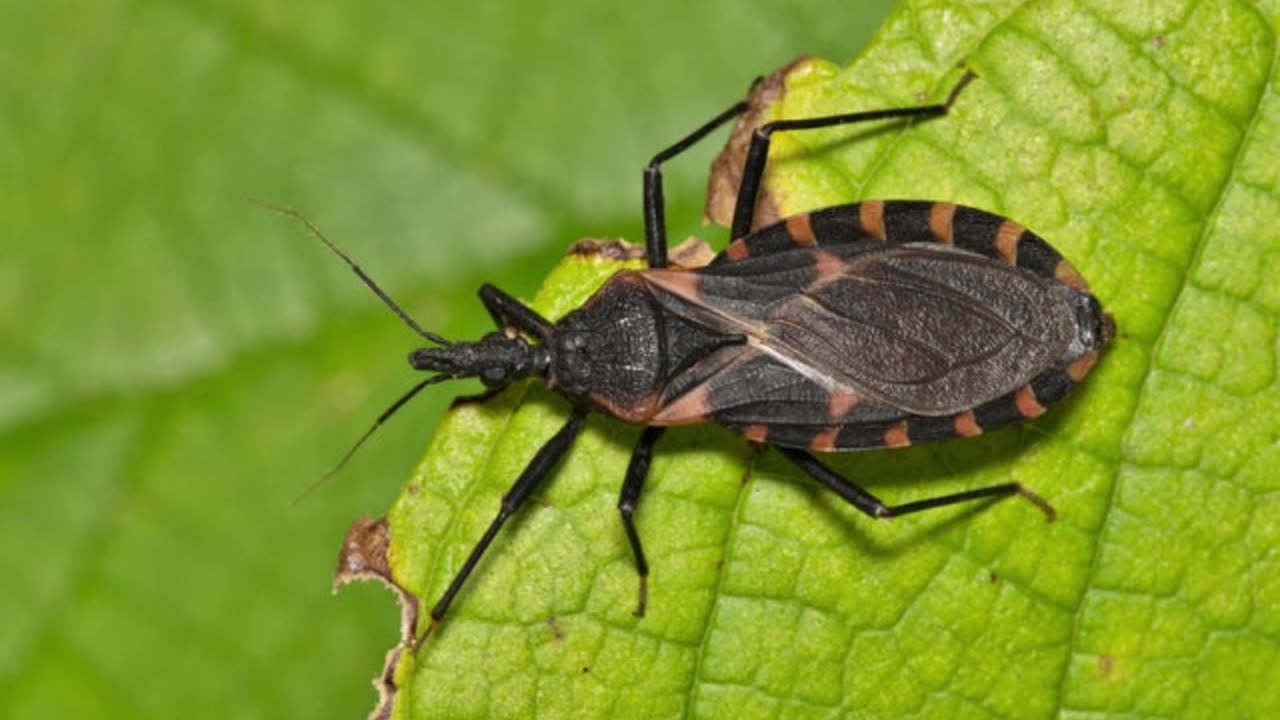
Silent Killer in Plain Sight: The Parasitic Disease Spreading Across US States
#Chagas #KissingBugs #SilentKiller #PublicHealth #InfectiousDisease #VectorBorne #USHealth #EpidemicAlert #EmergingThreat #HealthNews #WhatYouNeedToKnow #StaySafeRecommended #Texas #Arizona
A little-known but potentially deadly parasitic infection long associated with Latin America is now drawing urgent attention in the United States. Researchers and public-health experts are warning that Chagas disease, caused by the parasite Trypanosoma cruzi and transmitted by triatomine “kissing bugs,” has been detected in people and local insect and animal populations across multiple states, prompting some investigators to recommend it be classified as endemic in parts of the U.S..The geographic footprint of infections is expanding: recent analyses and maps show confirmed human cases in several states and evidence of the parasite in wildlife and insect vectors in many more, with some estimates suggesting hundreds of thousands of Americans may already be infected, most without knowing it. That latent, undercounted burden is why public-health researchers describe Chagas as a “silent killer”: infections can remain clinically invisible for years while causing progressive, irreversible damage.Transmission is chiefly linked to triatomine bugs that feed on blood and can leave infectious feces near bite sites, but the parasite’s ecology is broad. Wild mammals such as rodents, raccoons, and other mammals act as reservoirs, and infected bugs have been found in urban, suburban, and rural settings alike, increasing opportunities for human and pet exposure beyond traditionally recognized risk areas. Local transmission, cases not related to travel—has been documented, underscoring that this is not only an imported-disease problem.Clinically, Chagas can present acutely with mild or no symptoms and later progress to chronic disease that damages the heart or digestive tract, causing heart failure, arrhythmias, enlarged organs, stroke, or sudden death. Antiparasitic treatment is most effective when given early, but routine screening is limited and many infected people go undiagnosed until serious complications appear. Expanded clinician awareness, targeted screening of at-risk populations, and earlier access to treatment can prevent severe outcomes for many patients.Addressing this emerging threat requires coordinated action: improved surveillance and reporting, vector-control and habitat management where triatomine bugs thrive, clinician education to recognize and test for Chagas, and public outreach so people understand risk and preventive measures. Recognizing and responding to local transmission now can reduce the long-term human and health-system costs of a disease that, left unseen, continues to kill quietly.
-
 2:55:52
SOLTEKGG
3 hours agoLIVE - NOT LOSING A MATCH - NEW PC - !pc
16.8K2 -
 LIVE
LIVE
ThatStarWarsGirl
3 hours agoTSWG LIVE: Stargate Is BACK! EFAPing Michael Shanks Interview with GUEST!!!
245 watching -
 LIVE
LIVE
MissesMaam
4 hours agoStardew Co-Op 💚✨
47 watching -
 1:32:46
Glenn Greenwald
5 hours agoHillary Blames TikTok for Anti-Israel Sentiment; MAGA Sycophants Gain Pentagon Press Access; Who Should Win Anti-Semite of the Year? See the Top 10 Finalists | SYSTEM UPDATE #552
109K89 -
 56:12
56:12
Flyover Conservatives
22 hours ago100% Chance the Grid Fails: Why No One Is Fixing It (and How Easy It Is) - Tommy Waller | FOC Show
19K4 -
 LIVE
LIVE
JDubGameN
4 hours agoStarlink Network Test Stream! | Road to 100 Followers
275 watching -
 2:17:31
The Daily Signal
7 hours ago $5.22 earned🚨BREAKING: Tennessee Congressional Election Results, Minneapolis Police to "Intervene" Against ICE,
24.8K6 -
 1:52:47
megimu32
3 hours agoON THE SUBJECT: Christmas Vacation Is UNTOUCHABLE!
14.8K4 -
 59:56
59:56
Sarah Westall
4 hours agoNeurostrike, Cognitive Targeting & the New Tech Arms Race w/ Professor Armin Krishnan
13.3K2 -
 2:52:28
Nikko Ortiz
6 hours agoNo More Gear Fear... | Rumble LIVE
21.8K1