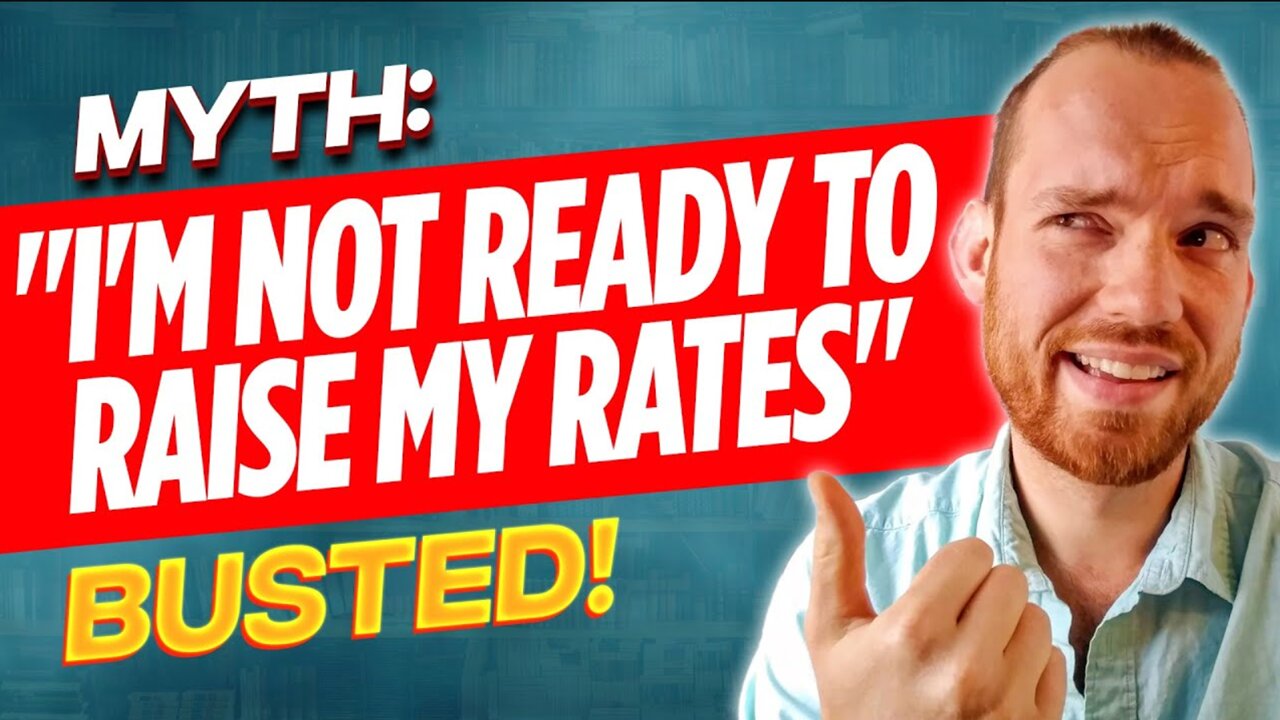
Celebrity Ghostwriter & Writing Coach Joshua Lisec Busts Myth: “I shouldn't raise my writing rates.”
👉 Write a useful book that converts readers into high-paying clients. Free training shows you how: https://lisecghostwriting.com/golden/ 📖
Joshua Lisec, the celebrity ghostwriter and writing coach known for his no-nonsense approach to business growth, challenges one of the most damaging beliefs in the writing world: “I shouldn’t raise my writing rates.” In this powerful new video, Lisec dismantles the myth that keeps countless freelance writers stuck earning less than their skills deserve. He shares what separates writers who make money writing articles and make money writing online at premium rates from those who never seem to move beyond low-paying gigs.
The video traces Lisec’s journey from earning a mere $1.67 an hour to regularly closing five-figure ghostwriting deals. His transformation wasn’t luck—it was the result of mastering pricing strategy, understanding how much to charge for freelance work, and building long-term systems that generate steady freelance writer income. Viewers who want to learn how to make money as a creative writer will find every insight applicable and actionable, especially if they’ve ever asked themselves, “How much should I pay a freelance writer?” or “How much do freelance writers make per article?”
Lisec makes it clear that freelance writing rates are not simply about improving one’s prose or accumulating more clients—they’re about mindset, positioning, and persuasive value. As a writing coach, he explains that writers who charge more don’t do so out of arrogance but because they understand the true worth of their work. That’s the real lesson behind his success as a celebrity ghostwriter: knowing what clients value and structuring services around that.
The video explores how freelance writers can escape the endless cycle of low-paying jobs by sending a freelance rate increase letter grounded in confidence and persuasion. Lisec shows that raising rates isn’t just about asking for more money—it’s about offering more value, mastering persuasive writing, and attracting better clients who appreciate top-tier talent. He contrasts writers who keep their freelance writer salary per article stagnant year after year with those who learn how to charge more by demonstrating credibility, authority, and results.
For many, the fear of losing clients stops them from increasing rates. Lisec breaks down why that fear is misplaced. Clients who balk at fair prices are often those who drain time and energy without offering long-term rewards. Meanwhile, high-caliber clients—the kind that pay well and respect a writer’s time—seek out professionals who confidently state how much they charge and why. By following Lisec’s pricing strategy, freelance writers can learn how to make money as a creative writer not through hustle or luck, but through structure and strategic communication.
He also tackles a critical question: How much do freelance editors make, and what can writers learn from them about pricing? The lesson is simple: editors who understand the business side of creativity don’t stay broke. They know their rates, defend them, and attract clients who value excellence. Lisec teaches that writers can do the same when they shift focus from surviving project-to-project to creating scalable systems.
Throughout the discussion, Lisec uses examples from his early career to prove that anyone can turn small beginnings into major wins. He compares those who make money writing online through low-priced gigs with those who build enduring partnerships worth thousands of dollars per month. The difference lies in how they frame their work and the clients they target. His blueprint for success emphasizes consistency, confidence, and clarity about how much to charge for freelance work—the essential foundation for a sustainable freelance writer income.
Lisec urges writers to think bigger. Instead of wondering, “How much should I pay a freelance writer?” or “How much do freelance writers make per article?”, he encourages them to ask, “What kind of clients do I want to work with?” and “What results do I deliver that justify premium rates?” That’s where persuasive writing becomes more than a craft—it becomes a business tool. Writers who master persuasion can elevate their careers, attract influential clients, and command freelance writing rates that reflect their expertise.
For those unsure how to begin, Lisec presents the freelance rate increase letter as a practical step. Rather than apologizing for higher prices, he teaches writers to communicate with authority and evidence—showing how their experience, reliability, and quality make them worth the investment. The video provides a wake-up call for writers who’ve been undercharging for years, proving that a simple mindset shift can unlock exponential income growth.
The transformation Lisec describes isn’t hypothetical. His journey from underpaid freelancer to celebrity ghostwriter earning $50,000-plus per project demonstrates that anyone willing to apply discipline and strategy can do the same. Viewers will learn why relying on slow, incremental price hikes isn’t enough and how to use pricing strategy to leap ahead of the competition. By learning from Lisec’s framework, freelancers can charge more, earn respect from clients, and finally build the kind of business they can step away from without losing income.
As a writing coach, Lisec doesn’t just talk theory—he provides a roadmap. His insights combine the psychology of persuasive writing with the practicalities of building a profitable creative business. He reveals why so many talented writers remain stuck at low freelance writing rates, emphasizing that skill alone doesn’t dictate success. Positioning, packaging, and mindset do.
This episode offers more than inspiration—it delivers a formula for writers ready to take action. Those who apply Lisec’s methods can transform a struggling freelance career into a stable, high-earning enterprise. The video stands as a guide for anyone determined to make money writing articles, make money writing online, or make money as a creative writer without relying on luck or burnout.
Ultimately, Joshua Lisec proves that the phrase “I shouldn’t raise my writing rates” is the biggest lie in the industry. Writers who believe it remain trapped in underpayment and overwork, while those who challenge it—armed with the right pricing strategy and freelance rate increase letter—gain freedom, confidence, and long-term prosperity. By applying the lessons of this celebrity ghostwriter and writing coach, freelancers can redefine what’s possible for their freelance writer income and their lives.
-
 1:32:46
Glenn Greenwald
3 hours agoHillary Blames TikTok for Anti-Israel Sentiment; MAGA Sycophants Gain Pentagon Press Access; Who Should Win Anti-Semite of the Year? See the Top 10 Finalists | SYSTEM UPDATE #552
85.9K51 -
 LIVE
LIVE
Flyover Conservatives
20 hours ago100% Chance the Grid Fails: Why No One Is Fixing It (and How Easy It Is) - Tommy Waller | FOC Show
220 watching -
 LIVE
LIVE
JDubGameN
1 hour agoStarlink Network Test Stream! | Road to 100 Followers
28 watching -
 2:17:31
The Daily Signal
4 hours ago $0.77 earned🚨BREAKING: Tennessee Congressional Election Results, Minneapolis Police to "Intervene" Against ICE,
7.02K4 -
 LIVE
LIVE
megimu32
1 hour agoON THE SUBJECT: Christmas Vacation Is UNTOUCHABLE!
112 watching -
 LIVE
LIVE
Sarah Westall
2 hours agoNeurostrike, Cognitive Targeting & the New Tech Arms Race w/ Professor Armin Krishnan
197 watching -
 2:52:28
Nikko Ortiz
3 hours agoNo More Gear Fear... | Rumble LIVE
11.7K1 -
 LIVE
LIVE
Razeo
1 hour agoTopside carnage with some fries.,
29 watching -
 1:03:17
BonginoReport
4 hours agoViolent Criminals Run Free in NY & CA - Nightly Scroll w/ Hayley Caronia (Ep.188) - 12/02/2025
113K34 -
 6:33:02
The Rabble Wrangler
18 hours agoBattlefield with The Best in the West
6.99K