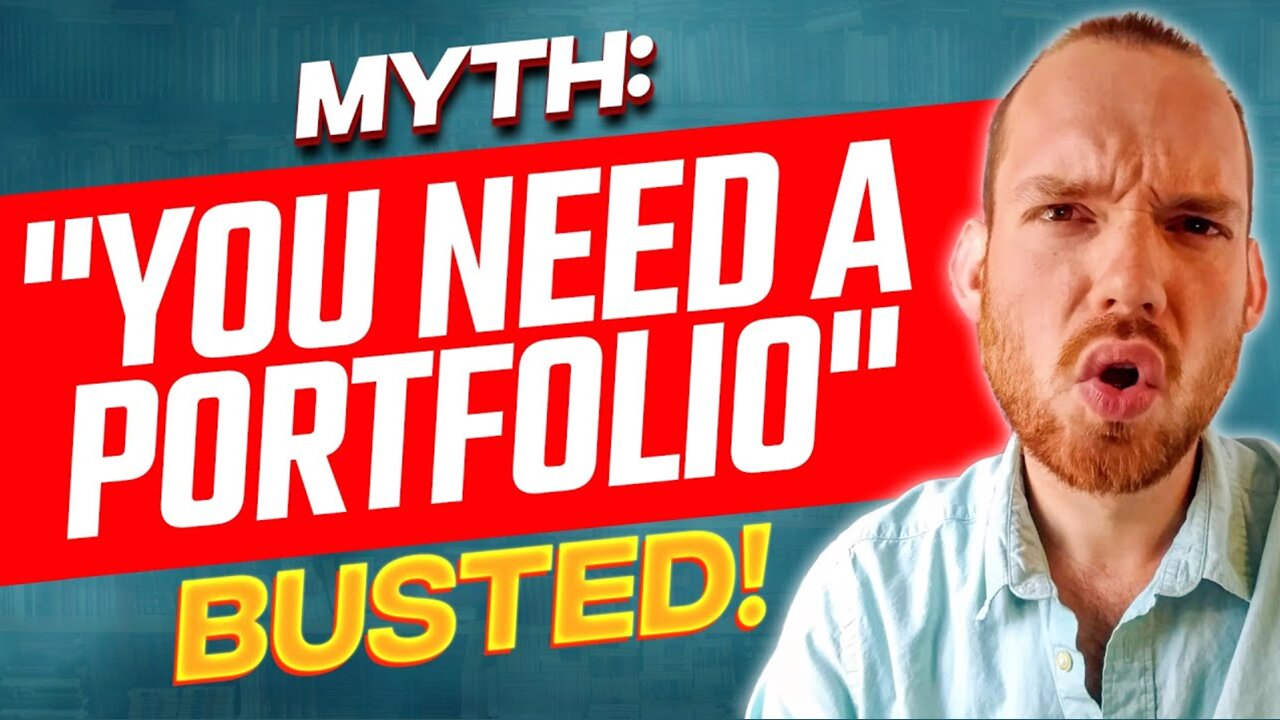
Celebrity Ghostwriter & Writing Coach Joshua Lisec Debunks Ghostwriting Myth 1: You Need a Portfolio
👉 Write a useful book that converts readers into high-paying clients. Free training shows you how: https://lisecghostwriting.com/golden/ 📖
Most freelance writers believe success begins with building a portfolio. Articles, courses, and online gurus all repeat the same formula: create your writer portfolio, send it to potential clients, and wait to get hired. But according to celebrity ghostwriter and writing coach Joshua Lisec, that formula is not only flawed—it’s one of the fastest ways to lose clients before they even respond. In “Celebrity Ghostwriter & Writing Coach Joshua Lisec Debunks Ghostwriting Myth 1: You Need a Portfolio,” Lisec reveals why the traditional freelance writer portfolio strategy backfires and what to do instead if you want steady, high-paying ghostwriting jobs.
For years, Lisec followed the same advice every freelance copywriter hears: collect ghostwriter samples, send them to potential clients, and showcase your versatility. The logic seems sound—until you realize what’s really happening in the minds of aspiring authors. When potential clients read those samples, they’re not seeing skill; they’re judging style. And because every writer portfolio sample naturally reflects the client’s unique voice, no two examples look or sound alike. To authors who don’t understand the nuances of ghostwriting, that inconsistency raises red flags. They start thinking, “This isn’t my tone,” or “I don’t like this style.” As Lisec learned firsthand, sending a copywriter portfolio pdf often leads not to a signed contract—but to silence.
Through his years as a celebrity ghostwriter, Lisec discovered that the best clients aren’t asking, “Can you write?” They’re asking, “Can you deliver results?” That realization changed everything. Instead of trying to impress clients with a writing portfolio pdf or a sleek writer portfolio website, Lisec began showcasing success stories—books that achieved real outcomes. His clients wanted proof that ghostwriting could build credibility, grow influence, or generate income. They didn’t need to see paragraphs of polished prose; they wanted to know what happened after the book was published.
This episode teaches viewers how to shift from displaying writing portfolio examples to demonstrating tangible impact. By emphasizing client results rather than writing samples, ghostwriters and freelancers position themselves as professionals who deliver business outcomes, not just beautiful sentences. Lisec explains that testimonials, reviews, and post-launch success stories speak louder than any freelance writer portfolio could. These forms of persuasive writing act as third-party validation, showing potential clients that investing in professional ghostwriting produces measurable results.
Lisec’s advice overturns one of the biggest misconceptions in the writing industry: that credibility requires a copywriter portfolio. For most ghostwriting jobs, sharing samples is counterproductive. Ghostwriting, by definition, means writing in someone else’s voice. A great ghostwriter disappears behind the author’s tone, message, and style. When potential clients read ghostwriter samples, they often misinterpret what they’re seeing. Instead of thinking, “This writer can adapt to any style,” they think, “This doesn’t sound like me.”
That’s why Lisec recommends replacing the freelance copywriter portfolio with testimonials. Show the emotional satisfaction of authors who held their finished book for the first time. Share the financial impact of books that launched speaking careers, online courses, or consulting offers. These kinds of outcomes are the real selling points. According to Lisec, nothing persuades an author to sign a contract faster than proof that someone else already got the result they’re looking for.
Viewers also learn why obsessing over a writer portfolio or copywriting website example can hold freelancers back. Many aspiring ghostwriters spend months perfecting writing portfolio pdfs, collecting ghostwriter samples, and tweaking their writer portfolio website, all before ever pitching a client. But Lisec argues that this is just professional procrastination. The key to building a successful writing business isn’t in perfecting presentation—it’s in perfecting persuasion.
As a writing coach, Lisec emphasizes the psychology behind buying decisions. When a potential client reads a freelance copywriter portfolio, they aren’t just evaluating the words—they’re subconsciously comparing them to their own imagined voice. Even a flawless sample can feel “off” if it doesn’t match their expectations. That’s why sending a copywriting portfolio no experience sample often ends with rejection. The best strategy, Lisec explains, is to lead with results. Use persuasive writing to highlight how your ghostwriting process has helped real clients. Share metrics, stories, and testimonials that prove your work delivers outcomes.
Lisec’s approach transforms how freelancers market themselves. Instead of pushing ghostwriter samples, they pull clients in with success narratives. A single compelling testimonial—shared on a website, email footer, or LinkedIn profile—can replace an entire writer portfolio. The principle is simple: social proof beats self-promotion every time. Potential clients are far more impressed by another author’s endorsement than by your own examples.
For those who still feel the need to show something tangible, Lisec suggests reframing the writing portfolio examples into case studies. Instead of presenting random snippets of text, walk potential clients through the story of a project: the challenge, the process, and the result. Explain how your persuasive writing helped a client clarify their message, attract media attention, or grow their business. This approach not only demonstrates skill but also reinforces credibility.
Another critical insight Lisec shares concerns confidentiality. Many freelancers assume every ghostwriting job requires signing an NDA that prevents them from sharing anything. In reality, most clients don’t expect that level of secrecy. A short testimonial, a sales ranking, or even a statement like “This book led to a successful speaking tour” can go a long way in proving value—without violating privacy. Lisec’s advice empowers writers to confidently showcase success without compromising trust.
Throughout the discussion, Lisec ties everything back to one foundational principle: persuasive writing is about influence, not information. Sending a writer portfolio pdf informs a client that you can write. Sharing client success stories influences them to hire you. Persuasion isn’t about proving ability—it’s about transferring belief. When potential clients believe that hiring you will lead to their success, they stop asking for samples and start asking how to get started.
By debunking this first major myth—“You need a portfolio”—Lisec gives freelancers permission to stop hiding behind their samples and start leading with stories. His own career as a celebrity ghostwriter demonstrates how effective this mindset shift can be. He built a thriving business without ever needing to flaunt a copywriter portfolio pdf or showcase a writer portfolio website. Instead, he let the voices of satisfied clients do the persuading.
Aspiring writers watching this episode will walk away understanding what a ghostwriter does far beyond typing words. They’ll see that the real value of ghostwriting lies in capturing ideas, shaping narratives, and helping clients achieve results that outlive the project itself. The path to success isn’t paved with polished samples; it’s paved with trust, proof, and results.
By the end, viewers grasp the deeper truth behind Lisec’s message: portfolios don’t sell writing—persuasive writing sells writing. Freelancers who embrace this principle position themselves not as service providers but as trusted partners in their clients’ success. The smartest move any freelance writer can make isn’t perfecting their copywriting portfolio—it’s learning how to tell a success story so compelling that no portfolio is needed at all.
-
 LIVE
LIVE
FyrBorne
12 hours ago🔴Battlefield REDSEC Live M&K Gameplay: Testing Sleeper Loadouts
133 watching -
 28:54
28:54
ZeeeMedia
16 hours agoREAL ID Non-Compliance Fees from 2026 & WW3 Escalation | Daily Pulse Ep 154
9.66K32 -
 LIVE
LIVE
PudgeTV
4 hours ago🔴 Sea of Thieves - Gaming on Rumble | The Three Rumskateers Go Sailing Again!!
143 watching -
 1:27:15
Midnight In The Mountains™
1 hour agoMorning Coffee w/ Midnight & The Early Birds of Rumble | Pudge Made me LATE! |
2.21K2 -
 LIVE
LIVE
Pickleball Now
5 hours agoLive: IPBL 2025 Day 3 | Nonstop Action from India’s Biggest Pickleball League
63 watching -
 1:12:46
MetatronGaming
1 day agoLet's Try Heroes of Might and Magic The Olden Era
40.5K2 -
 1:02:58
Coin Stories with Natalie Brunell
19 hours agoBitcoin’s ‘Silent IPO’ Moment & The Coming AI Shockwave with Jordi Visser
25.4K3 -
 21:06
21:06
Nikko Ortiz
16 hours agoBodycam's Zombie Update Is Crazy...
22.7K3 -
 42:52
42:52
Code Blue Cam
1 day agoDrunk Teacher's First and Last Day at Elementary School
21.4K9 -
 17:11
17:11
MetatronHistory
1 day agoMedieval Christianity in the Historical Context of Power
24.7K6