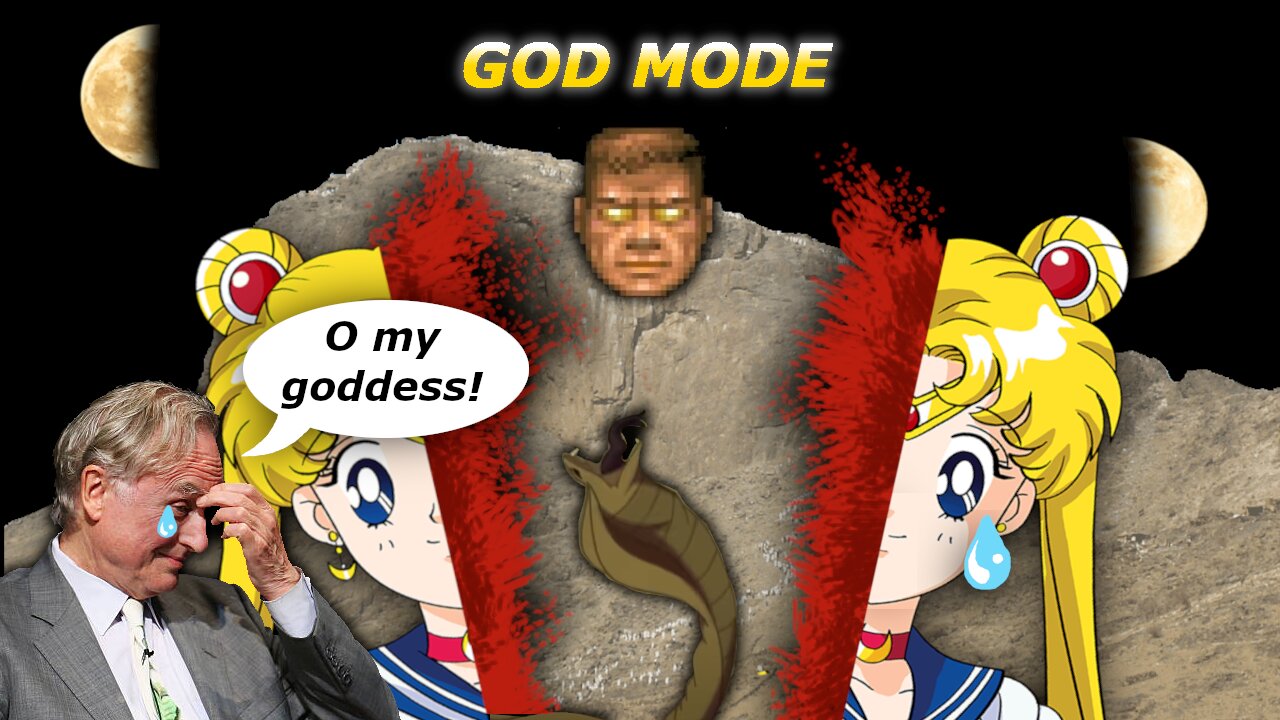
Islam and Science 1/3: Did Muhammad split the moon and scale the heavens?
0:00 Outline
0:18 Claim
4:48 Interpretation
9:09 Significance
15:48 Witnesses
23:48 Explanations
29:03 Conclusion
Is Islamic law predicated on irrational assumptions? The two major claims of skeptics and critics who believe this to be the case are that Muhammad split the moon and ascended the heavens. However, as this video shows, these very examples—which we shall call Muhammad’s ‘Ladder’ and his ‘Hammer’—illustrate the ultra-rationalist and -anti-irrationalist character of Islam and accomplish what no rational argument or scientific discovery can against irrational critics of Islam.
Skeptics at the time of Muhammad—the greatest being his own tribe of Quraysh—asked for a miracle. Not just any miracle. They literally asked for the moon—to be split. Yet, when Muhammad purportedly accomplished this seemingly impossible feat in front of thousands of witnesses, they dismissed it as an illusion (Qur’an 3:144 & Abu Dawud 41:19). From a symbolic aspect, splitting the moon is comparable to Moses’ staff devouring the magicians’ snakes, which represent the Egyptian sun god (2 Kings 18:4).
The counterpart to Muhammad’s Hammer is his Ladder. In a great vision, he traveled from Mecca to Jerusalem in one night, whence he ascended the seven heavens (which correspond to the seven lively virtues) to the Holy of Holies or Elyon (Ar. ‘Illyin) (Qur’an 83:18), followed by a katabasis to the heart of the earth (Qur’an 31:16). Thus, while Muhammad’s Ladder shows the path of transcendence, his Hammer splits the heads of gods or idols, sparing none on earth or in heaven. In particular, the Ladder establishes prayer (Salat) as the means to connect (Sila) to and intercede with God (cp. Genesis 18 & Mishkat al-Masabih 29:121) and attain felicity.
Muhammad’s opponents told him why they rejected his message. His uncle, Abu Lahab, for example, said he does not reject Muhammad, but his message (Qur’an 29:94, Mishkat al-Masabih 29:94 & Tirmidhi 47:415). His nemesis Abu Sufyan, on the other hand, offered to embrace Islam if Muhammad forsook his diverse companions, whom he considered to be inferior (Ibn Majah 37:28). ‘Urwa ibn Mas’ud said he never saw a person as revered as Muhammad (Bukhari 54:19), whose thousands of companions and followers freely offered their property and lives to his cause, as he did (Bukhari 65:131), unlike the Israelites who rejected Moses and plotted to kill him and his (two) followers (Numbers 13-14).
Many of Muhammad’s followers were wont to worship him, despite his forbidding it (Bukhari 23:5). Indeed, it is inconceivable that Muhammad could have achieved such great success and such an exalted status without performing amazing feats or predictions.
In short, when Muhammad’s opponents got the miracle they demanded, their only argument was to call it an illusion, as they couldn’t deny the witnesses, which the Qur’an documents (e.g., vv. 54:1 & 46:10). Muhammad, for his part, didn’t call people to have faith in anything; not in him or his miracles or God. Rather, as verse 12:108 states: “I call to what is plain to see.”
-
 1:22:59
The Quartering
4 hours agoJ6 Pipe Bomber Arrested, Candace Owens TPUSA Debate Predictions & My Staff Caused A Lawsuit!
93.4K55 -
 LIVE
LIVE
Dr Disrespect
7 hours ago🔴LIVE - DR DISRESPECT - WARZONE x BLACK OPS 7 - SEASON 1 INTEGRATION
1,161 watching -
 26:36
26:36
Jasmin Laine
2 hours agoTrump SILENCES Liberal Canada—CEO’s Oval Office Bombshell STUNS Ottawa
4.95K8 -
 27:03
27:03
The Kevin Trudeau Show Limitless
1 day agoThey're Not Hiding Aliens. They're Hiding This.
20.7K32 -
 LIVE
LIVE
LFA TV
20 hours agoLIVE & BREAKING NEWS! | THURSDAY 12/04/25
1,052 watching -
 2:13:10
The HotSeat With Todd Spears
2 hours agoEP 220: Candace Vs. TPUSA (and Why I DON'T CARE)
15.1K9 -

DeVory Darkins
5 hours agoBOMBSHELL: Congress drops BRUTAL NEWS for Tim Walz after Comer announces Probe
196K58 -
 1:15:17
Sean Unpaved
6 hours agoPlayoff Implications On The Line For Cowboys vs. Lions NFC SHOWDOWN! | UNPAVED
65.8K -
 59:30
59:30
Simply Bitcoin
1 day ago $1.27 earnedThe Bitcoin Crucible w/ Alex Stanczyk & Daniel Batten - Episode 11
44.9K3 -
 8:44
8:44
Jamesons Travels
20 hours ago $2.16 earnedCongress Created This Mess…Now Troops Pay the Price
40.3K28