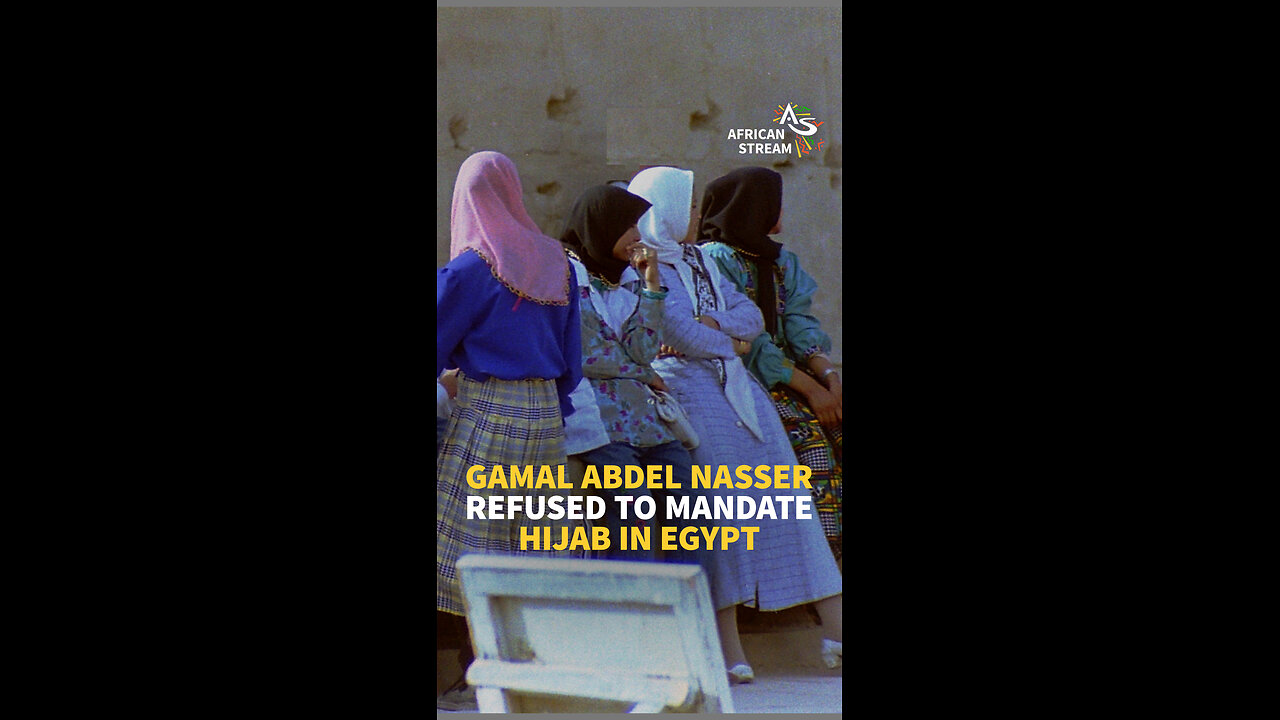
GAMAL ABDEL NASSER REFUSED TO MANDATE HIJAB IN EGYPT
Egypt’s second president, Gamal Abdel Nasser (1918-70), was not only a revolutionary leader who played a key role in the 1952 revolution that overthrew Egypt’s monarchy and led to the British Empire pulling out of the country, but he was also a staunch pan-Africanist. Nasser advocated for the unity of Africans and came to the aid of fellow revolutionaries like the Democratic Republic of the Congo’s Prime Minister Patrice Lumumba (1925-61), providing refuge to his family in Cairo after his assassination by US-, UK- and Belgian-backed Congolese forces in 1961.
Under the leadership of Nasser, the Free Officers Movement overthrew Egyptian King Farouk I in 1952. Egypt underwent a transformative period that shaped its political and economic trajectory for decades to come. Aiming to dismantle the feudal system, revolutionary land reform moved land from the hands of the elite to peasants in what came to be known as a socialist Arab state. Nasser is most fondly known for nationalising the Suez Canal, which helped generate around $100 million per year and became a symbol of national pride.
In this clip, Nasser shares a light-hearted moment from a conversation when the leader of the Muslim Brotherhood asked him in 1953 to mandate the hijab (Muslim head scarf) for women in Egypt. However, Nasser rejected this as he believed it should be left to individual choice. The late Egyptian leader often expressed that the Muslim Brotherhood was deceptive, only seeking to exploit religion to further their ambitions and the interests of colonists and Arab reactionary groups.
-
 2:25
2:25
AfricanStream
5 months agoTHE ZANZIBAR REVOLUTION
520 -
 LIVE
LIVE
DBoss_Firearms
55 minutes agoD'Boss Firearms is LIVE! Help me vote for the Gundies!
85 watching -
 3:14:14
Nerdrotic
6 hours ago $15.54 earnedHollywood PANICS! Netflix WINS Warner Bros | RIP Star Trek - Friday Night Tights 383
122K11 -
 1:33:57
Russell Brand
5 hours agoThe Venezuela Flashpoint: How Fast Could This Spiral? - SF659
147K28 -
 1:26:58
vivafrei
5 hours agoJan. 6 Suspect ADMITS to Planting Bombs, Claims to be Trump SUPPORTER? The Blaze RETRACTS? & MORE!
61.2K106 -
 22:00
22:00
Jasmin Laine
4 hours agoTrump’s Peace Medal Triggered the Biggest Liberal Meltdown of the Year
21.6K23 -
 30:47
30:47
The HotSeat With Todd Spears
5 hours agoEP 221: Bonus Friday Episode! 2025 Spotify Recap
31.7K54 -
![MAHA News [12.5] Glyphosate Study Retracted (MONSANTO), Vaccine News (COVID), DMSO Chat](https://1a-1791.com/video/fwe2/02/s8/1/0/u/D/F/0uDFz.0kob-small-MAHA-News-12.5.jpg) 1:01:00
1:01:00
Badlands Media
15 hours agoMAHA News [12.5] Glyphosate Study Retracted (MONSANTO), Vaccine News (COVID), DMSO Chat
46.2K7 -
 1:11:14
DeVory Darkins
7 hours agoJeffries SCRAMBLES After National Gas Prices hit record low amid AFFORDABILITY CRISIS
225K145 -
 56:44
56:44
The Quartering
7 hours agoSpam Calls Are Out Of Control, Candace Hits Rock Bottom & More Poison Food
69.2K102