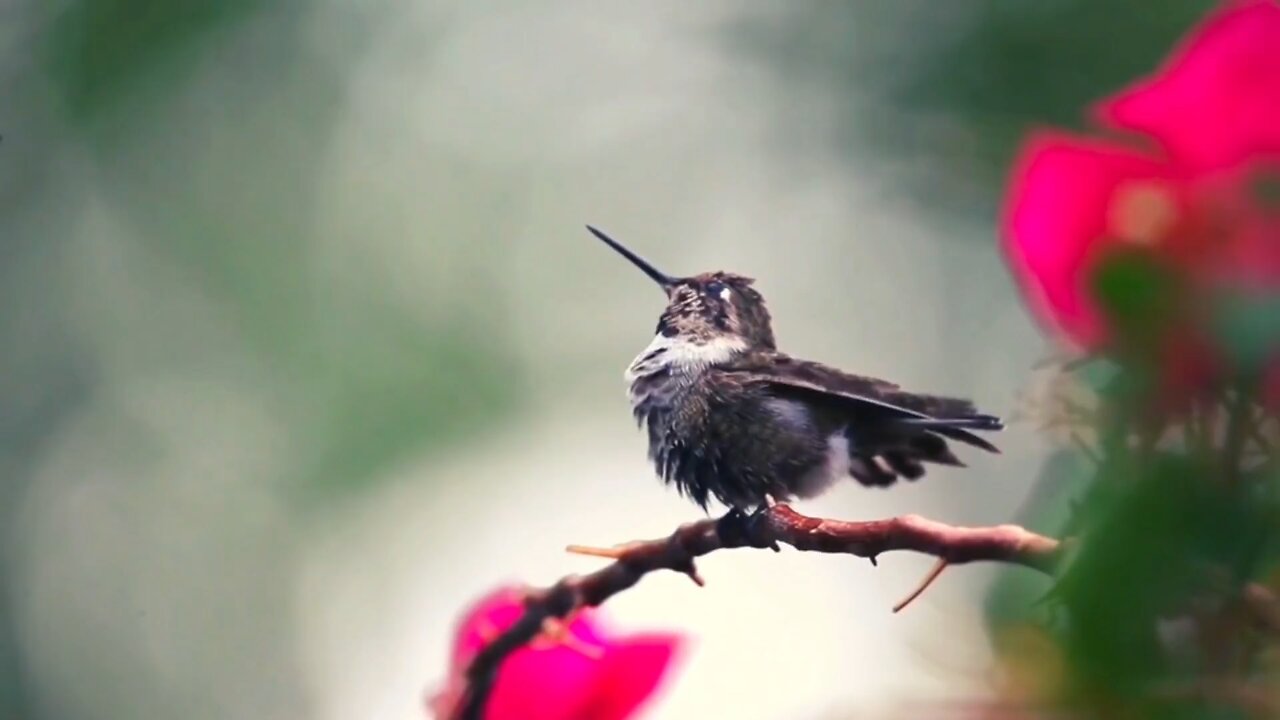
"Hummingbirds: Exploring the Secrets of Nature’s Speedsters"
Hummingbirds are small, vibrant birds known for their exceptional flying abilities and rapid wing beats. They belong to the family Trochilidae and are native to the Americas. Here’s more about hummingbirds:
### Physical Characteristics:
- **Size:** Hummingbirds are among the smallest birds in the world, ranging in size from about 3 to 5 inches in length. The smallest species, the bee hummingbird, is only about 2.5 inches long.
- **Plumage:** They are renowned for their iridescent feathers, which can display a dazzling range of colors due to microscopic platelets that refract light. Common colors include green, red, blue, and purple.
- **Wings:** Hummingbirds have unique wings that can beat rapidly, up to 80 times per second, allowing them to hover in place. This rapid wing movement creates a distinctive humming sound.
### Habitat and Distribution:
- **Range:** Hummingbirds are found exclusively in the Americas, from Alaska to Tierra del Fuego. They are most diverse in Central and South America, particularly in tropical and subtropical regions.
- **Habitat:** They inhabit a variety of environments including tropical rainforests, temperate woodlands, mountain meadows, and even urban areas. Some species migrate seasonally between their breeding and wintering grounds.
### Behavior and Diet:
- **Feeding:** Hummingbirds primarily feed on nectar from flowers, which provides them with the necessary sugars for their high metabolism. They use their specialized long, slender bills and extendable, tube-like tongues to extract nectar. They also consume small insects and spiders for protein, vitamins, and minerals.
- **Hovering:** Their ability to hover is unique among birds and is facilitated by their ball-and-socket shoulder joints, which allow their wings to rotate 180 degrees in all directions.
- **Metabolism:** Hummingbirds have an incredibly high metabolism to support their energy-intensive flying. They can consume twice their body weight in nectar each day.
### Reproduction:
- **Nesting:** Female hummingbirds build small, cup-shaped nests using plant down, spider silk, and other materials. Nests are often camouflaged and can be located in a variety of locations, such as trees, shrubs, or even human-made structures.
- **Eggs and Chicks:** The female lays 1-2 eggs, which are very small (about the size of a pea). Incubation lasts about 2 weeks. After hatching, the chicks are altricial (born undeveloped) and require several weeks of care before they fledge (leave the nest).
### Migration:
- **Long-Distance Migration:** Some species of hummingbirds migrate long distances between their breeding and wintering grounds. For example, the Ruby-throated Hummingbird migrates from North America to Central America or Mexico for the winter.
- **Migration Patterns:** Migration can vary among species, with some making short migrations and others traveling thousands of miles. They navigate using landmarks, the sun, and possibly the Earth’s magnetic field.
### Adaptations and Defense:
- **Camouflage:** Many hummingbirds have evolved colorful plumage that can provide camouflage among flowers or foliage, aiding in their survival by blending in with their surroundings.
- **Aggression:** Hummingbirds are known for their territorial behavior, especially around feeding sites. Males will fiercely defend their feeding territories from other hummingbirds.
### Conservation:
- **Threats:** Some hummingbird species are threatened by habitat loss due to deforestation and climate change. Others face threats from the capture for the pet trade or window collisions.
- **Conservation Efforts:** Efforts to protect hummingbirds include habitat preservation, creating hummingbird-friendly gardens with native plants, and supporting conservation organizations dedicated to protecting these birds.
### Cultural Significance:
- **Symbolism:** Hummingbirds are often associated with joy, love, and resilience in various cultures. They appear in myths and folklore, symbolizing qualities such as beauty and perseverance.
- **Research:** Hummingbirds are also subjects of scientific research due to their unique flying abilities and high metabolic rates. Studies on their flight mechanics and physiology provide insights into bird flight and metabolism.
Hummingbirds are remarkable for their agility, vibrant colors, and important role in pollination. Their fascinating behaviors and adaptations make them a subject of admiration and study around the world.
-
 LIVE
LIVE
Graham Allen
35 minutes agoCandace Owens BACKS DOWN?! It’s Time To Burn All Of This Insanity To The Ground…..
4,545 watching -
 UPCOMING
Wendy Bell Radio
4 hours agoRobbing America Blind
2.3K38 -
 LIVE
LIVE
Chad Prather
14 hours agoHow To Be Used By God By Mastering Patience!
7,067 watching -
 LIVE
LIVE
LFA TV
10 hours agoLIVE & BREAKING NEWS! | FRIDAY 12/05/25
3,590 watching -
 LIVE
LIVE
Game On!
16 hours ago $2.28 earnedHAPPY FOOTBALL FRIDAY! NFL Week 14 Betting Preview!
562 watching -
 1:05:41
Crypto Power Hour
11 hours ago $5.79 earnedBlockchain Solutions w/ U.S. Healthcare Featuring Solum Global
39.5K9 -
 1:18:24
The Illusion of Consensus
1 month ago“Your Math Is WRONG” - Mark Cuban GRILLED Over His NBA COVID Vaccine Mandate | Part 2
11.1K12 -
 14:17
14:17
RTT: Guns & Gear
16 hours ago $2.33 earnedBest Budget RMR Red Dot 2025? Gideon Optics Granite Review
15.8K3 -
 LIVE
LIVE
BEK TV
23 hours agoTrent Loos in the Morning - 12/05/2025
290 watching -
 LIVE
LIVE
The Bubba Army
22 hours agoWill Michael Jordan TAKE DOWN NASCAR - Bubba the Love Sponge® Show | 12/05/25
1,270 watching