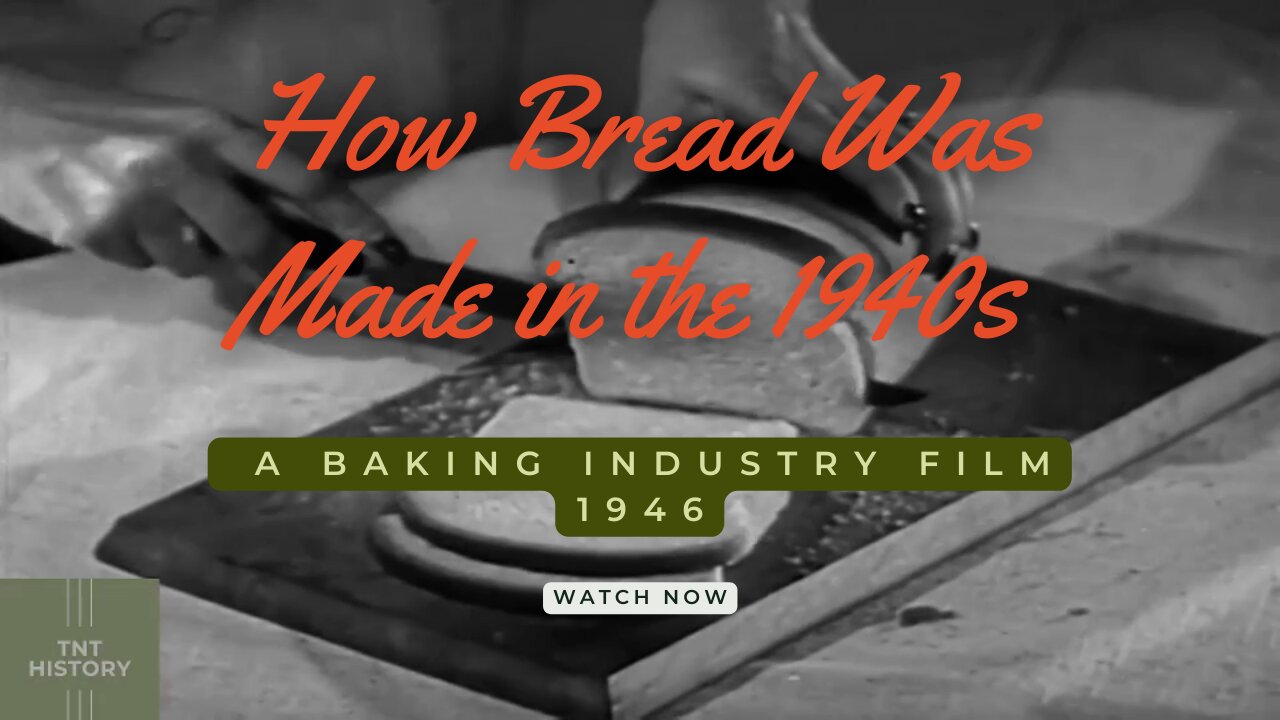
Bread Production: How Bread Was Made in 1942 - A Glimpse into the Past
In 1946, a vocational guidance film provided a comprehensive overview of the baking industry as it existed in the 1940s. The film meticulously explores the various stages and techniques involved in bread production, offering insights into the training required for these roles. Moreover, it distinguishes between large-scale commercial bakeries and the increasingly rare small, family-owned bakeries. Notably, the film offers a behind-the-scenes look at the complete bread-baking process at the Schulze Baking Company Plant, operated by the Interstate Bakeries Corporation, located in Chicago, Illinois.
The 'Your Life's Work' series of films, including this one, often take a somewhat humorous approach by highlighting the "qualifications" needed for various professions, including that of a baker. It humorously points out the unexpected role of physics, chemistry, and mathematics in the art of baking. This film specifically showcases a range of bakery positions, such as the pan loader, with the succinct description that the pan loader's primary task is loading dough into pans.
HISTORICAL CONTEXT:
Bread, a dietary staple created from a dough mixture of flour and water, primarily through baking, has enjoyed worldwide popularity throughout documented history. Its significance dates back to the earliest days of agriculture.
The composition of bread, including the types of flour and other ingredients used, varies significantly across cultures, leading to diverse forms, shapes, sizes, and textures of bread found worldwide. Leavening processes differ as well, ranging from natural sourdough fermentation to the use of chemicals, industrially produced yeast, or high-pressure aeration. In some cases, bread is baked prior to leavening. Additional ingredients like fruits, nuts, and fats may also be incorporated. Commercially produced bread often includes additives to enhance flavor, texture, color, shelf life, and production efficiency.
Bread serves as a versatile accompaniment to any meal throughout the day. It's consumed as a snack, utilized as a primary component in various culinary preparations, such as sandwiches, or used for coating fried items to prevent sticking. Bread forms the essential base of bread pudding and serves as a stuffing material to fill cavities or retain juices.
Beyond its role as sustenance, bread holds significant social and emotional value and plays vital roles in religious rituals and secular culture. Its influence on daily life is reflected in language, idiomatic expressions (e.g., "He stole the bread from my mouth"), religious prayers ("Give us this day our daily bread"), and the etymology of words (e.g., "companion" from Latin "com" meaning "with" and "panis" meaning "bread").
Common bread is typically crafted from wheat-flour dough that is fermented with yeast, allowed to rise, and then baked in an oven. The presence of yeast accounts for the characteristic air pockets found in bread. Due to its high gluten content, common or bread wheat is the most frequently used grain for bread-making, making a substantial contribution to the world's food supply.
However, bread can also be made from the flour of alternative wheat species, such as spelt, emmer, einkorn, and kamut. Non-wheat cereals, including rye, barley, maize (corn), oats, sorghum, millet, and rice, have been used to make bread, typically in combination with wheat flour due to their lower gluten content.
The impact of World War II on the bread industries of the UK and the US was profound. Baking schools were forced to close during this period, resulting in a shortage of skilled bakers when the war eventually concluded. In response to the world's demand for bread, new methods emerged, including the introduction of chemicals into dough, premixes, and specialized machinery. Unfortunately, these innovations led to the near extinction of traditional baking techniques, which were deemed obsolete and financially unsustainable. Traditional bakeries became increasingly scarce during this era.
The introduction of sliced bread in 1928 marked a significant advancement in the baking industry. It was promoted as "the greatest forward step in the baking industry since bread was wrapped." This breakthrough gave rise to the popular expression "the greatest thing since sliced bread." Interestingly, during 1943, U.S. authorities briefly banned sliced bread as a wartime conservation measure.
●Visit Jadesales.shop for Reliable and Affordable Products - Free Shipping on Orders over $45
►Electronics: https://bit.ly/Electronic-Collection
►Health Products: https://bit.ly/Health-Items
►School Supplies: https://bit.ly/Jade-Sales-School-Supplies
#BreadProduction #1942 #BakingHistory
-
 59:47
59:47
TheCrucible
3 hours agoThe Extravaganza! EP: 68 with guest co-host Rob Noerr (12/02/25)
75.7K2 -
 DVR
DVR
Kim Iversen
3 hours agoHegseth Throws Admiral Bradely Overboard | Kash Patel's Bomber Jacket Tantrum
9.16K29 -
 1:29:39
Redacted News
3 hours agoWar Alert! CIA Caught Inside Venezuela Trying to Kill Maduro, Russia Captures 86 cities since Sept
110K85 -
 LIVE
LIVE
Red Pill News
3 hours agoMinnesota Fraud Gets Worse - Walz Under Investigation on Red Pill News Live
3,958 watching -
 1:17:03
vivafrei
4 hours agoMiranda Divine & Dan Bongino Go Fisticuffs! Jillian Michaels & Crowder Go Fisticuffs! AND MORE!
102K45 -
 1:19:31
The Quartering
5 hours agoWoke Church Exposed, Income Taxes To End?, Gross Doordash Video, & Based Chic At Planet Fitness
133K65 -
 24:55
24:55
Stephen Gardner
4 hours ago🔥Trump Just Got THE EVIDENCE we’ve ALL been waiting for!
35.5K40 -
 LIVE
LIVE
LFA TV
21 hours agoLIVE & BREAKING NEWS! | TUESDAY 12/02/25
1,105 watching -
 1:14:03
John Crump Live
4 hours agoDLD Makes His Case For Micro Influencer of The Year
14.4K -
 LIVE
LIVE
freecastle
7 hours agoTAKE UP YOUR CROSS- Then you will call on ME and come and pray to ME, and I will LISTEN to you."
103 watching