If we're not careful, AI hiring could institutionalise discrimination - Euronews
🥇 Bonuses, Promotions, and the Best Online Casino Reviews you can trust: https://bit.ly/BigFunCasinoGame
If we're not careful, AI hiring could institutionalise discrimination - Euronews
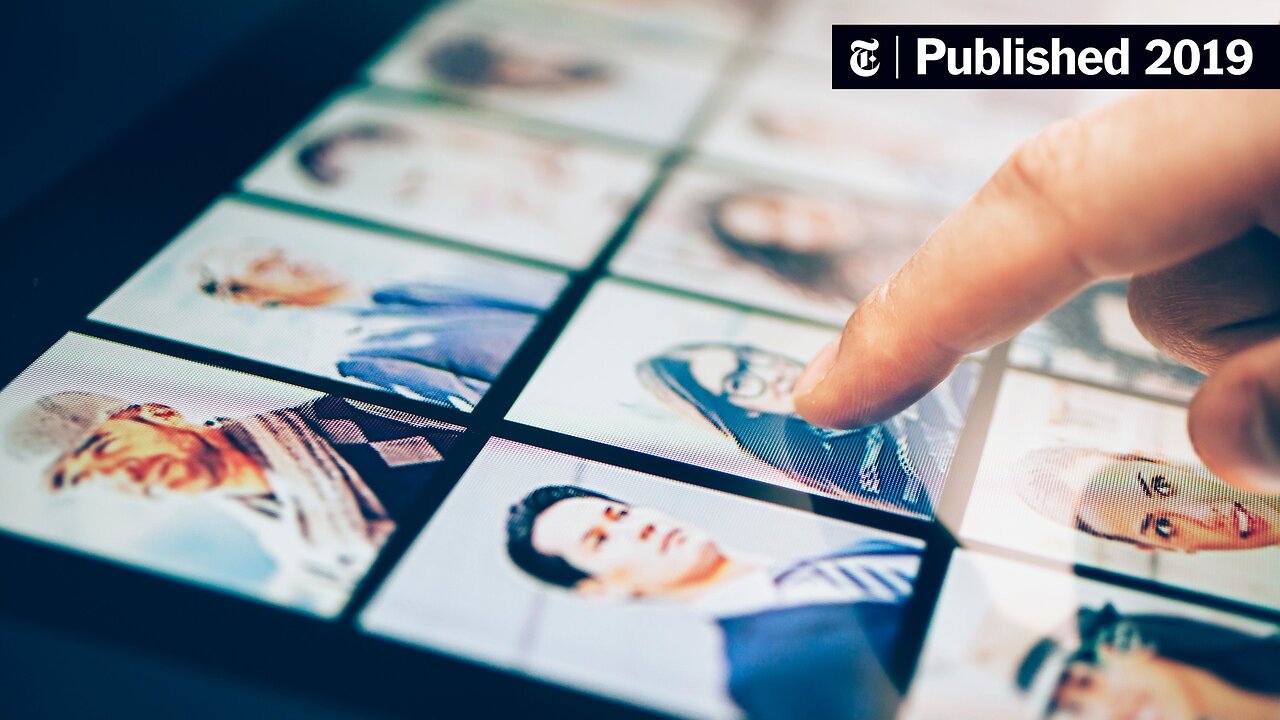
The opinions expressed in this article are those of the author and do not represent in any way the editorial position of Euronews. Relying too heavily on automation and AI is akin to commercial airlines simply using autopilot: there’s too much on the line to dismiss the importance of human intervention, Oz Rashid writes. Since recruiting methods are increasingly relying on artificial intelligence (AI), the principles used to identify qualified individuals have come into question. While these machines seem like a worthy replacement to subjective hiring managers, they can perpetuate historic company and algorithmic bias, discriminate against an applicant's gender or age, and erode the laws in our democracies. Therefore, the world's workforce shouldn’t be selected through AI alone. Trained professionals must be knowledgeable about AI recruiting methods and implement sufficient safeguards to keep programs ethical and the world safe. Cases showing AI bias already exist While AI has the potential to improve many aspects of the workplace, it also has the capability to undermine acceptable hiring practices and exacerbate wealth inequality. A 2022 Cambridge University study revealed how voice and phrenology analyses are unreliable, biased methods for identifying ideal applicant traits. Phrenology, a pseudoscience that claims skull patterns are linked to particular human characteristics, has been heavily contested, and voice analyses can be regarded as another underdeveloped practice not worthy of determining who deserves a job. Since AI hiring tools can unintentionally discriminate against others, they can also be applied consciously as a way to manipulate a candidate pool. The software can easily be hardwired to reject applicants with disabilities, a specific racial background, or based on physical profiles alone. For instance, a case from 2018 showed that while Amazon’s recruitment tool was designed to solicit applicants of all genders, the hiring data used to train the tool was male-dominant. This caused the machine to interpret women as incompatible candidates and reject their applications. Although this stemmed from biased data alone, this detailed analysis could screen applicants on information they didn’t even know they were sharing. In 2019, the company HireVue released software that ranked job applicants’ employability based on their facial movements, word choice, and how they spoke. Algorithms can have biases, too Prior to AI recruitment tools, Applicant Tracking Systems (ATSs) have been popular applications used since the 90s. ATSs are helpful for sourcing, filtering, and analysing candidates throughout the entire recruiting and hiring process, but they can exacerbate workplace bias, and many have become outdated. Therefore, replacing old ATSs with modernised tools is smart as long as experienced professionals are still involved. Too often, hiring managers and other business leaders think that AI will replace the jobs of talented HR teams because it’s less biased and more efficient. In reality, even the most carefully programmed AI will have algorithmic biases and can make disconcerting decisions. All humans have an unconscious bias to prefer things familiar to them, which can directly skew the hiring data a machine learns from. Managing AI use in recruiting is crucial for protecting the rights of every citizen and ensuring that society has access to opportunities that keep them and their families alive. This kind of regulation can only be done through proper safeguards and monitoring. We shouldn't rely on autopilot too much From the moment candidates are sourced, machine learning and predictive algorithms choose which individuals should see a job advertisement and which should be accepted. A study from Northeastern University in Boston and USC reported that Facebook advertised 85% of cashier jobs to women and showcased a taxi company’s vacancies to audiences that were 75% black. This situation most likely resulted from an AI’s independent evaluation of what applicants each company preferred. While that behaviour isn’t inherently malicious, it’s in violation of US Equal Employment Opportunity laws. Unfortunately, 79% of organisations used a combination of automation and AI for hiring in 2022, and the majority...
-
 LIVE
LIVE
Chad Prather
7 hours agoHow to Get Along With People You Don’t Even Like (Most of the Time)
3,192 watching -
 LIVE
LIVE
LFA TV
15 hours agoLIVE & BREAKING NEWS! | MONDAY 11/3/25
4,614 watching -
 1:30:13
Game On!
12 hours ago $3.53 earnedChiefs Dynasty OVER, New Longest FG RECORD, and Patriots Are Winning The Super Bowl!
8.02K1 -
 LIVE
LIVE
The Bubba Army
2 days agoIS AMERICA OVER TRUMP? - Bubba the Love Sponge® Show | 11/03/25
2,036 watching -
 48:57
48:57
Man in America
17 hours agoThe Sinister Reason They Put Fluoride in Everything w/ Larry Oberheu
350K90 -
 1:06:56
Sarah Westall
14 hours agoAstrological Predictions, Epstein & Charlie Kirk w/ Kim Iversen
91.6K67 -
 2:06:49
vivafrei
23 hours agoEp. 289: Arctic Frost, Boasberg Impeachment, SNAP Funding, Trump - China, Tylenol Sued & MORE!
275K203 -
 2:56:28
IsaiahLCarter
18 hours ago $13.10 earnedThe Tri-State Commission, Election Weekend Edition || APOSTATE RADIO 033 (Guest: Adam B. Coleman)
54.6K7 -
 15:03
15:03
Demons Row
14 hours ago $15.15 earnedThings Real 1%ers Never Do! 💀🏍️
68.9K22 -
 35:27
35:27
megimu32
17 hours agoMEGI + PEPPY LIVE FROM DREAMHACK!
190K15