How chicken became the rich world’s most popular meat
How chicken became the rich world’s most popular meat
How chicken became the rich world’s most popular meat
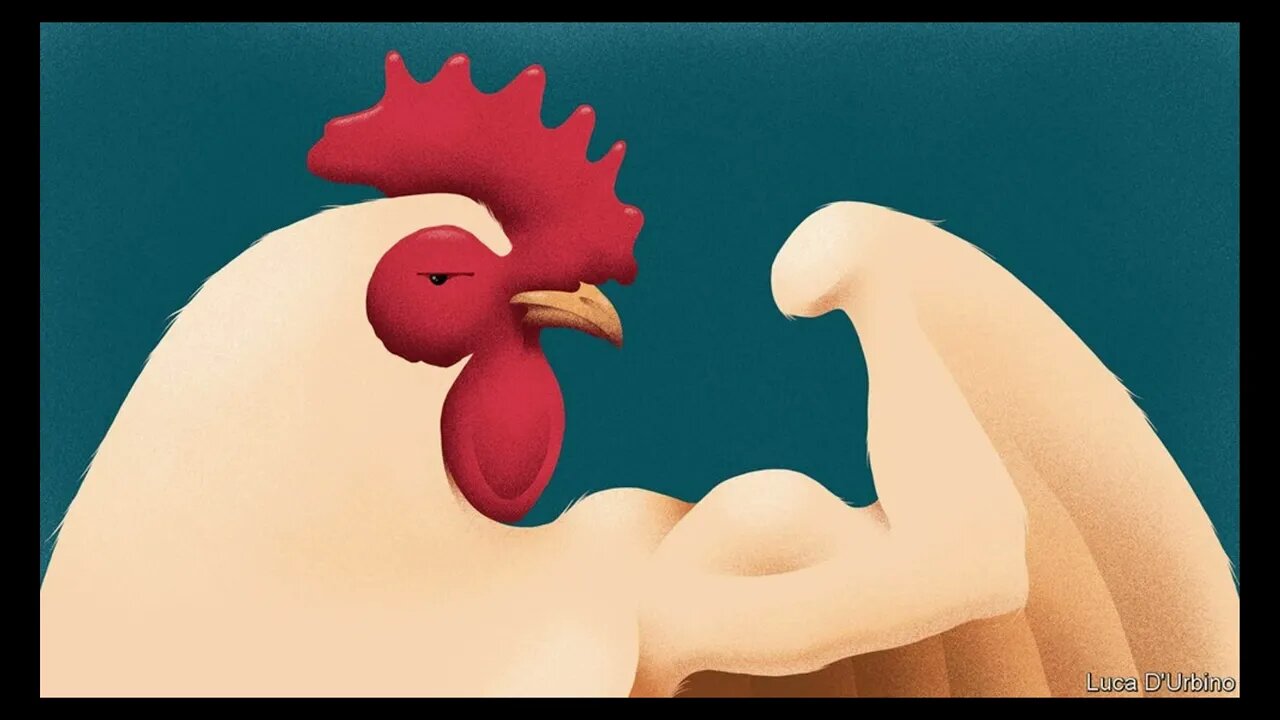
The birds now count for 23bn of the 30bn land animals living on farms.
In a shed on a poultry farm just outside Colchester, in south-east England, thousands of chickens sit on piles of their own excrement. The facilities will not be cleaned until after the birds are killed, meaning they suffer from ammonia burns and struggle to grow feathers. Ants and maggots crawl over the bodies of those that have not made it to slaughter. The chicken industry is a dirty business, but it is also a profitable one. In the OECD, a club of mostly rich countries, pork and beef consumption has remained unchanged since 1990. Chicken consumption has grown by 70%.
Humans gobble so many chickens that the birds now count for 23bn of the 30bn land animals living on farms. According to a recent paper by Carys Bennett at the University of Leicester and colleagues, the total mass of farmed chickens exceeds that of all other birds on the planet combined. In London, some 50 miles west of Colchester, fried-chicken shops are ubiquitous. Many are named after American states (including Kansas and Montana, not to mention Kentucky). But schoolchildren and late-night partiers are unfazed by the strange names. Nor do they worry much about where their meal came from.
And why should they? Chicken is cheap and delicious. A pound of poultry in America now costs $1.92, a fall of $1.71 since 1960 (after adjusting for inflation). Meanwhile the price of beef has fallen by $1.17 a pound to $5.80.
Fans of cheap chicken have selective breeding to thank. In the 1940s America launched a series of “Chicken of Tomorrow” competitions for farmers. The aim, as described by a newspaper at the time, was to produce “one bird chunky enough for the whole family—a chicken with breast meat so thick you can carve it into steaks, with drumsticks that contain a minimum of bone buried in layers of juicy dark meat, all costing less instead of more.” The result was something along the lines of the modern broiler chicken.
Since then chickens have continued to get bigger. A study by Martin Zuidhof of the University of Alberta and colleagues documented this shift by comparing chickens that were selectively bred in 1957, 1978 and 2005. The authors found that at 56 days old the three birds had average weights of 0.9kg, 1.8kg and 4.2kg (see chart). As raising a single big bird is more efficient than raising two smaller ones, it now takes farmers just 1.3kg of grain to produce 1kg of chicken, down from 2.5kg of grain in 1985.
The intense use of antibiotics means that farmers no longer need to spend much time worrying about their chickens’ welfare. Before the second world war, most birds were raised on small plots. Farmers kept hens for eggs and sold their meat when they got too old to lay any more. But prophylactics have allowed farmers to pack chickens into conditions that would once have been considered unthinkably cramped and dirty. Birds raised in denser quarters do not move around much, and so require less to eat.
Farmers have also benefited from the healthy reputation of chicken. In the 1980s doctors worried that by eating too much beef and pork people were ingesting lots of saturated fat, which was then thought to increase the risk of heart disease. Those fears have since waned, but new evidence suggests that red meat might increase people’s chances of getting colon cancer. In contrast, poultry’s image as a healthy meat survives unscathed.
Feet and feathers
It is not just fussy Western eaters who increasingly favour chicken. Rising incomes mean that demand for the meat is growing even faster in poorer countries. As a result, chickens are now the world’s most widely traded meat. In economic terms they are, in effect, the opposite of cars. They are produced whole. But their value is maximized once they are broken up.
Though Westerners prefer lean, white meat; many in Asia and Africa prefer dark meat, which includes legs and thighs. These preferences are reflected in local prices: in America breasts are 88% more expensive than legs; in Indonesia they are 12% cheaper. Differences in the price of chicken feet are even starker. The thought of eating talons is abhorrent to many Westerners, but they often feature in Cantonese recipes. China now imports 300,000 tonnes of “phoenix claws” every year.
The fact that different countries specialize in different kinds of production also boosts trade. America and Brazil, the world’s two biggest chicken exporters, are agricultural powerhouses that grow huge amounts of feed, the main cost in poultry production. Thailand and China, in contrast, dominate the processed-meat market which requires cheap, skilled labor. Russia and Ukraine, once net importers of chicken, have become net exporters as their grain industries have grown...
-
 20:31
20:31
Actual Justice Warrior
1 day agoOxford Student Who Celebrated Charlie Kirk's Murder Plays Victim
2.09K9 -
 23:40
23:40
Code Blue Cam
14 hours agoMan Celebrates Independence Day by Losing His Freedom
10.8K7 -
 58:39
58:39
MattMorseTV
10 hours ago $29.95 earned🔴Rand Paul just made a BIG MISTAKE.🔴
65K146 -
 24:21
24:21
The Pascal Show
9 hours ago $6.09 earned'CHALLENGE ACCEPTED!' TPUSA Breaks Silence On Candace Owens Charlie Kirk Allegations! She Responds!
14.5K7 -
 19:23
19:23
MetatronHistory
16 hours agoThe REAL Origins and Function of the PRETORIANS in Ancient Rome
9.38K -
 2:03:59
Side Scrollers Podcast
19 hours agoKaceytron Publicly Humiliated by H3H3 + Sabrina Carpenter/White House FEUD + More | Side Scrollers
55.8K7 -
 2:17:46
The Connect: With Johnny Mitchell
4 days ago $17.43 earnedA Sitdown With The Real Walter White: How An Honest Citizen Became A Synthetic Drug Kingpin
100K2 -
 2:40:08
PandaSub2000
1 day agoDEATH BET | Solo Episode 01 (Edited Replay)
26.1K1 -
 9:41
9:41
Blabbering Collector
2 days agoHarry Potter Vintage Christmas Merch By Realtec Canada!
10.3K1 -
 LIVE
LIVE
Lofi Girl
2 years agoSynthwave Radio 🌌 - beats to chill/game to
673 watching