Film Noir and Exploitation
11 videos
Updated 2 days ago
Film noir is a style of Hollywood crime drama that emphasizes cynical attitudes and motivations. The 1940s and 1950s are generally regarded as the "classic period" of American film noir. Film noir of this era is associated with a low-key, black-and-white visual style that has roots in German expressionist cinematography. Many of the prototypical stories and attitudes expressed in classic noir derive from the hardboiled school of crime fiction that emerged in the United States during the Great Depression, known as noir fiction. An exploitation film is a film that seeks commercial success by capitalizing on current trends, niche genres, or sensational content. Exploitation films often feature themes such as suggestive or explicit sex, sensational violence, drug use, nudity, gore, destruction, rebellion, mayhem, and the bizarre. While often associated with low-budget "B movies", some exploitation films have influenced popular culture, attracted critical attention, gained historical significance, and developed cult followings.
-
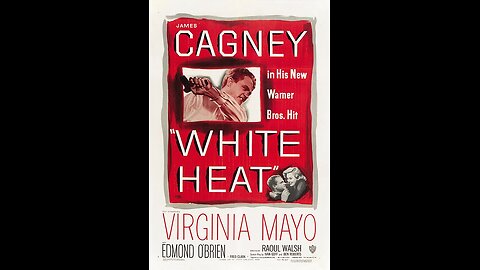
White Heat - 1949
CCult Classics Cinema &TV ClassicsWhite Heat is a 1949 American film noir, directed by Raoul Walsh. Its screenplay, written by Ivan Goff and Ben Roberts, is based on a story by Virginia Kellogg. The film stars James Cagney, Virginia Mayo, and Edmond O'Brien. Arthur "Cody" Jarrett is a ruthless, psychotic criminal and leader of the Jarrett gang. Although married to Verna, he is overly attached to his equally crooked and determined mother, "Ma" Jarrett.36 views -
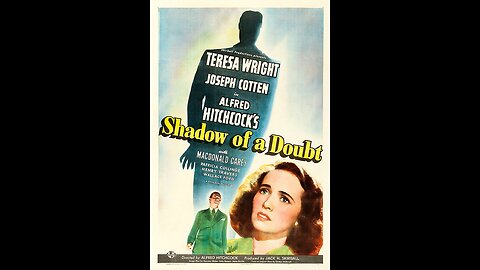
Shadow of a Doubt - 1943
CCult Classics Cinema &TV ClassicsShadow of a Doubt is a 1943 American psychological thriller film noir directed by Alfred Hitchcock, and starring Teresa Wright and Joseph Cotten. Written by Thornton Wilder, Sally Benson, and Alma Reville, the film was nominated for an Academy Award for Best Story for Gordon McDonell. The story follows Charlotte "Charlie" Newton and her family who live in very quiet Santa Rosa, California. An unexpected visit by Charles Oakley, her charming and sophisticated Uncle Charlie, brings much excitement to the family and the small town. That excitement turns to fear as young Charlie slowly begins to suspect that her uncle may be concealing a dark secret.52 views -
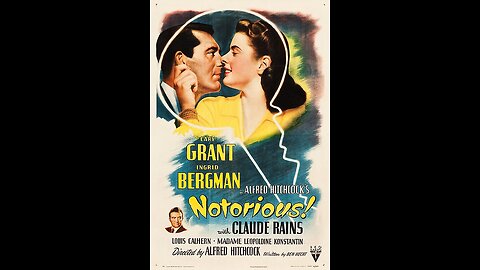
Notorious - 1946
CCult Classics Cinema &TV ClassicsNotorious is a 1946 American spy film noir directed and produced by Alfred Hitchcock, starring Cary Grant, Ingrid Bergman, and Claude Rains as three people whose lives become intimately entangled during an espionage operation. The film follows U.S. government agent T. R. Devlin (Grant), who enlists the help of Alicia Huberman (Bergman), the daughter of a German war criminal, to infiltrate a circle of executives of IG Farben hiding out in Rio de Janeiro after World War II.38 views -
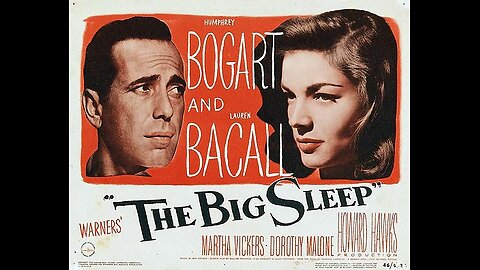
The Big Sleep - 1946
CCult Classics Cinema &TV ClassicsThe Big Sleep is a 1946 American film noir directed by Howard Hawks. William Faulkner, Leigh Brackett and Jules Furthman co-wrote the screenplay, which adapts Raymond Chandler's 1939 novel. The film stars Humphrey Bogart as private detective Philip Marlowe and Lauren Bacall as Vivian Rutledge in a story that begins with blackmail and leads to multiple murders65 views -
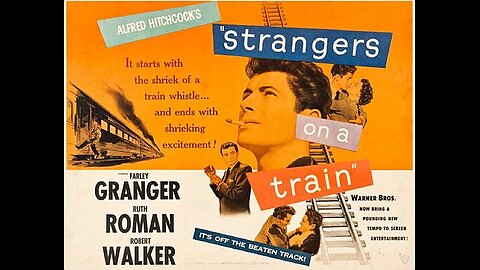
Strangers on a Train - 1951
CCult Classics Cinema &TV ClassicsStrangers on a Train is a 1951 American psychological thriller film noir produced and directed by Alfred Hitchcock, screenplay by Raymond Chandler and Czenzi Ormonde based on the 1950 novel of the same name by Patricia Highsmith. It was shot in late 1950, and released by Warner Bros. on June 30, 1951, starring Farley Granger, Ruth Roman and Robert Walker. The story concerns two strangers who meet on a train, one of whom is a psychopath who suggests that they "exchange" murders so that neither will be caught.54 views -
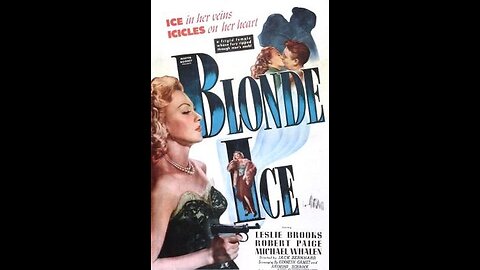
Blonde Ice - 1948
CCult Classics Cinema &TV ClassicsBlonde Ice is a 1948 American crime film noir starring Leslie Brooks, Robert Paige, and Michael Whalen. Based on the 1938 novel Once Too Often by Elwyn Whitman Chambers, the B picture was directed by Jack Bernhard, with music by Irving Gertz.41 views -
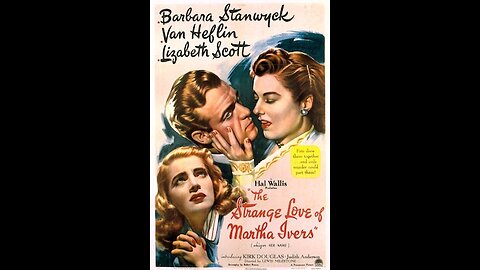
The Strange Love of Martha Ivers - 1946
CCult Classics Cinema &TV ClassicsThe Strange Love of Martha Ivers is a 1946 American noir tragedy film directed by Lewis Milestone and starring Barbara Stanwyck, Van Heflin and Lizabeth Scott. Kirk Douglas appears in his film debut. It follows a man who is reunited with his childhood friend and her husband; both the childhood friend and her husband believe that the man knows the truth about the mysterious death of the woman's wealthy aunt years prior. The screenplay was written by Robert Rossen (and an uncredited Robert Riskin), adapted from the short story "Love Lies Bleeding" by playwright John Patrick.71 views -
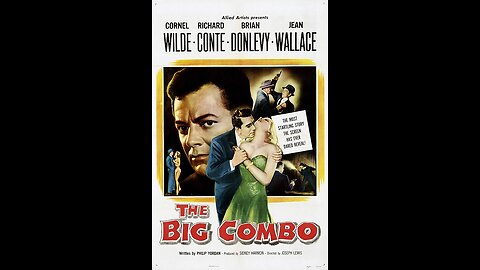
The Big Combo - 1955
CCult Classics Cinema &TV ClassicsThe Big Combo is a 1955 American crime film noir directed by Joseph H. Lewis, written by Philip Yordan and photographed by cinematographer John Alton, with music by David Raksin. The film stars Cornel Wilde, Richard Conte and Brian Donlevy, as well as Jean Wallace, who was Wilde's wife at the time. The supporting cast features Lee Van Cleef, Earl Holliman and the final screen appearance of actress Helen Walker. The Big Combo received positive reviews from critics.61 views -
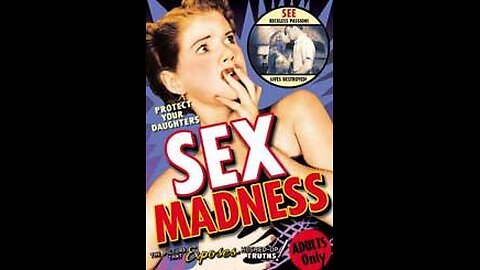
Sex Madness - 1938
CCult Classics Cinema &TV ClassicsSex Madness is a 1938 American exploitation film directed by Dwain Esper, along the lines of Reefer Madness, supposedly to warn teenagers and young adults of the dangers of venereal diseases, specifically syphilis. This exploitation film belongs to the social guidance genre of quasi-documentary narratives, which exhort young adults to follow particular moral and social prescriptions related to sexuality and drug use. The film centers on Paul Lorenz, a "concerned citizen" alarmed at the spread of venereal diseases such as syphilis and gonorrhea.154 views -
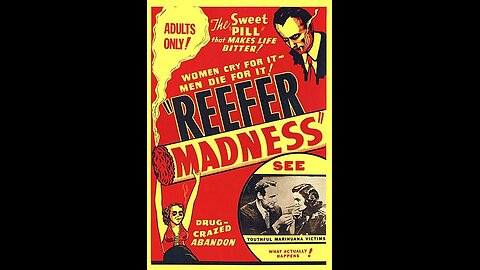
Reefer Madness - 1936
CCult Classics Cinema &TV ClassicsReefer Madness is an American public service announcement and exploitation film about drug use and abuse. It was originally titled Tell Your Children, and it has been known by the titles The Burning Question, Dope Addict, Doped Youth, and Love Madness as well. In the film, aspiring high school students are enticed by pushers to try marijuana. They become addicted and engage in criminal activities such as a hit and run accident, manslaughter, murder, conspiracy to murder and attempted rape. They suffer hallucinations, descend into manic-depressive episodes and insanity, and associate with organized crime. One character commits suicide. The film was produced in 1936 by mainstream independent filmmaker George Hirliman. It was financed by a church group and intended to be shown to parents as a morality tale about the dangers of cannabis use.57 views