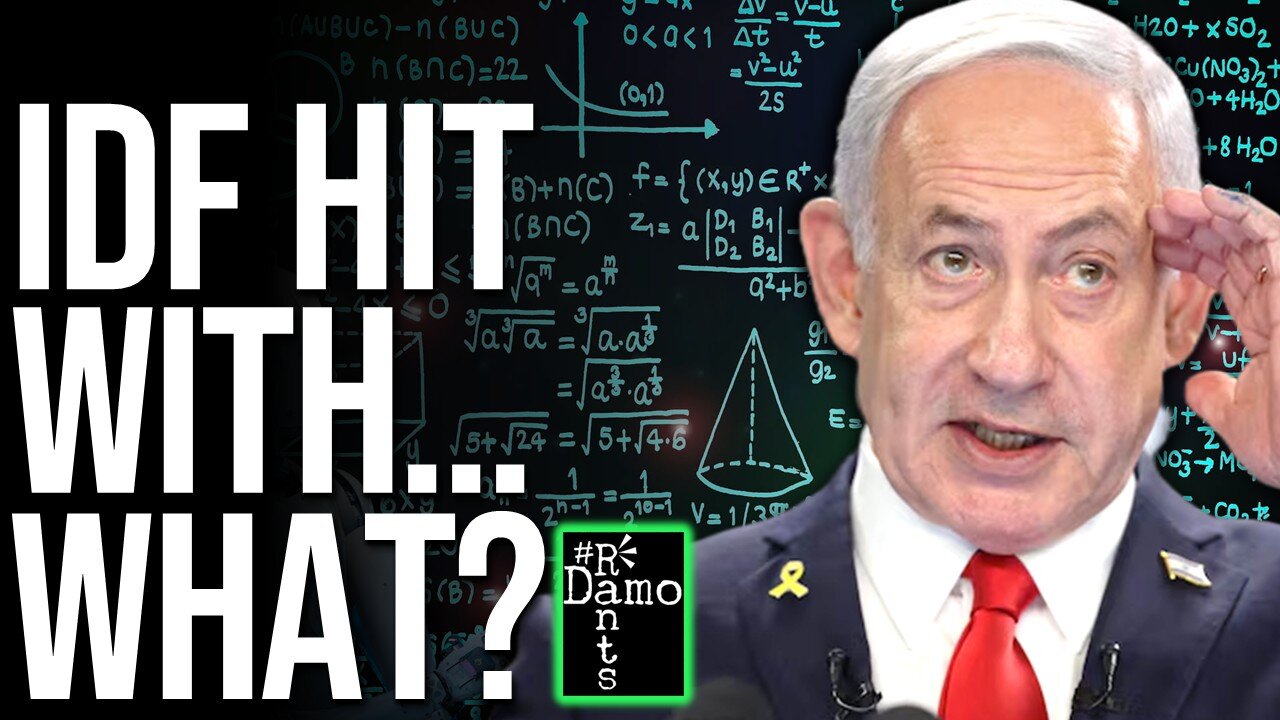
Israel Just Admitted It’s Genocide Guilt In the Most Israeli Way Possible
Right, so Israel keeps telling us it has the most moral army on Earth, and yet here we are: the government has had to build an AI censor just to stop that same army posting what it actually does. If your troops are as saintly as you claim, you don’t need a machine scanning their TikToks in real time. But soldiers have been filming everything — raids, smashed homes, detainees, the lot — and instead of asking why the footage looks like this, Israel’s answer has been to deploy Morpheus, an algorithm already watching more than forty thousand soldiers, with plans to cover the entire force. You don’t gag your own troops because they’re too moral. You gag them because the record they’ve created is a threat — and the state knows it.
Right, so after months of soldiers filming themselves in Gaza, filming detainees, filming destruction, filming taunts, filming things no state comfortable in its own narrative would ever want surfaced if we’re honest, we’ve all seen the footage I’m sure, Israel has decided the only way to survive the truth is to erase the evidence record it’s own forces keep adding to. It has built an AI machine called Morpheus, very much blue pill or red pill territory and the purpose of that system is not to fight an enemy or defend a population. It is to track what Israeli soldiers say and show online and stop the world from seeing what they have already lived.
If the state believed its own rhetoric about discipline, morality and restraint, it would not need Morpheus. It would welcome the footage. It would point to it as proof of everything it claims. The fact that Israel has built a tool to monitor tens of thousands of soldiers in real time tells you immediately that the government knows exactly what those cameras have captured, and it knows those images cannot be reconciled with the message it is selling abroad. You do not create a machine to erase the record unless the record is dangerous. And Israel has decided the most dangerous thing in this entire war is not Hamas, not Hezbollah, not Iran, but its own army and what they are sharing via their own smartphones.
The sequence that brought Israel to this point makes the pattern unavoidable. The government thought it could manage the war’s image the old way: keep journalists out, impose tight military censorship, refuse foreign media access to Gaza, and rely on controlled briefings. But the state misread the era it is operating in. It forgot that the people with the most access to this war are the soldiers, and soldiers now document everything reflexively whether they realise it or not. They record raids, damaged buildings, civilians under arrest, the aftermath of strikes, and they post it casually on TikTok and Instagram and Telegram, often with commentary that tears straight through the polished lines the government feeds the world. These soldiers are not thinking like the spokespeople the state wishes they were. They are thinking like young people living online.
And the result is the largest uncontrolled archive Israel has ever created about itself. Independent investigators now have hundreds of gigabytes of soldier-filmed material. Legal teams abroad have said outright that much of their evidence comes from Israeli soldiers themselves, not outside adversaries. Those clips cannot be spun away, because the time stamps are real, the voices are real, the locations can be verified, and the conduct speaks for itself. A government can argue with foreign critics. It can smear NGOs. It can dismiss journalists. But it cannot dismiss its own soldiers as hostile fabricators. And that is the problem Israel cannot talk its way out of.
So the state pivoted. When warnings and censorship did not stop the flow of material, the government tried to clamp down on soldier visibility. Reporters were told they could not identify most soldiers at all. Interviews with rank-and-file troops became almost impossible. Broadcast outlets were warned to remove identifying features. Even Army Radio, a loyal and long-standing institution, has found its wings clipped when soldiers began speaking honestly about what they had seen and done. None of this was about operational security. If it were, Israel would have fixed it months earlier. This was about narrative security: stopping soldiers from contradicting the polished myth that Israel insists on presenting to the world.
But the government still could not control the posts. Soldiers kept uploading because documenting their lives is not a habit the state can turn off by decree. That is when the political calculation hardened. If you cannot stop the behaviour, you must stop the visibility. And that is the moment Morpheus appeared — an AI system scanning tens of thousands of accounts at once, analysing pictures, captions, videos and audio for anything that could expose the truth the government can no longer manage through conventional censorship.
In its pilot alone Morpheus watched forty-five thousand soldiers. It flagged thousands of posts. It ordered deletions across accounts the state had never been able to control manually. Now Israel plans to extend it to more than one hundred and seventy thousand personnel. That is not a security measure; that is a government treating its own military as an information hazard. You only monitor your entire army if you believe any soldier could reveal something catastrophic. And Israel clearly believes that.
The scale tells you what the state is really afraid of. This is not about troop movements or classified tactics. Those could have been controlled with basic rules. The footage that has harmed Israel internationally is not footage showing where units are. It is footage showing what those units are doing: detainees blindfolded and mocked, neighbourhoods smashed apart while soldiers film themselves laughing, the tone of casual domination that tears through every official line about precision. Morpheus exists to suppress that conduct’s visibility, not to change the conduct itself.
And once a state decides suppression is easier than reform, something fundamental has broken. Because to fix the conduct would require confronting what that footage shows, and Israel is unwilling to do that. It would rather erase the symptoms than treat the condition. It would rather gag the witness than challenge the culture. That is not a security strategy. It is a political survival strategy, and it only becomes necessary when a government knows the truth is incompatible with the story it needs people to believe.
What this does to the army is its own crisis. Soldiers now know they are being watched continuously by a machine that assumes they cannot be trusted. Morpheus is not a training tool; it is a presumption of guilt. It tells soldiers the government sees their honesty as a liability, their perspective as a threat, their real experiences as something that must be hidden. And when soldiers realise the state values the narrative more than their truth, the trust between them collapses. They will still obey orders, but they will no longer defend the mythology the government relies on, because they are the evidence that mythology is false.
Externally, the meaning is even starker. Morpheus is a confession. Israel can claim morality in speeches, but speeches do not require an AI system to silence the people who know the reality. If the footage helped Israel, Morpheus would not exist. The fact that it does exist tells every observer that the footage harms Israel so badly that only automated censorship can slow the damage.
And this is where you see the deeper political crisis emerging, because once a government begins suppressing its own soldiers’ accounts of a war, it has already admitted the war cannot defend itself. Soldiers are not outside agitators. They are not political opponents. They are the people the state trains, arms and deploys. If their unfiltered testimony must be shut down by an algorithm scanning posts around the clock, then the government is terrified of its own reflection. Morpheus is a mirror Israel cannot allow anyone to look into.
But the political cost does not stop at the border. Israel’s strongest allies are already under pressure from their own publics, because the soldier-filmed material that escaped before Morpheus existed is now global. Governments that backed Israel are dealing with footage they cannot explain away. Institutions once afraid to criticise Israel openly are now forced to because the record is too overwhelming. Israel can censor internally, but it cannot recall what has already been posted, downloaded, archived and analysed. Morpheus can only prevent the next wave of evidence; it cannot erase the first.
And that brings us to the core of the problem: Israel is fighting a twenty-first-century documentation reality with a twentieth-century propaganda instinct. In the last century, if a state controlled the press, it controlled the story. Now the press is secondary. The story is carried by the people with the phones, and in this war those people are soldiers. Israel’s leadership never adjusted to that shift. It thought barring journalists from Gaza would be enough. It thought military censorship and a compliant media ecosystem would keep the narrative intact. What it did not understand was that the army itself had become the camera crew.
And you can see how the government is now scrambling to rebuild a version of control it should have realised was impossible. It is not just deleting posts. It is restructuring the flow of information around the entire military. The rules restricting interviews are part of it. The ban on identifying soldiers is part of it. The quiet pressure on broadcasters is part of it. The whole direction of policy is turning inward: silence the people closest to the truth because the truth contradicts everything the government says publicly. This is not the behaviour of a confident state. It is the behaviour of a state in narrative retreat.
None of this means the technology itself is particularly sophisticated. The impressive part is not what Morpheus can do but what its existence reveals. AI systems that scan public posts are not new. What is new is deploying one on an army this size, for this purpose, at this moment. It is the largest automated self-censorship system Israel has ever built, and it targets the institution the government insists is its moral core. The contradiction is almost unbearable. Israel tells the world its army is uniquely ethical, yet it has constructed a machine to stop anyone seeing the army unfiltered. That tells you which version even the government believes.
And the more the state doubles down on suppression, the more it accelerates the collapse of its own credibility. When a government builds an AI censor to hide the actions of its soldiers, the world does not conclude the soldiers are moral. It concludes the opposite. When a government shifts from managing its message to suppressing internal testimony, observers do not see stability. They see panic. Morpheus is supposed to reassure Israel’s allies that the government is taking information security seriously. Instead, it signals that the state is terrified of what its own personnel might reveal.
But the deeper danger for Israel is internal, not external. A military is held together by more than hierarchy and discipline. It is held together by a sense that the institution is aligned with some version of truth. When soldiers realise the government wants them silent because their reality contradicts its narrative, the institution becomes brittle. Some soldiers will comply. Some will self-censor. But others will recognise the state is hiding something significant, and once that recognition spreads, no amount of censorship can rebuild the lost trust.
And trust is not the only thing at risk. Once you treat soldiers as liabilities, they start acting like witnesses. Some will hold on to footage privately. Some will leak anonymously. Some will pass material to people they trust outside the army. Some will simply describe what they saw when they no longer fear the consequences. Morpheus might suppress the publicly posted clips, but it cannot suppress the experiences that created them. A society cannot algorithmically erase the memories of tens of thousands of young people sent into a war that has defined their entire view of their country.
This is why the system feels less like control and more like delay. Morpheus cannot solve the crisis; it can only postpone the moment when the crisis becomes unavoidable. The government knows more evidence will surface in time. It knows international bodies already have enough material to work with. It knows allies are uneasy. It knows the moral story it relied on for decades has been shattered not by its enemies but by its own army’s cameras. The AI is not a fix. It is a tourniquet. It slows the bleeding, but it does not stop it.
And the irony, which Israel’s leadership either cannot see or refuses to acknowledge, is that the attempt to hide the truth ends up confirming it. Even people who know nothing about the war can understand the implication of a state monitoring one hundred and seventy thousand soldiers because it fears what they might reveal. You do not need expertise in international law to grasp what it means when the army itself becomes the focus of censorship. A state that trusts its soldiers does not need Morpheus. A state that believes its army behaves morally does not hide its footage. A state confident in the righteousness of its war does not silence the only people who can describe it accurately.
Morpheus reveals something else as well: the tech sector Israel prides itself on has been redirected away from innovation and toward internal political control. Instead of building tools that advance science, energy, health or civilian life, the state is building tools that police its own troops. That is not the posture of a forward-looking nation. It is the posture of a government trying to outrun a truth it can no longer manage. And in the process, it exposes the hollowness of its claims about transparency and morality.
For more on the shut down of Army Radio, along with the collapse in morale that will come with that, now doubled down on by AI literally spying on them it seems, check out the details of that story here.
Please do also hit like, share and subscribe if you haven’t done so already so as to ensure you don’t miss out on all new daily content as well as spreading the word and helping to support the channel at the same time which is very much appreciated, holding power to account for ordinary working class people and I will hopefully catch you on the next one. Cheers folks.
-
 LIVE
LIVE
MattMorseTV
2 hours ago $10.18 earned🔴THE STREAMER AWARDS🔴
2,509 watching -
 LIVE
LIVE
Side Scrollers Podcast
7 hours agoSide Scrollers Presents: QUEEN OF THE Wii
4,709 watching -
 20:52
20:52
Exploring With Nug
1 hour ago $6.15 earnedTwo Missing People, One Missing Truck — What’s in the River?
33.3K1 -
 DVR
DVR
vivafrei
4 hours agoBREAKING: Jan. 6 Pipe Bomber Prosecutor is the SAME ONE Who Prosecuted Enrique Tarrio?
109K29 -
 35:16
35:16
Tactical Advisor
2 hours agoNew Pivoting Rifle for Backpacks | Vault Room Live Stream 048
15.3K -
 LIVE
LIVE
Amish Zaku
6 hours agoRumble Spartans December Event
51 watching -
 LIVE
LIVE
OhHiMark1776
5 days ago🟢12-06-25 ||||| HMR. 21: King of the Hill ||||| Halo MCC (2019)
85 watching -
 20:08
20:08
MYLUNCHBREAK CHANNEL PAGE
9 hours agoThe Field Museum is From Another Timeline
62.4K16 -
 LIVE
LIVE
BigTallRedneck
1 hour agoRUMBLE SPARTANS HALO NIGHT
114 watching -
 LIVE
LIVE
AirCondaTv Gaming
2 hours ago $0.29 earnedHalo: The Master Chief Collection - Conda a Clause is Spreading some Plasma Holiday Cheer (Collab)
51 watching