Dick Cheney Was the Architect of Post-9/11 Wars that Championed Bloodshed and Torture
Dick Cheney Was the Architect of Post-9/11 Wars and Championed Military Invasions, Bloodshed and Torture
Who put Jupiter Missiles in Turkey pointed at Moscow in 1961? In 1961, the US put Jupiter nuclear missiles in Italy and Turkey. All were within range of Moscow. The US had trained a paramilitary force of Cuban expatriates, which the CIA led in an attempt to invade Cuba and overthrow its government.
For half a century, one man moved in the shadows of American power-pulling string, starting wars, and calling it security.
Former Vice President Dick Cheney has died at the age of eighty-four.
On November 4, former US Vice President, Dick Cheney died at the age of 84 following complications from pneumonia and long standing cardiovascular disease.
Cheney’s health, like his politics, was defined by persistent challenges.
For eight years, Dick stood by my side and always did what was right for our nation - could not have asked for a better Vice President than Dick Cheney.
Former US President, George W Bush
Even a heart transplant in 2012 couldn't soften the image many held of him, a man seen by some as a patriot, and by many others, as the cold architect of an era of endless bloody war.
When I think of Dick Cheney I, of course, think of the Iraq war and the war in Afghanistan, how many US lives were lost, and others and you know the failure of those efforts, I think Dick Cheney's legacy will be a reevaluation of American global dominance and the effort to impose hegemony across the world and police the world in a way that's probably not sustainable.
Few American leaders have left such a divided legacy. Cheney was not merely a vice president. He redefined the office, transforming it from a ceremonial seat into a command post for America's war on terror.
Behind the Scenes of the George W Bush administration, Cheney pulled the levers of power that would lead the US into the invasion of Iraq, a war built on the phantom menace of weapons of mass destruction.
Organizations like al Qaeda, and those who hold, or are proliferating knowledge about weapons of mass destruction, so the concern is very real, it's very great, and we need to find ways as we go forward, to make certain that the terrorist never acquires that capability and that it can never be used against the United States or the United Kingdom or allies.
Dick Cheney, Former US Vice President
None were ever found, yet Cheney maintained, until his death, that the war was justified.
His influence stretched back decades as Defense Secretary under President George H.W. Bush, 1989 to 1993; Cheney oversaw US victories in Panama and the Persian Gulf, even as he began scaling down military spending after the Soviet collapse.
On my orders, the United States military has begun strikes against al Qaeda terrorist training camps and military installations of the Taliban regime in Afghanistan.
Former US President, George W Bush
Yet, when he returned to public life under Bush's son in 2001, it was with a very different mission: to expand American power abroad and at home.
Between those two eras, Cheney led Halliburton, the oil and engineering giant that would later profit immensely from the very wars he helped to wage.
Under his leadership, Halliburton became a symbol of the privatized military industrial complex, a world where war and profit were intertwined.
Cheney was a key figure in the early history of the privatized military industry.
It now encompasses hundreds of firms, thousands of employees and billions of dollars in revenue.
Peter Singer, Author
Back in Washington, Cheney pursued a long-held conviction that the presidency had been weakened since the Watergate scandal.
His solution was to reclaim power for the executive branch using the post 9/11 fear and chaos to expand surveillance, secrecy, and the state authority to unprecedented levels.
The Patriot Act, which he championed, gave the US government sweeping new powers of spying and detention; powers often turned against Muslim Americans under the guise of national security.
Meanwhile, Cheney's War on Terror overseas metastasized into torture, black sites and indefinite detentions.
Under his watch, the US employed so-called enhanced interrogation techniques at Guantanamo Bay and CIA facilities worldwide, practices that violated international law and left a lasting stain on America's reputation.
Many of those detained were never charged with a crime.
My sort of overwhelming view is that the enhanced interrogation techniques were absolutely essential in saving thousands of American lives, in preventing further attacks against the United States and giving us the intelligence we needed to go find al Qaeda, to find their camps, to find out how they were being financed.
The consequences of Cheney's policies remain staggering.
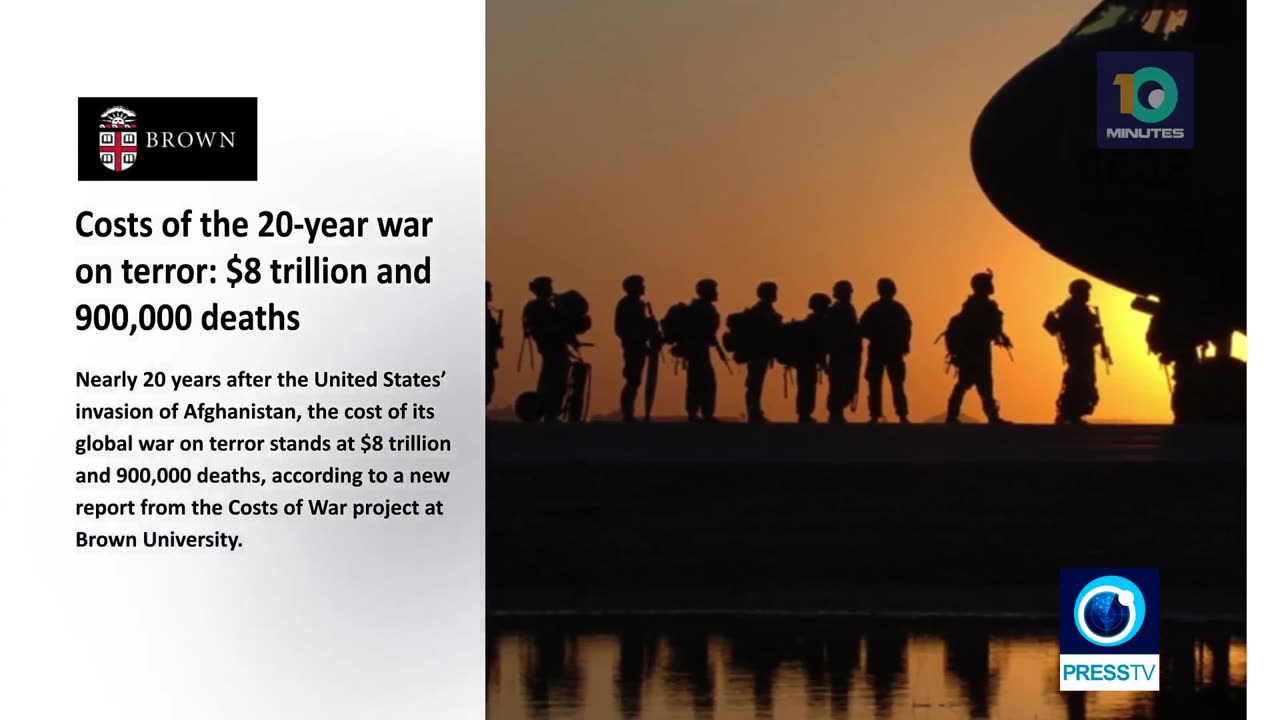
The Iraq war, waged on false pretenses, cost trillions of dollars and hundreds of thousands, perhaps millions, of lives.
It destabilized West Asia, fueled the rise of extremist groups like Daesh, and left behind a generation of veterans scarred in body and mind.
Domestically, the financial and moral capital spent in the war hollowed out the very foundations of the society Cheney claimed to defend.
Saudi Arabia is making raids and arrests.
Libya is dismantling its weapons programs.
The army of a free Iraq is fighting for freedom, and more than three quarters of Al Qaeda’s key members and associates have been detained or killed.
George W Bush, Former US President
In Cheney's worldview, the US could, and should, strike first against any possible threat.
This became known as the 1% doctrine: if there was even a 1% chance of danger, America must act as if it were certain.
That logic reshaped foreign policy, turning preemption into a permanent posture and suspicion into strategy.
The Cheneys are die hard globalists and warmongers who have been plunging us into new conflicts for decades, spilling American blood and spending American treasure all over the world.
Donald J Trump, US President
To his critics, Cheney embodied the dark heart of American power, a man who saw the world in absolutes and acted without remorse.
To his admirers, he was a realist who understood that strength, not sentiment, secured the nation's safety.
But as time passes, it is the costs of his choices, not the intentions, that define his legacy,
Because he was very much a proponent of some of the more controversial policies of the George W Bush administration, whether you're thinking about sort of enhanced interrogations or torture, essentially, if you're thinking about sort of surveillance, the Patriot Act or surveillance, also domestic spying on Americans, and, of course, his most hawkish line on the war in Iraq, and being largely unapologetic about it.
I think many of those issues played into the perception of Dick Cheney not being the most sympathetic character to his opponents.
Professor Garret Martin, American University School of International Service
From the oil fields of Halliburton to the war rooms of Washington, Cheney's career charted the rise of a new kind of empire, one driven by fear, technology, and private profit.
The surveillance state, the normalization of torture, and the unchecked growth of private military contractors can all trace their roots to his years in power.
Even the politics of resentment and fear that later fueled Donald Trump's rise bear Cheney's fingerprints.
Dick Cheney lived much of his life with a damaged heart.
In 2012, medical science gave him a new one. But in much of the world, especially across West Asia, many believed he never had one at all.
By Ivan Kesic
Richard Bruce Cheney, who died on November 3, 2025, at 84, leaves behind a legacy as the ruthless architect of America’s post-9/11 wars, which killed 4.5 million people and displaced over 38 million others, as per a study by Brown University.
He will be remembered as a vice president whose pursuit of unrestrained power, defense of torture, and deception over Iraq’s non-existent weapons of mass destruction (WMDs) made him both the embodiment and the author of the darkest chapters in modern militarized US foreign policy.
The death of Cheney closes the chapter of one of the most destructive forces in modern American statecraft, an architect of empire whose legacy is a litany of catastrophe: a war of aggression waged on false pretenses, a global torture regime, and a doctrine of limitless executive power that bent the Constitution to its breaking point.
From the corridors of Washington to the secret torture chambers across the world, Cheney operated with a singular, ruthless conviction, systematically exploiting the tragedy of 9/11 to unleash a pre-ordained project of American hegemony.
He was a radical bureaucrat who legalized war crimes, a CEO who privatized conflict for corporate profit, and a vice-president who engineered a shadow presidency to serve a vision of power so absolute that it ensured the bill for his actions—measured in trillions of dollars, hundreds of thousands of lives, and a deeply compromised national soul—would be paid for generations.
Apprenticeship of power
Cheney’s journey was not one of charismatic public appeal but of quiet, relentless accumulation of power and influence. Born in Lincoln, Nebraska, in 1941 and raised in Casper, Wyoming, his early years were unremarkable, even rocky—flunking out of Yale and receiving two drunk-driving arrests. But he found his calling in the mechanics of government.
Under the tutelage of Donald Rumsfeld in the Nixon and Ford administrations, Cheney absorbed the doctrine of a powerful, centralized executive.
As Gerald Ford’s Chief of Staff, he witnessed what he viewed as the dangerous erosion of presidential authority in the post-Watergate and post-Vietnam era. This experience forged a core tenet of his worldview: that congressional and judicial oversight could be a fatal handicap in a dangerous world.
His tenure as a Congressman from Wyoming and later as Secretary of Defense for George H.W. Bush further solidified his reputation as a shrewd and duplicitous operator.
He oversaw the devastating 1991 Iraq War, with a clear objective and exit strategy. In a telling moment, he argued against marching on Baghdad to topple Saddam Hussein, warning it would lead to a “quagmire.” It was a position of opportunism he would dramatically reverse a decade later.
The interlude between governments was spent as CEO of Halliburton, the oilfield services giant. This period, observers note, fused his ideological belief in American primacy with a corporate understanding of its strategic and economic applications.
Under his leadership, Halliburton subsidiaries engaged in controversial deals with Libya, Nigeria and Saddam’s Iraq.
They traded in defiance of US sanctions, did business through offshore cutouts, and paid $180 million in suspected bribes to win a Nigerian gas contract, blurring the lines between national interest and corporate profit, and setting the stage for future conflicts of interest.
Shadow presidency
The 2000 election returned Cheney to power as George W. Bush’s running mate, but he was no ordinary vice president. He hand-picked himself for the role and then engineered the vice presidency into a power center unprecedented in American history.
He embedded his staff across the federal bureaucracy, controlled the flow of information to the president, and positioned himself as the administration’s principal voice on national security and foreign policy matters.
The attacks of September 11, 2001, were the catalyst for which his entire career had been a preparation. From a secure bunker, he authorized fighter jets to shoot down hijacked airliners, an astonishingly grim demonstration of his readiness to wield ultimate power for petty interests.
The so-called "global war on terror" became not just a military campaign but a constitutional project for Cheney and his legal counsel, David Addington.
They championed the theory of the "unitary executive," which held that the president, as commander-in-chief, held near-absolute power in matters of national security, unconstrained by Congress or international law.
This philosophy underpinned a series of radical policies, including the "One Percent Doctrine."
Cheney articulated that if there was even a one percent chance of a catastrophic threat, it must be treated as a certainty. This doctrine justified preemptive action based on possibility rather than evidence.
The war-mongering US administration, with Cheney as its chief advocate, also redefined torture through legal memos to permit "Enhanced Interrogation Techniques" (EITs) including waterboarding, sleep deprivation, and confinement in small boxes.
Cheney personally authorized the waterboarding of Khalid Sheikh Mohammed 183 times. He defended these methods as necessary, despite the subsequent Senate Intelligence Committee report finding them brutal and ineffective.
Furthermore, the CIA established a network of secret prisons overseas, known as "Black Sites," beyond the reach of any court or the Red Cross, where detainees were subjected to these EITs.
From a legal and human rights perspective, this period represents a deliberate dismantling of post-WWII norms. Human rights organizations have consistently argued that these policies constituted war crimes, a stain on America’s moral standing.
Dick Cheney wants to kill Syrians like Iraqis: Analyst
Dick Cheney wants to kill Syrians like Iraqis: Analyst
Former vice president Dick Cheney is part of an evil that created Daesh and now wants Syria destroyed, says an analyst.
Drumbeat for Iraq War
If the torture program was Cheney’s shadow war, the public invasion of Iraq was his crusade. He became the administration's most forceful and credible advocate for war, leveraging his reputation to make a case that would later prove to be built on a foundation of falsehoods and exaggerations.
He relentlessly advanced a connection between Saddam and Al-Qaeda—a link the 9/11 Commission later concluded did not exist.
Most notoriously, he repeatedly asserted, with unwavering certainty, that Iraq possessed weapons of mass destruction. “Simply stated, there is no doubt that Saddam Hussein now has weapons of mass destruction,” he told the VFW in August 2002.
This was not mere salesmanship; it was a conscious attempt to shape intelligence. Cheney and his staff made frequent trips to the CIA, pressuring analysts and creating the Office of Special Plans to bypass skeptical intelligence agencies.
A British government memo from July 2002, the "Downing Street Memo," captured the mood: "the intelligence and facts were being fixed around the policy."
When no WMDs were found, the war’s core justification collapsed. The devastating war, which Cheney had once warned would be a "quagmire," cost 4,431 American lives, hundreds of thousands of Iraqi civilian deaths, and trillions of dollars in taxpayers' money.
It destabilized the region and catalyzed the rise of Daesh terrorists. For many, the Iraq War stands as one of the most catastrophic strategic blunders in American history, a decision for which its chief architect never expressed remorse.
War crimes and accountability
The question of legal accountability has followed Cheney longer than any other. Human rights organizations have named him personally liable for authorizing torture.
Estimates of Iraqi civilian deaths range from 200,000 to more than 600,000, while millions were displaced, cities destroyed, and a generation traumatized.
As vice president, Cheney shaped every phase of the occupation: from the dismantling of Iraq’s army—fueling insurgency and civil war—to the privatized rebuilding effort that enriched corporations like Halliburton, his former employer. He dismissed calls for accountability, insisting that history would vindicate him.
The Kuala Lumpur War Crimes Tribunal convicted him in absentia in 2012. Yet, he traveled the world with impunity, protected by a US government that refused to ratify the Rome Statute of the International Criminal Court and an Obama administration that chose "forward-looking" unity over prosecution.
His infamous 2006 hunting accident, in which he peppered a companion with birdshot and then delayed informing the press, became a metaphor for his entire career: a man who inflicted collateral damage and operated by his own rules of engagement.
Unrepentant architect and his final acts
In his final years, Cheney witnessed a profound irony. The Republican Party he helped shape—steeped in the neoconservative belief in robust executive power and international intervention—was transformed by the populist, "America First" nationalism of Donald Trump.
In a remarkable coda, Cheney, alongside his daughter Liz—who was exiled from the GOP for her work on the January 6th Committee—became a vocal critic of Trump, whom he called "a coward" and "the greatest threat to our republic."
He endorsed Kamala Harris in 2024, a final, stark repudiation of the political forces he had, in part, unintentionally unleashed.
Dick Cheney never apologized. He never expressed a doubt. He believed the "dark side" was a necessary frontier for "defending civilization."
His legacy is therefore not one of simple villainy, but of a profound and enduring paradox: a man who wielded power with the stated goal of protecting American democracy, yet in doing so, championed policies that corroded its moral and legal foundations.
He was the ultimate architect of power, and the bill for the world he built is a ledger history is still tallying: illegal wars, hundreds of thousands of graves, a global torture archipelago, and a precedent that the most powerful can act with the utmost certainty, and never be held to account.
Former US vice president Dick Cheney’s death at 84 closes the chapter on one of the darkest and most destructive figures in modern US history, yet the violent, profit-driven empire he contributed to building continues to thrive.
As the chief architect of the “War on Terror,” Cheney spread lies about Iraq’s weapons of mass destruction, paving the way for wars that killed millions and displaced tens of millions more—all while enriching his corporate allies.
Both Democrats and Republicans now whitewash his crimes, hailing his “service” as if mass murder is patriotism, proving that in Washington, power still trumps justice.
Though the world may feel a little lighter without Cheney, the system he embodied—rooted in greed, deceit, and impunity—remains firmly intact.
His passing has stirred strong reactions across the world, particularly online. What follows are some of the responses from netizens to Cheney’s death.
Dick Cheney, architect of post-9/11 American wars that killed 4.5 million people
Dick Cheney, former US vice president and architect of post-9/11 wars, championed military invasions, bloodshed and torture, leaving a legacy steeped in violence, deception, and infamy.
Join the Weekly Video Call
constitutionhelp.com
-
 LIVE
LIVE
SpartakusLIVE
4 hours agoNEW Buyback Mode is the MOST FUN I've had on WZ in YEARS
122 watching -
 LIVE
LIVE
Adam Does Movies
2 hours agoThe Best & Most Overrated Christmas Movies - LIVE!
61 watching -
 LIVE
LIVE
BubbaSZN
5 hours ago🔴 LIVE - SLAYING ZOMBIES W/ CATDOG UNTIL MY BDAY AT 12AM!
55 watching -
 LIVE
LIVE
SlingerGames
2 hours agoRumble Spartans, ASSEMBLE! | Push for 400 Followers
37 watching -
 5:22:07
xXFadedAngelXx
5 hours agoSPARTAN NIGHT! Featuring the Communiy! Thanks @OhHiMark! & @Phyxicx! for the invite
157 -
 LIVE
LIVE
AdmiralSmoothrod
4 hours agohalo MCC - Multiplayer Rumble No. 21 - its gonna get sticky
33 watching -
 UPCOMING
BlackDiamondGunsandGear
2 hours agoNEW Glock Gen6 / Still Hate them / After Hours Armory
64 -
 8:49
8:49
Hollywood Exposed
3 hours agoBill Maher Explodes After Killer Mike Refuses Any Accountability On Air
40 -
 UPCOMING
DLDAfterDark
3 hours agoThe Average Gunfighter - Gen 6 Glocks - The After Hours Armory
57 -
 12:31
12:31
Robbi On The Record
2 days ago $6.33 earnedWhy Nothing Feels Real Anymore | The Science, Culture, and Spiritual War Behind the Fog
60.4K31