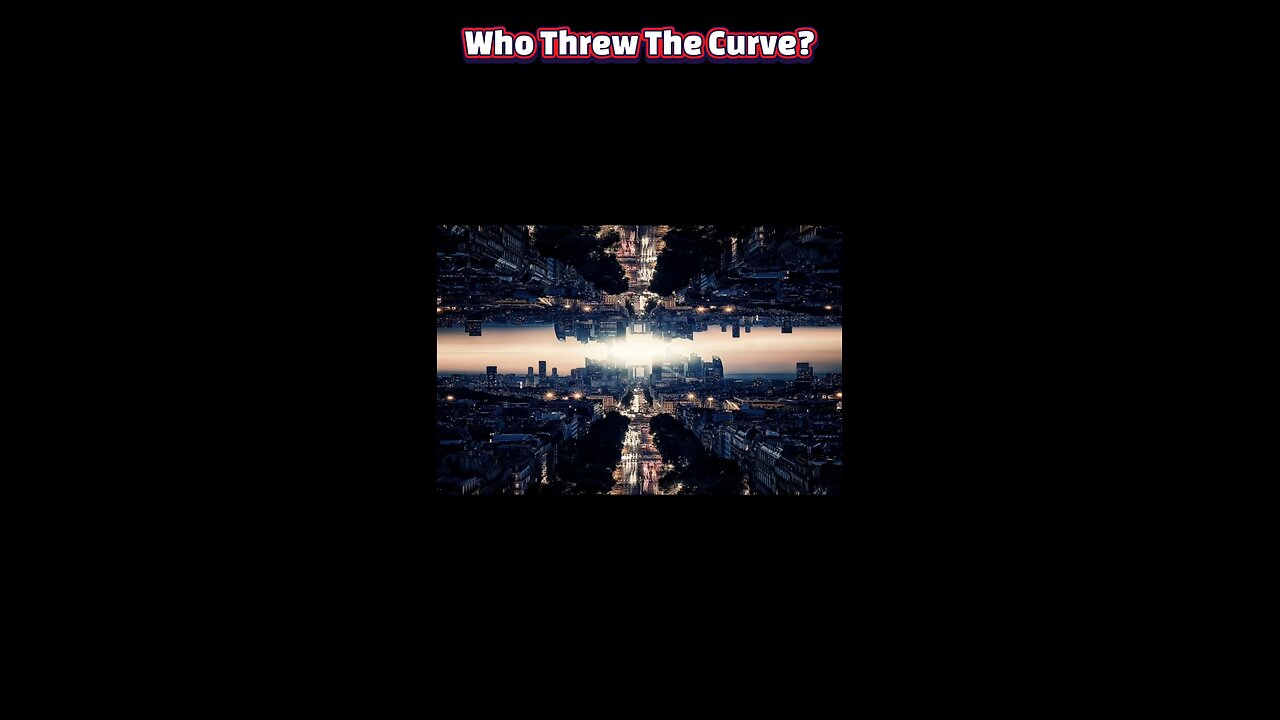
Escaping Reality: The Dangerous Thrill of Alternate Worlds
#AlternateReality #MindScience #VirtualWorlds #PerceptionVsReality #NeuroscienceExplained #DigitalEscapism #CognitiveDistortion #SciFiMeetsScience #RealityCheck #BrainHacks
Scientists and science writers have recently explored a provocative idea: that it may be possible, through certain altered states of consciousness or technological mediation, to "transport" oneself into an alternate world, an experience that can feel as vivid and coherent as waking life but that also warps the traveller’s view of reality. Reports and commentaries describe these alternate-world experiences as anything from lucid, sustained dreams and immersive virtual realities to speculative quantum or multiverse crossings; in every case, the common thread is an experiential shift so complete that ordinary epistemic anchors, memory, causal expectation, and perceptual consistency, begin to loosen. The allure of such transport is obvious: escape, exploration, and the possibility of encountering alternatives to one’s life and history. Yet researchers warn that the same mechanisms that make these worlds compelling also make them distortive.
At the psychological level, entering an alternate world rearranges attention and meaning-making. When perception is reweighted, sensory input is altered, time feels nonlinear, or familiar causal chains break down, the brain stitches experience together using heuristics and narratives that favor coherence over fidelity. That adaptive stitching produces rich, meaningful experience in the moment but can leave lingering confabulations: memories that feel real but are sourced from the alternate state rather than shared, verifiable reality. Over repeated exposures, the boundary between what was experienced in an alternate world and what actually occurred can blur, producing persistent changes in belief, memory confidence, and emotional priorities.
Neurologically and cognitively, the distortion arises from the same systems that enable creativity and simulation. Brain networks that decouple internal models from immediate sensory constraints, default mode and frontoparietal control networks, for example, are implicated in imagination, dreaming, and immersive virtual engagement. When those networks dominate, the mind treats internally generated scenarios with the same cognitive resources normally reserved for external perception, making imagined or alternate-world content feel subjectively real. That neural overlap explains why highly immersive experiences can recalibrate risk assessment, moral judgement, and autobiographical narratives even after the experience ends: the brain does not neatly tag every vivid mental event as "fiction."
Social and epistemic consequences follow from these individual distortions. If people increasingly rely on alternate-world experiences for identity exploration, trauma processing, or entertainment, there will be collective effects on shared reality, disagreements about facts, divergent historical memories, and fragmented common ground. Institutions that rely on a baseline of shared perception, news media, courts, education, may face growing strain as experiential epistemologies multiply. Mitigating these effects will require both technological design that preserves traceable links to consensual facts and cultural practices that cultivate epistemic humility: labeling experiences clearly, maintaining external verification, and training people to recalibrate memory confidence after immersive states.
Ultimately, the promise of alternate worlds comes with a trade-off: richness of subjective exploration for fidelity to shared reality. Scientists and thinkers urging caution do not argue for banning immersive experience; rather, they recommend informed frameworks that recognize how such experiences reshape brains and beliefs, paired with practices that preserve communal epistemic anchors. Embracing alternate worlds responsibly means celebrating their creative and therapeutic potential while actively guarding the signals that keep individual experience tethered to an accountable, verifiable world.
-
 3:08:15
Decoy
5 hours agoFinally
43.6K10 -
 2:55:01
TimcastIRL
5 hours agoTrump Calls Democrat RETARDED, Whistleblower EXPOSES Democrat FRAUD | Timcast IRL
214K60 -
 LIVE
LIVE
Akademiks
5 hours agoMeg Thee Stallion spent $2 mil on lawyers to win $59k vs Milagro! 50 Cent BURIES Diddy. SNAKES HIM!
1,039 watching -

SpartakusLIVE
5 hours agoI'M BACK from Florida || The RETURN to the Spartan Stronghold
43.7K -
 1:38:45
Joker Effect
4 hours agoWhy is everything so DIFFICULT?! Cuffem, Gypsy Crusader, WVAGABOND is getting SUED?! IDuncle is mad!
23.5K1 -
 54:46
54:46
Flyover Conservatives
1 day agoInside the Kill Zones: Kidnappings, Camps & the War on Nigerian Christians Exposed - Judd Saul | FOC Show
30.7K1 -
 1:02:35
MattMorseTV
6 hours ago $22.10 earned🔴We just got the CONFIRMATION.🔴
42.2K84 -
 1:24:52
Glenn Greenwald
8 hours agoTrump Admin Preparing for New Regime-Change War Against Venezuela; Who Should Win Anti-Semite of the Year? See the Top 10 Finalists | SYSTEM UPDATE #551
120K84 -
 23:12
23:12
Jasmin Laine
10 hours agoCBC TURNS on Carney—Poilievre Speech Goes VIRAL, ROASTS Canada’s Elites
30.3K17 -
 1:16:21
The Daily Signal
8 hours ago $4.38 earned🚨BREAKING: Tim Walz Self-Destructs Over BILLIONS in Fraud Under His Watch, War Crime Allegations
26.9K8