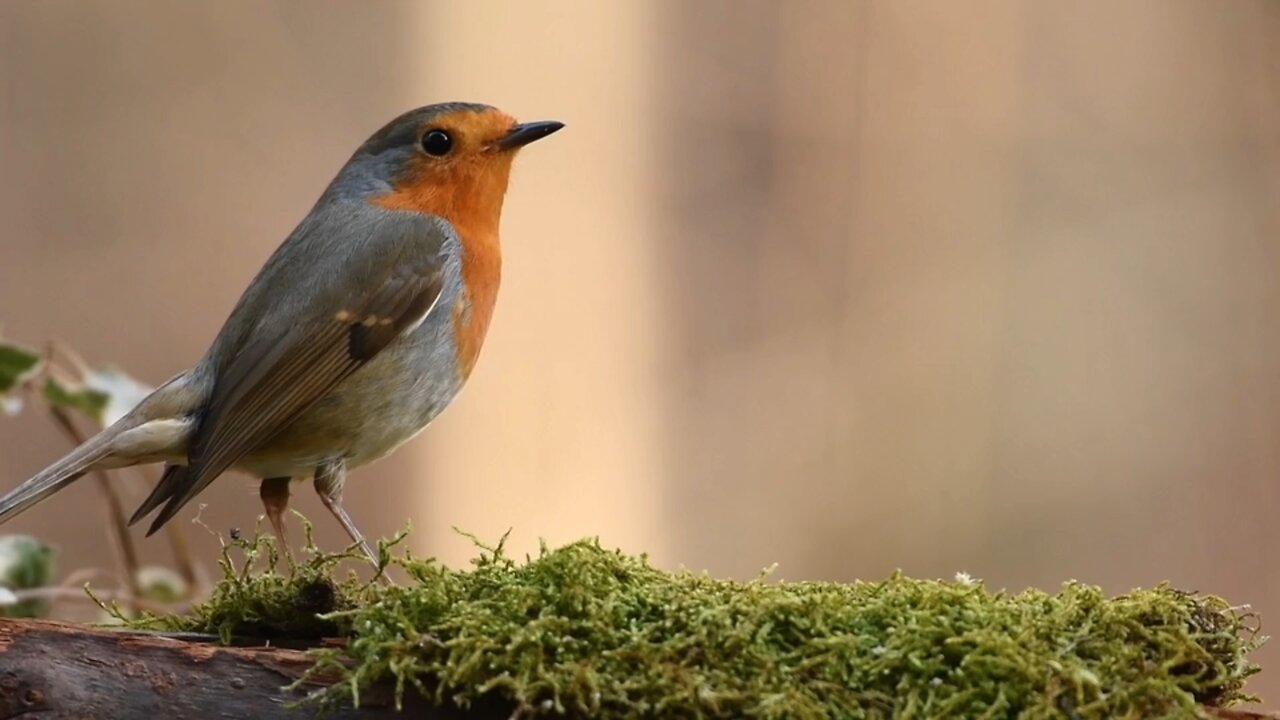
"The European Robin: A Tale of Song and Survival"
The European robin (*Erithacus rubecula*) is a small, insectivorous songbird native to Europe, western Asia, and parts of North Africa. Known for its distinctive orange-red breast and face, the robin is a familiar and beloved bird across its range, often associated with winter and Christmas in European culture.
### Key Features:
- **Size**: The European robin is small, measuring about 12.5–14 cm (5–5.5 inches) in length, with a wingspan of 20–22 cm (8–9 inches).
- **Plumage**: Its most striking feature is the bright orange-red breast, extending up to the face and throat. The rest of the body is mainly brown with a white belly.
- **Song**: The robin's song is a sweet, warbling melody, which is often heard year-round but is particularly prominent in the spring and autumn.
### Behavior and Habitat:
- **Habitat**: Robins are highly adaptable and can be found in a variety of habitats, including woodlands, gardens, parks, and hedgerows. They are particularly fond of areas with dense undergrowth where they can forage for insects and worms.
- **Behavior**: European robins are territorial and can be quite aggressive towards intruders, especially during the breeding season. They are also known for their curious and bold nature, often approaching humans closely, especially when food is involved.
- **Diet**: Their diet primarily consists of insects, worms, spiders, and other invertebrates. In winter, they may also eat berries and seeds when insect prey is scarce.
### Cultural Significance:
- The European robin is a symbol of Christmas in many European countries, often featured on holiday cards and decorations.
- It has a strong presence in folklore and literature, frequently depicted as a friendly, helpful bird.
- The robin is the national bird of the United Kingdom.
### Breeding:
- Robins typically breed from April to June, with females laying 4-6 eggs per clutch. The nest is usually built in a hidden, sheltered location, such as a tree hole, wall crevice, or among dense vegetation.
- Both parents take part in feeding the chicks, which fledge around 14 days after hatching.
### Conservation:
- The European robin is currently listed as a species of Least Concern by the IUCN, meaning it is not at immediate risk of population decline. Its adaptability and widespread presence help ensure its survival across its range.
This bird's charming appearance and melodious song make it a favorite among birdwatchers and nature enthusiasts across Europe.
-
 24:45
24:45
Blabbering Collector
1 day agoUnboxing The 2025 Diagon Alley Advent Calendar By Carat Shop | Harry Potter
1.58K -
 0:43
0:43
Gaming on Rumble
1 day ago $5.40 earnedLvl UP (Raids)
34K2 -
 LIVE
LIVE
Lofi Girl
2 years agoSynthwave Radio 🌌 - beats to chill/game to
875 watching -
 19:07
19:07
MetatronGaming
1 day agoWe need to find a way out NOW!
3.04K -
 1:11:16
omarelattar
4 days agoHow I Went From Depressed w/ $0 To $500 Million Per Year In My 20's (COMFRT CEO Hudson Leogrande)
3.96K -
 2:22:42
Badlands Media
22 hours agoDevolution Power Hour Ep. 413 – The J6 Narrative Cracks, Media Meltdowns, and the Intel Nobody Trusts
227K33 -
 7:13:51
MattMorseTV
10 hours ago $93.04 earned🔴THE STREAMER AWARDS🔴
191K56 -
 5:50:33
Side Scrollers Podcast
15 hours agoSide Scrollers Presents: QUEEN OF THE Wii
111K22 -
 2:08:11
TundraTactical
12 hours ago $3.93 earnedMatt Hover (CRS Firearms) Released This Week, Glock Gen 6 is Here, and More Tonight At 9pm CST
20.3K -
 6:48:52
SpartakusLIVE
9 hours agoNEW Buyback Mode is the MOST FUN I've had on WZ in YEARS
32.5K