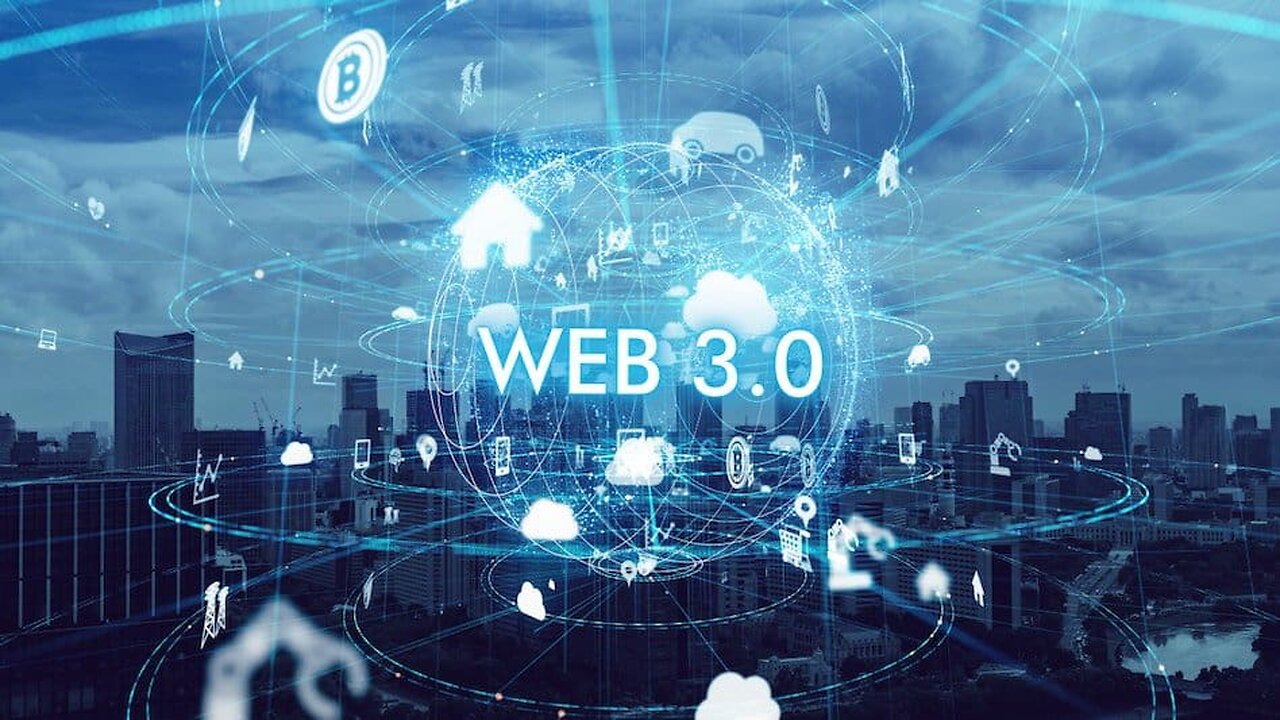
What is website 3.0 means for the future?
The internet is arguably the most important technology revolution in the history of humankind.
Although the industry has evolved considerably since its inception, its current stage is akin to the auto industry in 1920 — that is, it’s world-changing technology that has been around for 20 years but is still relatively immature and in need of major improvements.
Tim Berners-Lee’s internet was to be “a collaborative medium, a place where we [could] all meet and read and write.” An interconnected computer system designed for scientists to share experiments was soon dominated by AOL, Compuserve, early Yahoo and other portals. These online service providers were the gateway to Web 1.0, where businesses, individuals and governments began to consume and occasionally post content. Netscape launched its web browser in 1994, prompting the dot-com explosion, and the browser wars began.
Unlike Web 1.0 where, according to Graham Cormode and Balachander Krishnamurthy, “content creators were few … with the vast majority of users simply acting as consumers of content,” Web 2.0 brought us the “‘Web as Platform,’ where software applications are built upon the Web as opposed to upon the desktop,” according to John Battelle and Tim O’Reilly.
This enabled masses of users to participate in content creation on social networks, blogs, sharing sites and more. Search engines and social media platforms driven by user-generated content disrupted the media, advertising and retail industries. As a result, giant companies in retail and publishing that did not adapt have died or are struggling to stay alive.
Web 2.0’s business model relies on user participation to create fresh content and profile data to be sold to third parties for marketing purposes. Indeed, the internet has become a massive app store, dominated by centralized apps from Google, Facebook and Amazon, where everyone is trying to build an audience, collect data and monetize that data through targeted advertising. In my opinion, the centralization and exploitation of data, and the use of it without users’ meaningful consent, is built into Web 2.0’s business model.
So what is Web 3.0?
Five years ago, it was thought that the next generation of the internet would be the Semantic Web. Berners-Lee coined the term to describe a web in which machines would process content in a humanlike way (i.e., a “Global Brain” where all data would be connected and understood both contextually and conceptually).
The Semantic Web did not materialize for a number of reasons. The primary reason was that the real AI technology, referred to as RDF (resource description framework), was nearly impossible to implement. How can a machine know the difference between a jaguar (the animal) and a Jaguar (the car)? The only way to know the difference is to understand the context in which it is being described.
Connecting concepts and building taxonomies for every word are monumentally difficult tasks. So difficult that despite IBM’s Watson spending billions to advance this technology, it never truly came to fruition.
Although not the Semantic Web envisioned by Berners-Lee, Web 3.0 is in many ways a return to his original web, where “no permission is needed from a central authority to post anything … there is no central controlling node, and so no single point of failure … and no “kill switch”!
The rise of technologies such as distributed ledgers and storage on blockchain will allow for data decentralization and create a transparent and secure environment, overtaking Web 2.0’s centralization, surveillance and exploitative advertising. Decentralized infrastructure and application platforms will displace centralized tech giants, and individuals will be able to rightfully own their data.
Indeed, one of the most significant implications of decentralization and blockchain technology is in the area of data ownership and compensation. As we move toward Web 3.0 and the technologies that support it mature and become scalable, I believe the web will reflect its original intent.
Surely, Berners-Lee did not foresee that internet behemoths would dominate the web and become owners and profiteers of our data. The chronic interruptions that have become the norm in Web 2.0 will disappear as decentralization also makes possible transparent, opt-in, peer-to-peer communications that allow individuals to take ownership of their precious time.
In sum, Web 3.0 will bring us a fairer internet by enabling the individual to be a sovereign. True sovereignty implies owning and being able to control who profits from one’s time and information. Web 3.0’s decentralized blockchain protocol will enable individuals to connect to an internet where they can own and be properly compensated for their time and data, eclipsing an exploitative and unjust web, where giant, centralized repositories are the only ones that own and profit from it.
-
 LIVE
LIVE
vivafrei
47 minutes agoMiranda Divine & Dan Bongino Go Fisticuffs! Jillian Michaels & Crowder Go Fisticuffs! AND MORE!
6,757 watching -
 LIVE
LIVE
The Quartering
1 hour agoWoke Church Exposed, Income Taxes To End?, Gross Doordash Video, & Based Chic At Planet Fitness
6,450 watching -
 DVR
DVR
Stephen Gardner
34 minutes ago🔥Trump Just Got THE EVIDENCE we’ve ALL been waiting for!
2 -
 LIVE
LIVE
Right Side Broadcasting Network
3 hours agoLIVE: President Trump Makes an Announcement at the White House - 12/2/25
3,445 watching -
 LIVE
LIVE
The White House
2 hours agoPresident Trump Makes an Announcement, Dec. 2, 2025
1,268 watching -
 LIVE
LIVE
Professor Nez
2 hours ago🇺🇸 Trump’s SECRET Weapon for American Families (LIVE)
312 watching -
 1:07:14
DeVory Darkins
2 hours agoBREAKING: Washington Post suffers Major SETBACK after Hegseth story gets debunked
92K50 -
 LIVE
LIVE
StoneMountain64
2 hours agoArc Raiders EXPEDITION Money Making is Insane
174 watching -
 2:16:21
Side Scrollers Podcast
4 hours agoTwitch has a SERIOUS Problem + Leaflit’s VIRAL Interview + More | Side Scrollers
11.8K3 -
 LIVE
LIVE
Barry Cunningham
18 hours agoBREAKING NEWS: President Trump Hosts Cabinet Meeting & Makes MAJOR Announcement!
2,099 watching